
Moving A Bathroom To Another Room In An Exeter House
Luxury Bathrooms Exeter
Almost every bathroom we are asked to move starts with the same sentence: the bathroom is in the wrong place. Usually it is a family bathroom sitting between two bedrooms in a Victorian terrace, or a 1930s semi where the only WC is at the back of the house and the biggest bedroom has no water anywhere near it. Around one enquiry in six that reaches us is a relocation rather than a straight replacement, and the price gap between the two is wide: a like-for-like refit in the same footprint might be £12,000 to £18,000, while the same room moved two walls away can add £3,000 to £8,000 before a single tile is chosen. That gap is not arbitrary. It is set by four physical things - where the drain runs, what the floor is made of, how the moist air gets out, and how far the hot water has to travel. Understand those and you can predict your own quote fairly accurately before anyone visits.
The distance to the drain decides most of the budget
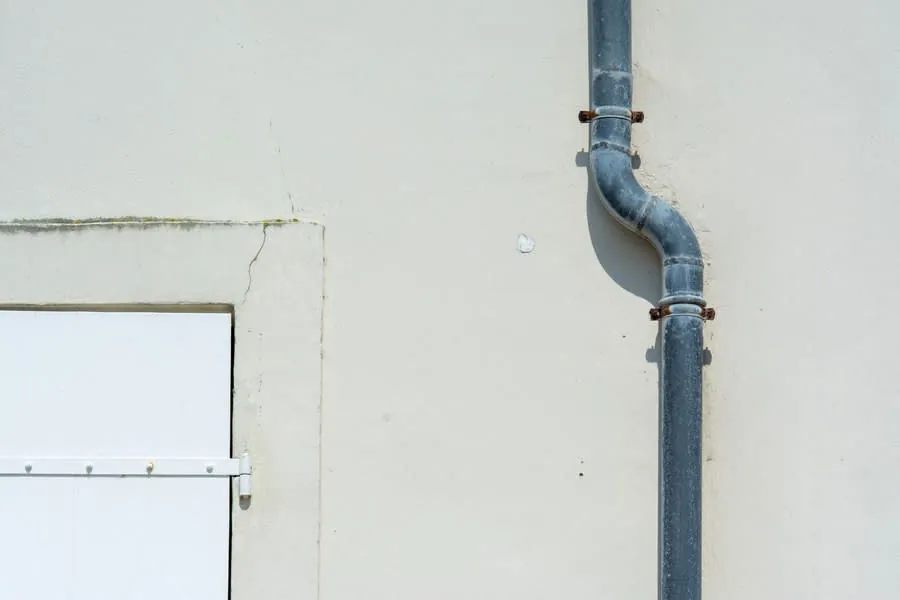
Water arrives under pressure and will go almost anywhere you ask it to. Waste leaves under gravity and will not. That single asymmetry explains why moving a basin is trivial and moving a WC is not.
The numbers are in Approved Document H, and they are less generous than people expect. A 32mm basin waste can run 1.7m before it needs venting, at a fall of 18 to 22mm per metre. Step up to 40mm and you get about 3m. A 110mm WC branch can run up to 6m to the stack, at a minimum fall of 18mm per metre, provided the bends are swept rather than square. Those are the constraints your whole layout has to live inside, and the government publishes the full document free if you want to check a proposed run yourself.
In practice the question at survey is simple: where is the existing soil stack, and can the new WC reach it inside 6m with a continuous fall? In the bay-fronted terraces around St Leonard’s and Mount Pleasant the stack is almost always on the rear elevation, serving the outrigger. Move a bathroom from the outrigger to the front of the house and you have crossed the building. Sometimes that works because the fall is available in the floor void. Often it does not, and then you are either dropping a new stack down an elevation, which is a planning conversation in a conservation area, or you are looking at pumped drainage. This is the single question we answer first on any bathroom renovation that involves moving the WC, because everything downstream of it changes with the answer.
What the floor will allow, and what it will not
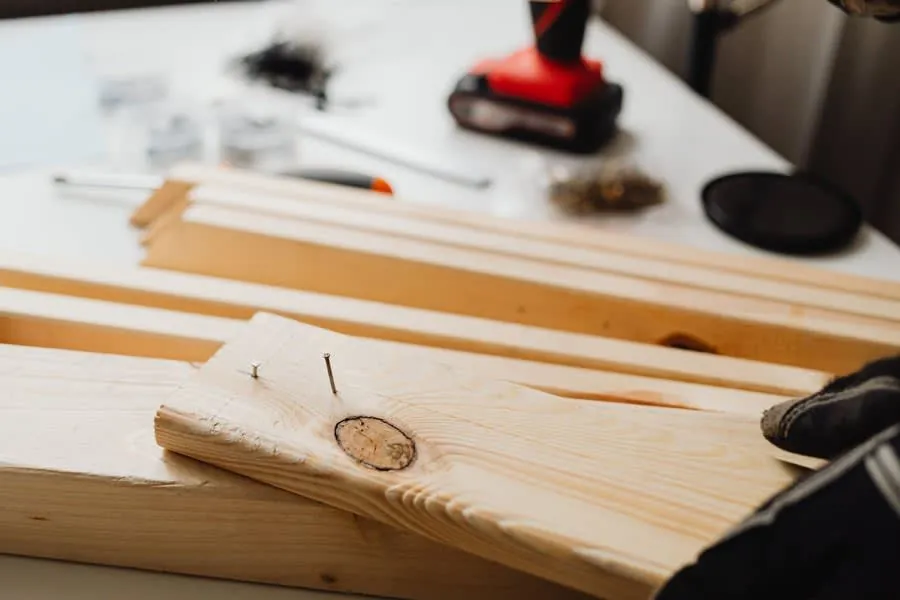
Assuming the fall exists, the next question is whether the joists will let you have it. A 110mm pipe needs roughly 130mm of depth once you allow for the socket, and a typical Victorian joist is 175mm to 225mm deep. So the pipe cannot cross the joists. It has to run parallel with them, in the void between two, which is why relocated WCs so often end up against a particular wall rather than the wall the customer had in mind.
Where pipes do have to cross timber, the rules are tighter than most people realise. A notch can be no deeper than one eighth of the joist depth and is only permitted near the supports, in the outer quarter of the span. A hole can be up to a quarter of the joist depth but only if it is drilled on the centre line, between a quarter and two fifths of the span from the support, with holes spaced at least three diameters apart. On a 200mm joist that means notches under 25mm and holes under 50mm, which will take a 22mm hot feed and a 40mm waste comfortably, and will not take a soil pipe at all.
Newer houses fail this test differently. On the estates at Monkerton and Newcourt, and across the new build at Cranbrook, floors are commonly engineered joists with a metal web or an I-beam profile. Those must never be notched or drilled outside the manufacturer’s designated service openings, because the whole point of them is that the timber flanges carry the load and the web does not have material to spare. The good news is that the service voids in a posi-joist floor are generous, so relocations in a modern house are frequently easier than in a Victorian one, as long as nobody takes a saw to anything.
One more thing peculiar to terraces. If the new pipework needs to cut into the wall you share with next door, that is a party structure and the Party Wall etc. Act 1996 applies. It is a formality rather than an obstacle, but it needs written notice served in advance, and the government’s guidance on party wall works sets out the timescales. Finding out about it after the plasterer is booked is the expensive version.
Turning a bedroom into a bathroom, and the room you give up
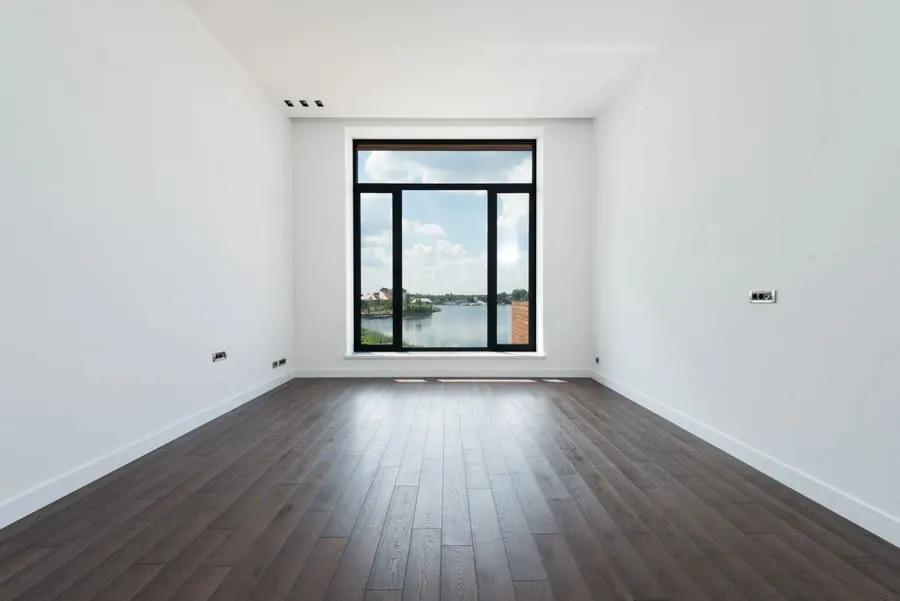
The most common relocation in Exeter is not really a move at all. It is a conversion: the small third bedroom becomes the bathroom, and the old bathroom becomes a study, a dressing room or the en-suite it always should have been.
The arithmetic behind it is worth stating plainly. In the older parts of the city, a box room is often 2.2m by 2.6m, which is a poor bedroom and an excellent bathroom. It gives you a wall long enough for a 1700mm bath, a second wall for a double vanity, and enough floor to stand two people up at once. Meanwhile the old bathroom, typically 1.7m wide over the stairs, converts into a workable en-suite or shower room without needing to be beautiful.
Valuation is the part worth pausing on. Estate agents in Exeter still price by bedroom count, and going from three bedrooms to two costs more than most people expect in a family-house market. Going from four to three, which is what most of these projects actually do, rarely costs anything at all. We looked at where the value sits in more detail in our piece on adding an en-suite in an Exeter home, and the same logic applies here.
There is also the floor. A bedroom floor is not a bathroom floor. It was built to hold a bed, and it will flex under a full 1700mm bath, which holds around 180kg of water plus a person. That flex cracks grout and eventually breaks a waterproofing membrane. Stiffening the floor - sistering joists, adding noggins, sometimes a new bearer - is standard on these jobs and should be an itemised line in the quote, not a discovery on day three.
Macerators: useful, misunderstood, and not a shortcut
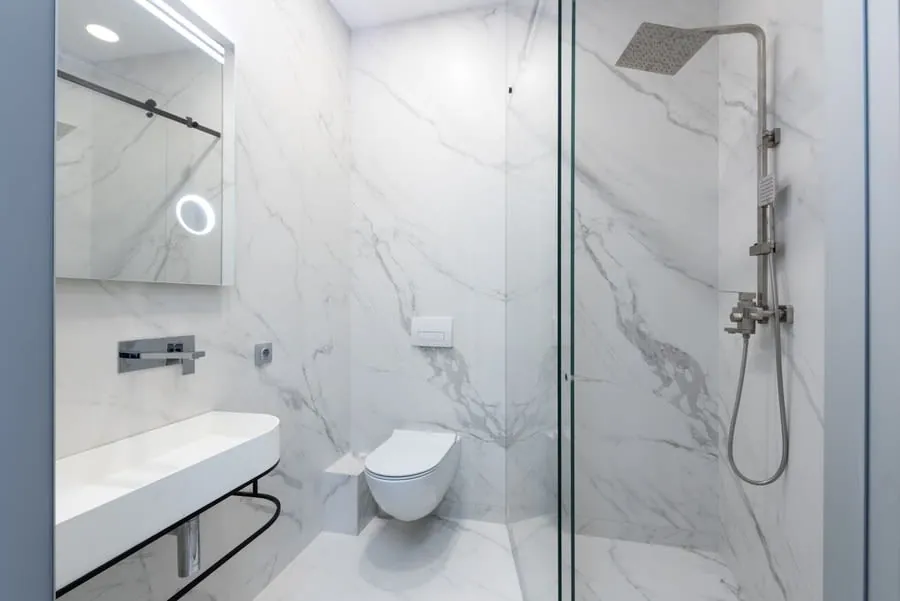
When the drain genuinely cannot be reached, a macerator will get you out of trouble. It is also the part of the job where the regulations are clearest and most often ignored.
Approved Document G is explicit: a macerator or pumped WC is permitted as long as there is also a WC in the property discharging to a gravity system. In other words, it can be the second toilet, never the only one. The unit itself should meet BS EN 12050-1 or BS EN 12050-3 depending on the application, and building control will ask. Local Authority Building Control sets out exactly when a macerator is acceptable in place of a gravity WC, and it is worth reading before committing to a layout that depends on one.
Then there is the question of whether you want one. A macerator has a motor, and motors are heard through walls and eventually fail. Small-bore pumped waste blocks where gravity waste would not, which means wipes and cotton buds become a genuine household issue rather than a mild one. In a £25,000 bathroom, a pump that hums for twenty seconds after every flush is a jarring note. Our position is that a macerator is the right answer for a cloakroom in a cellar or an en-suite where the alternative is not building it at all, and the wrong answer for a main bathroom where a slightly different layout would reach the stack by gravity.
Getting the moisture out of a room never built to be wet
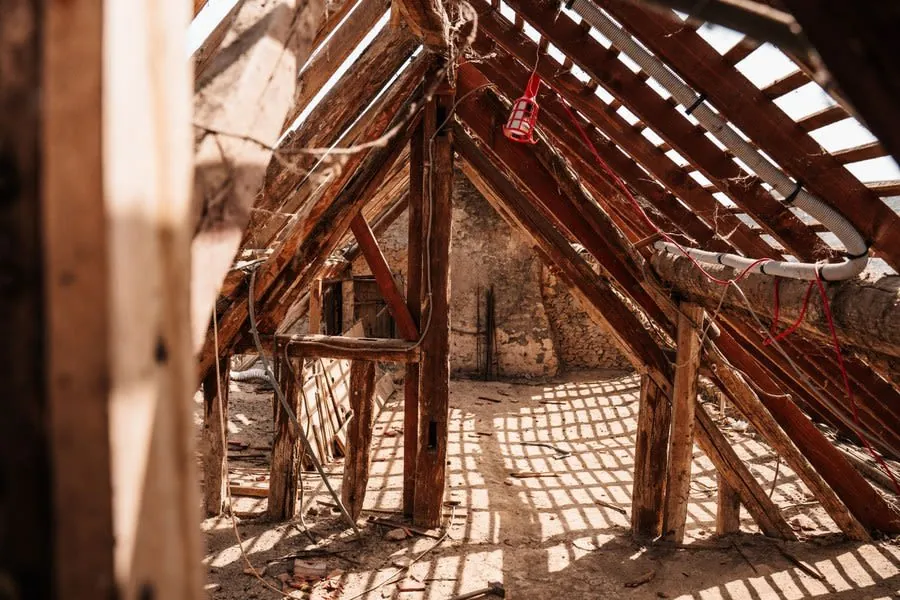
A bedroom has a window and no fan. A bathroom generates several litres of water vapour a day, and the room it moves into has none of the defences the old one had.
The extract rate for a bathroom is 15 litres per second intermittently, and that number is easy to hit with the right fan and easy to miss with the wrong duct. What kills fan performance is run length, flexible ducting and 90 degree bends, in that order. A fan rated at 15 l/s on the box can deliver less than half of it through five metres of concertina hose with two tight turns, which is exactly what happens when a bathroom moves inland from an outside wall.
So the vent route is part of the layout decision, not an afterthought. In a two-storey house the good outcomes are a short run to the nearest gable or eaves in rigid 100mm pipe, or a duct through the ceiling into the roof void and out through a tile vent. Both are straightforward if planned. Neither is possible if the room has already been tiled.
There is also the fabric to think about. A room that has been dry for a hundred years, with lath and plaster on a solid wall, will behave differently once it holds warm humid air twice a day. In the older terraces we frequently upgrade the wall build-up in the new wet zone rather than tile straight onto what is there, because a cold solid wall behind a shower is where condensation goes to become a problem. Our guide to stopping condensation and mould in an Exeter bathroom covers the ventilation side in more depth.
Hot water, pressure and the distance from the cylinder

Moving a bathroom moves it relative to the hot water, and that shows up in two ways: how long you wait, and how hard the shower runs.
The waiting is dead leg. Every metre of 15mm pipe holds about 0.18 litres of water, so a ten metre run from cylinder to shower means roughly two litres of cooled water to push through before the hot arrives. In a room used at seven in the morning by three people that is noticeable, and it is why a relocated bathroom on the far side of the house sometimes wants its own secondary return or, in smaller houses, an instantaneous unit for the basin.
Pressure is the other half. Exeter’s older housing stock still contains plenty of vented systems with a cold tank in the loft, and those give roughly 0.1 bar per metre of height between tank and outlet. Move a bathroom down a floor and pressure improves. Move a shower up into a loft conversion and it can collapse to the point where the valve will not operate. Unvented cylinders and combi boilers do not care about height in the same way, but they do care about flow rate, which is finite and shared. Adding a second bathroom to a combi and then running both at once is the commonest disappointment we are called in to fix afterwards. We go through the valve and pressure combinations in how to choose a shower for an Exeter bathroom, and the same survey questions apply the moment a room moves.
What it costs in an Exeter house, and what changes it

Relocation costs sit on top of the bathroom itself, and they vary more by house than by anything else.
At the easy end is a modern house where the new room sits on the same floor, within a few metres of the stack, over a posi-joist floor with a clear service void. Add £2,000 to £3,500 for first fix, floor works and making good. A 1930s semi where the bathroom shifts from the rear to a bedroom on the same landing usually lands between £3,500 and £5,500, because the joists run the wrong way and the vent route is longer. A Victorian terrace where the WC has to reach the rear stack across the building, over a floor that needs stiffening, with lath and plaster to make good, is £5,000 to £8,000 and occasionally more if a new drain connection is needed outside.
Then there are the properties where the constraint is legal rather than structural. In Topsham, where the conservation area was designated in 1967 and the listed building density is the highest we work in, the interior of a listed building is protected along with the shell, so moving a bathroom can require listed building consent for work that would be unremarkable elsewhere. At Devington Park in Exminster, a listed institutional conversion, you are dealing with both the listing and a lease. Neither makes the work impossible. Both make the design stage longer, and both are far cheaper to discover in month one than in week three.
It comes down to one thing. If the new location can reach the existing stack by gravity, moving a bathroom is a modest premium on a normal refit. If it cannot, the cost is in the drainage rather than the fittings, and no amount of trimming elsewhere in the room will absorb it. We would rather say that at survey than halfway through.
Common questions
Can I move a bathroom to any room in the house?
Physically, usually yes. Sensibly, only where the WC can reach a soil stack or drain by gravity, within about 6m at a minimum fall of 18mm per metre, and where the floor can carry the pipe without notching joists beyond the permitted limits. Rooms that fail both tests need pumped drainage, which is allowed only if another WC in the property discharges to gravity.
Do I need building regulations approval to move a bathroom?
The bathroom itself is not notifiable simply for being moved, but the work within it usually is. New drainage, new or altered circuits in the zones close to the bath or shower, structural alterations to joists and, in some cases, ventilation all fall under the regulations. Structural work and drainage almost always need building control involvement, so assume an application rather than hoping otherwise.
How much does it cost to move a bathroom in Exeter?
Expect £2,000 to £3,500 on top of the refit in a modern house with a short drain run, £3,500 to £5,500 in a typical 1930s semi, and £5,000 to £8,000 in a Victorian terrace where the WC has to cross the building and the floor needs stiffening. A new external drain connection or listed building consent pushes it higher.
Is it worth turning a bedroom into a bathroom?
It usually is where the house has four bedrooms, or where the third bedroom is genuinely too small to use. Going from three bedrooms to two affects resale in Exeter’s family-house market more than most owners expect, so it is worth a conversation with a local agent before the design is fixed.
Can I put a bathroom in a room with no outside wall?
Yes, provided mechanical extract can be ducted to outside air in rigid pipe, ideally under three metres with no more than one bend, and provided the drainage works. An internal bathroom with a well-designed duct performs better than an external one with a fan nobody ever runs.