
How To Stop Condensation And Mould In A Bathroom
Luxury Bathrooms Exeter
The black speckling in the corner of the ceiling, the sealant going grey along the bath, the mirror that takes an hour to clear. Almost every bathroom we are called to look at with a mould problem has the same underlying cause, and it is almost never the cause the owner assumed.
It is not damp coming through the wall. It is not a leak, usually. It is condensation, which is to say moisture that was already in the room landing on a surface cold enough to turn it back into water. Fix the two things that drive condensation and the mould has nothing to grow on. Repaint over it without fixing them and it comes back by the second winter, every time.
This matters more in Devon than in a lot of the country, for reasons of both climate and housing stock that are worth spelling out. So here is what actually causes it, the specific fix, and the one piece of ventilation guidance that catches people out in a period Exeter house.
Condensation is a temperature problem, not a water problem
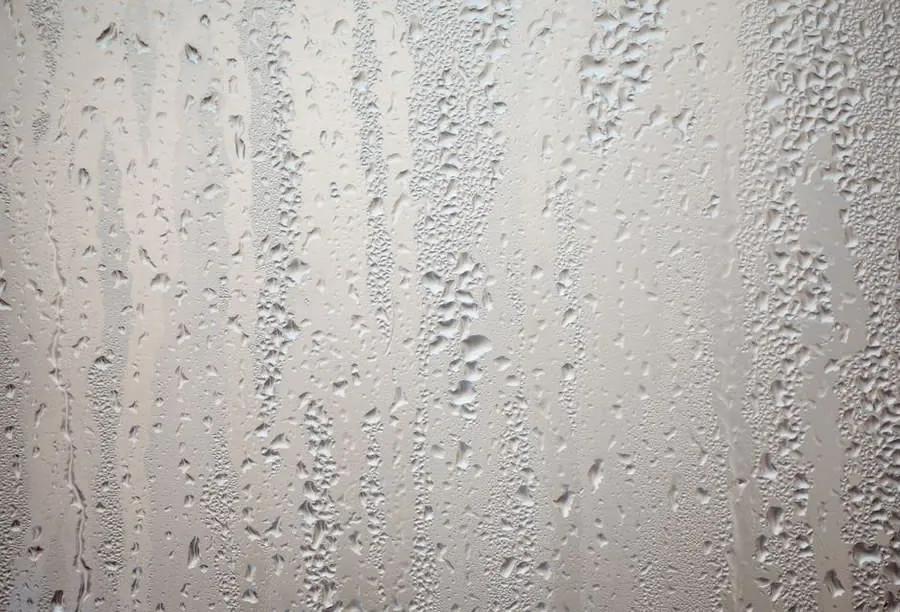
Warm air holds more moisture than cold air. A hot shower fills a small room with warm, wet air very quickly. When that air touches a surface colder than its dew point, it cannot hold the moisture any longer and it deposits it as liquid water. That is the fog on the mirror, the beads on the window, and the slow damp patch in the corner where the wall is coldest.
The reason it lands where it lands is all about which surfaces are cold. A single-glazed window is the coldest thing in most rooms, so it goes first. An external wall, especially a solid one with no cavity, is next. The corner where two external walls meet is coldest of all, which is exactly where the mould usually starts.
So there are only ever two levers. Reduce how much moisture is in the air, by getting it out of the room before it can settle. And raise the temperature of the cold surfaces, so the air never reaches its dew point against them. Everything that actually works is one of those two things. Everything that does not work, including wiping it up and repainting, ignores both.
Why Devon bathrooms suffer more

Two things stack up here, and they are both genuinely local rather than the sort of vague claim you could make about anywhere.
The climate is mild and damp. The South West is one of the wetter parts of England, and crucially it is mild rather than cold, so the outside air is often already carrying a lot of moisture. Air that starts damp has less capacity to absorb the extra load from a shower before it saturates. A hard frost actually dries air out. A grey, wet, ten-degree Devon January does the opposite, and that is most of our winter.
The housing stock makes it worse. A large share of the bathrooms we work in around Heavitree, St Leonard’s, Newtown and St Thomas are in Victorian and Edwardian terraces with solid walls and no cavity, and those walls run cold. Out toward Crediton and the Exe valley you get cob, which is a different construction again. Cold solid walls give condensation exactly the cold surface it needs, and older houses frequently have either no extract fan at all or one too feeble to matter.
None of this is a reason to panic about an old house. It is a reason to treat ventilation and surface temperature as design decisions rather than afterthoughts, which in a period Devon property they have to be.
The extract rate that actually clears the air
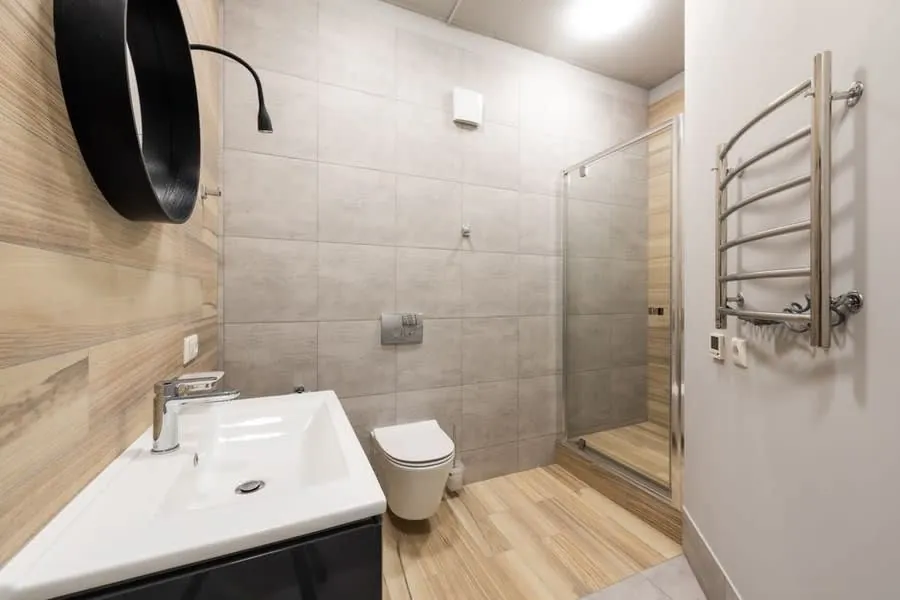
This is the single most effective fix, and it is the one most often done to a standard too low to work.
The numbers are set out in Approved Document F, the building regulations guidance on ventilation. A bathroom needs an intermittent extract rate of 15 litres per second, or 8 litres per second if the fan runs continuously. The fan has to sit as high as practicable and no more than 400 millimetres below the ceiling, because that is where the warm wet air collects. Where there is no openable window, it needs a run-on timer that keeps it going for at least 15 minutes after you leave. And where a room has no external wall at all, the guidance steps up to four full air changes an hour.
A cheap fan wired to the light switch, with no run-on and mounted wherever the hole already was, meets almost none of that. It is the single most common thing we find in a mouldy bathroom. The extractor is technically present, so nobody suspects it, but it is moving a fraction of the air it needs to and switching off the moment the light does, leaving a room full of steam to settle overnight.
The other quiet failure is a fan that runs to the required rate but discharges into the loft rather than to outside air. That does not solve the problem, it relocates it into your roof structure, where it does considerably more expensive damage. Ducting has to reach the outside, and it has to do so without long sagging runs that let condensate pool. We commission and test the actual rate rather than fitting a fan and assuming.
Warm the cold surfaces

The second lever is temperature, and it is the one people forget because ventilation gets all the attention.
If the cold corner never drops below the dew point of the air in the room, condensation cannot form on it. The most effective single move here is underfloor heating, because it warms the whole room gently and keeps it warm between uses, so surfaces do not get the chance to go cold and damp overnight. A heated towel rail helps but only locally. Underfloor heating raises the baseline temperature of the entire room, which is what actually keeps the corners above dew point.
In a solid-walled period house there is sometimes a case for internal wall insulation on the worst external wall, but it has to be done carefully, because in a breathable construction like cob the wrong insulation traps moisture inside the wall rather than solving anything. That is a genuine trap, and it is why we would never simply batten and board a cob wall in a bathroom without thinking about where the moisture goes. The principle is the same one that governs floors in these buildings, which we covered in our piece on whether underfloor heating is worth it.
Double glazing on a single-glazed bathroom window makes a real difference too, because that window is usually the coldest surface in the room and the first to stream. In a listed building or conservation area that is not always permitted, which is worth checking early.
The ventilation rule that catches people out in old houses
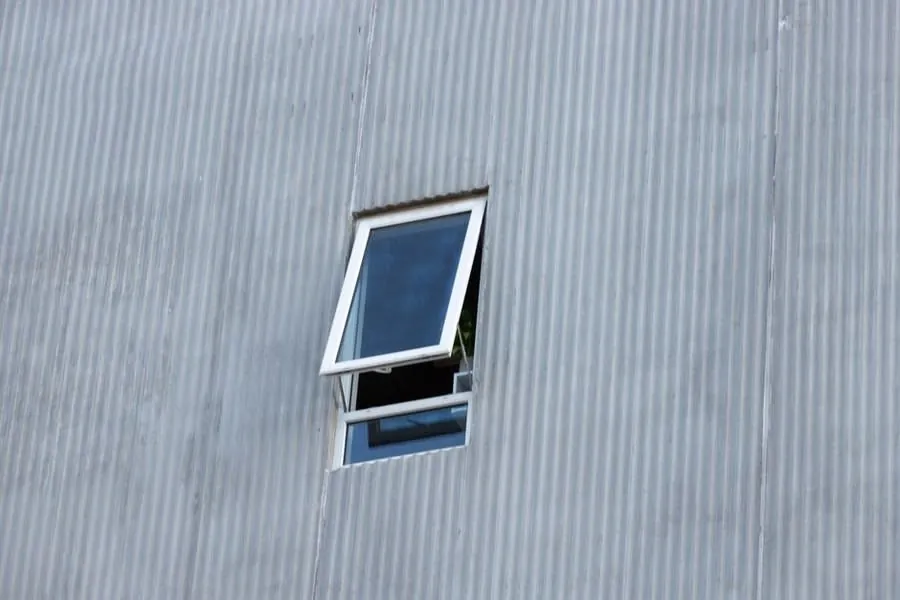
Here is a genuinely counter-intuitive point that even some fitters get wrong, and it matters a great deal in Exeter’s listed and conservation-area housing.
Approved Document F says that if there was no ventilation system in the original room, you are not required to add one when you refurbish it, though additional ventilation may be needed if the work would otherwise leave the building less compliant than before. It also says that if you replace an existing fan using the existing cabling, that does not need to be notified to building control.
Why does this matter? Because it means a bathroom refit in a listed Topsham or Sidmouth house does not automatically force you to cut a new hole through a protected external wall to satisfy the regulations. That is a real relief in a building where any change to the elevation needs consent. It does not mean you should skip ventilation, because a period house is exactly where you most want good extraction. It means you have room to solve it sympathetically, and an installer who tells you the rules force a new external vent through a historic wall has not read them properly.
The background-ventilation side matters too. A trickle vent in the window frame lets a small amount of air move through the room continuously, which stops it sitting stagnant and damp between uses. It is a small, cheap thing that does more than people expect.
What does not work, and why
The mould-resistant paint aisle exists because people keep buying it, and it is close to the least effective thing you can do. It contains a biocide that slows regrowth on that surface for a while, but it does nothing about the moisture or the cold, so it buys you a year or two and then the mould is back and you have painted over the early warning signs in the meantime.
Wiping the window down every morning is not nothing, but it is treating a symptom with your own labour every single day, and it does nothing for the corner you cannot see behind the towel rail.
A dehumidifier genuinely does reduce moisture, and running one can help in a specific problem room, but it is a machine you have to remember to empty and run, and it is dealing with the water after it is already in the air rather than getting it out of the room in the first place. It is a sticking plaster, not a fix.
And bleaching the mould off, then doing nothing else, is the most common cycle of all. It removes the visible growth and leaves every condition that caused it completely intact. The NHS notes that damp and mould can affect your health, particularly for anyone with a respiratory condition, so this is not purely a cosmetic issue to keep papering over. It is worth fixing properly once rather than managing forever.
Doing it properly as part of a refit
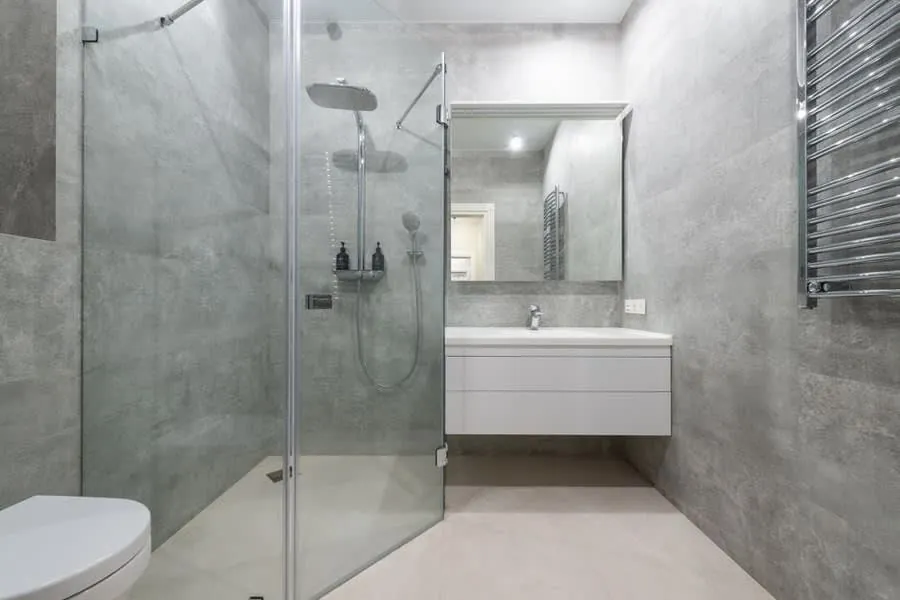
If a bathroom is being refitted anyway, this is the cheapest possible moment to solve condensation for good, because the fan, the ducting, the heating and the surfaces are all being touched regardless.
A proper extractor sized to the room and ducted to outside air. Underfloor heating to keep the surfaces above dew point. Sealant and grout that are correctly specified so they resist the moisture that does form. And, in the right property, attention to the coldest wall. Done together, at the point everything is open, it adds far less than solving each one separately after the fact. That is the argument for treating ventilation as part of the design rather than a fan chosen at the end, and it runs through how we approach a whole project, which our design process page sets out.
The reason we care about this beyond the obvious is that a mouldy bathroom is one of the fastest ways to make a good room look neglected, and it quietly knocks value off a house. We went into that side of it in our article on what a new bathroom adds.
Common questions
Why does my bathroom mould come back after I clean it?
Because cleaning removes the growth but not the two things that cause it: moisture in the air and a cold surface for it to condense on. Until you improve the extraction and warm the cold corner, the mould has everything it needs to return, and it will, usually within a winter.
Is an extractor fan enough on its own?
Often, in a modern well-insulated bathroom. In a solid-walled period house with cold external walls, extraction alone sometimes is not enough, because the surfaces are cold enough to condense moisture faster than the fan clears it. There you usually need extraction and some background warmth, most effectively underfloor heating.
Does opening the window do the same job as a fan?
It helps, but it is unreliable, because it depends on you remembering and on the weather. On a still, damp Devon day an open window barely moves any air. A properly sized extractor with a run-on timer does the job every time regardless, which is why the regulations are built around mechanical extract rather than an openable window alone.
My house is listed. Can I still improve the ventilation?
Yes. Approved Document F does not force you to add a new external vent when refurbishing a room that never had one, so you are not obliged to cut through a protected wall. There are usually sympathetic routes, including reusing existing openings and internally sited systems, and it is worth using a fitter who has worked on listed buildings before.
Will underfloor heating stop condensation?
It helps significantly, because it keeps the whole room and its surfaces warmer between uses, so they are less likely to drop below the dew point. It works best paired with good extraction rather than on its own. Warm surfaces plus air that is being removed is the combination that actually keeps a bathroom dry.