
Bathroom Renovation In Exeter
Working with a bathroom that has had its day?
Stripping back to the substrate to find out what you are actually dealing with, then rebuilding it correctly.
Renovation differs from installation in one respect that matters enormously: we do not know exactly what we are dealing with until the tiling comes off. In Exeter's Victorian, Georgian and cob-built housing that is not pessimism, it is experience. So we survey as far as access allows, price the likely finds as costed possibilities, and give you the news the same day rather than at the end.
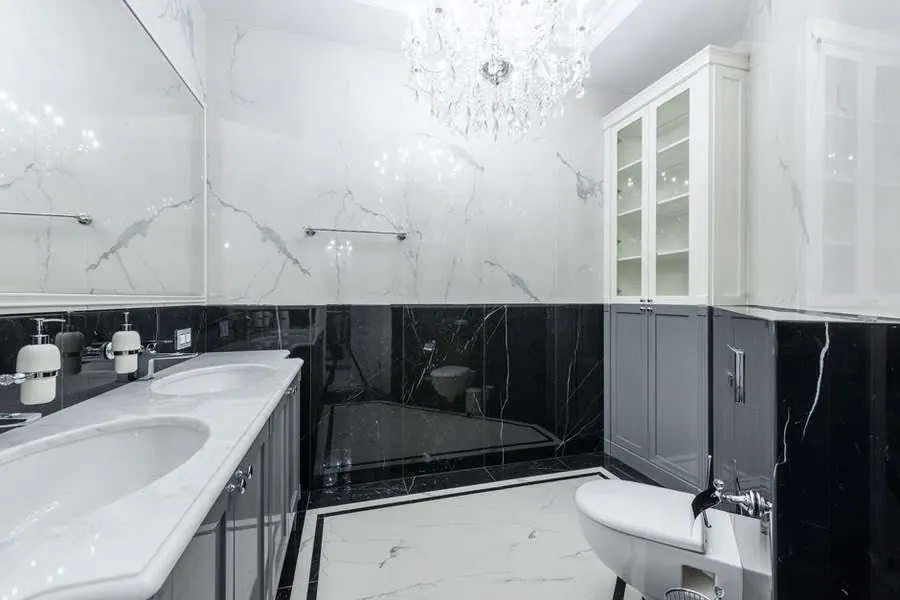
Ask About A Renovation
Tell us a little about the room and we will come back to you to arrange a visit. No obligation, and no pressure to decide on the day.
The Case For It
What A Proper Renovation Deals With
Substrate, not just surface
Tiling straight onto old tiling or failing plaster buys you three years. We take it back to something sound, board it correctly and prime it, which is the part that determines whether the room lasts twenty years.
Original services replaced while they are exposed
Lead and steel feeds, badly modified waste runs and undersized traps are common in older Exeter housing. There is no cheaper moment to put them right than when the wall is already open.
Damp diagnosed rather than covered up
Damp in a bathroom is usually a leak, a cold bridge or a ventilation failure - three different problems with three different fixes. Tanking over it without knowing which just relocates it.
Breathable build-ups in cob and solid walls
Cob and lime-rendered walls need to move moisture. Sealing them with impermeable board and a vapour barrier traps water inside the wall, which is a real and common problem in Crediton and rural Mid Devon.
Ventilation brought up to a rate that works
Older bathrooms frequently have no extract at all, or a fan too weak to matter. This is the moment to fix that, and there is a useful nuance in the regulations about it.
Floors checked and stiffened where needed
Century-old joists deflect. Tile and tanking do not tolerate deflection. Adding noggins or sistering joists while the floor is up is straightforward; afterwards it means starting again.
- High-End Projects
- 100+ High-End Projects
- Workmanship
- Guaranteed Workmanship
- Design Consultations
- Free Design Consultations
- Team, Start To Finish
- One Team, Start To Finish
Before You Choose
How To Judge A Renovation Quote
Look for named contingencies, not a round-number allowance. A renovation quote that contains no mention of what might be found is either optimistic or is planning to bill you later. Ours name the specific risks the survey identified - a soil stack we suspect is cast iron and cracked, a joist end near a known leak, a feed we think is lead - with a cost against each. If we are wrong, you do not pay it.
Ask what happens to the walls behind the tiles. In a period property the honest answer is often that nobody knows until the tiles are off, but the plan should be clear: assess, remove what is not sound, board and prime, and only then tile. A quote that includes tiling but says nothing about substrate preparation has priced the visible half of the job.
Ask about ventilation, and listen for whether they know the actual rules. There is a genuinely counter-intuitive provision here: Approved Document F states that if there was no ventilation system in the original room, it is not necessary to provide one in the refurbished room - though additional ventilation may be needed if the work would otherwise make the building less compliant than before. That matters in a listed Topsham or Sidmouth property, because it means a refit does not automatically oblige you to cut a new hole through a historic elevation. It also means an installer who insists you must has not read it.
Compared
Renovation, Refresh Or Straight Replacement
Three different jobs that get given the same name in conversation.
| Full renovation | Cosmetic refresh | Like-for-like replacement | |
|---|---|---|---|
| How far back it goes | To the substrate, walls and floor | Existing tiling and substrate retained | Fittings out and new ones in the same positions |
| Services | Renewed and re-routed as needed | Untouched | Connected to existing pipework |
| Layout change possible | Yes | No | No |
| Hidden problems addressed | Yes - that is largely the point | No, they stay behind the tiles | Only if they surface |
| Realistic lifespan | 20 years plus | 5 - 8 years | 10 - 15 years |
| Indicative cost | £10,000 - £28,000 | £2,500 - £6,000 | £6,000 - £12,000 |
Our Process
How An Exeter Bathroom Project Runs
Seven stages, in this order, every time. Most of the problems we get called in to fix on other people's work come from skipping straight from strip-out to tiling.
-
Design consultation and measured survey
We come to the house, measure the room properly, and ask how you actually use it - who uses it, at what time of day, and what irritates you about it now. Where we can get a look behind panelling or under a bath, we do, because that is where the surprises live.
-
Drawn layouts and full specification
You get two or three layouts to look at, not one. Alongside them, a written specification naming every tile, valve, tap and light - so the quote is for a defined room rather than a vague intention.
-
Fixed written quote
Itemised, VAT inclusive, with the specification attached. If the survey turned up something that might need attention once the walls are open, it is written down as a possibility with a cost, rather than sprung on you later.
-
Strip-out and first fix
Old suite out, back to the substrate. Pipework and cabling re-routed to suit the new layout, with electrics kept to the correct zones for a bathroom. This is the stage where an older property tells you the truth about its plumbing.
-
Substrate, tanking and falls
Walls and floors boarded and primed. Wet areas tanked as a complete system rather than a coat of paint near the tray. In a wet room the falls are formed and checked with a level before any tile is cut.
-
Tiling and set-out
Set-out is planned from the sightlines you will actually stand and look at, so full tiles land on the focal wall and cuts finish in the corners. Large-format and book-matched stone is dry-laid first to get the veining right.
-
Second fix, commissioning and handover
Sanitaryware and brassware fitted, thermostatic valves balanced to the pressure your house genuinely has, extraction tested against the required rate. Then we walk the room with you, hand over the warranties in your name, and leave a care guide for the finishes.
Detail
What Exeter's Housing Tends To Be Hiding
There is a pattern to it. In the Victorian and Edwardian suburbs - Heavitree, St Leonard's, Pennsylvania, St Thomas - we expect solid walls with no cavity, suspended timber floors, lath-and-plaster or lime-plastered partitions, and an original soil stack on the rear elevation. The common finds are a waste run modified badly at some point in the past fifty years, a trap with an inadequate seal, and a joist end that has been quietly damp since a leak nobody dealt with.
In the Georgian stock around Southernhay and Colleton Crescent, and across Topsham, add listed status to that list. Exeter City Council's own guidance is unambiguous: the entire building is listed, including all internal features, and fixed fixtures and fittings are protected. So a period bathroom rip-out is not a like-for-like job in the eyes of the local authority, and the sequence starts with establishing the consent position rather than with a skip.
Out toward Crediton and the rural parishes the construction changes again to cob, where the whole approach to moisture has to change with it. And in the postwar rebuild of the bombed city centre - the 1942 Blitz destroyed around 1,500 of Exeter's 20,000 houses - you get 1950s and 60s construction that is generally straightforward but often has undersized services. If you are working out whether your project is a renovation or a fresh installation, the survey is what settles it.
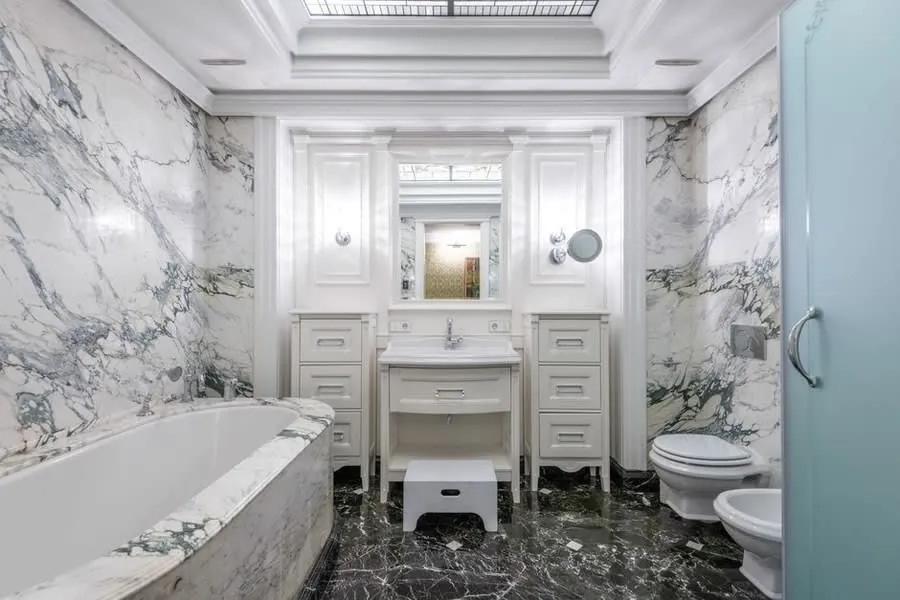
Reassurance
What Our Guarantee Actually Covers
- The workmanship, not just the products
- Manufacturers cover their own goods. What usually fails on a bathroom is the work around them - a tray that was not bedded, a valve set to the wrong pressure, tanking that stopped short of the door. That is the part we stand behind.
- Tanking and falls in wet areas
- Any fully tiled shower area or wet room we build is tanked as a system and the falls are set and checked before tiling. Water finding its way into a floor void is the single most expensive bathroom failure there is.
- Manufacturer warranties passed to you
- Every warranty on your sanitaryware, brassware and shower valves is registered in your name and handed over in writing at the end of the job, along with the specification of what was actually installed.
- Anything we got wrong, we come back for
- If something we installed is not right, we return and put it right. Most of our enquiries come from people who were let down by someone who stopped answering the phone.
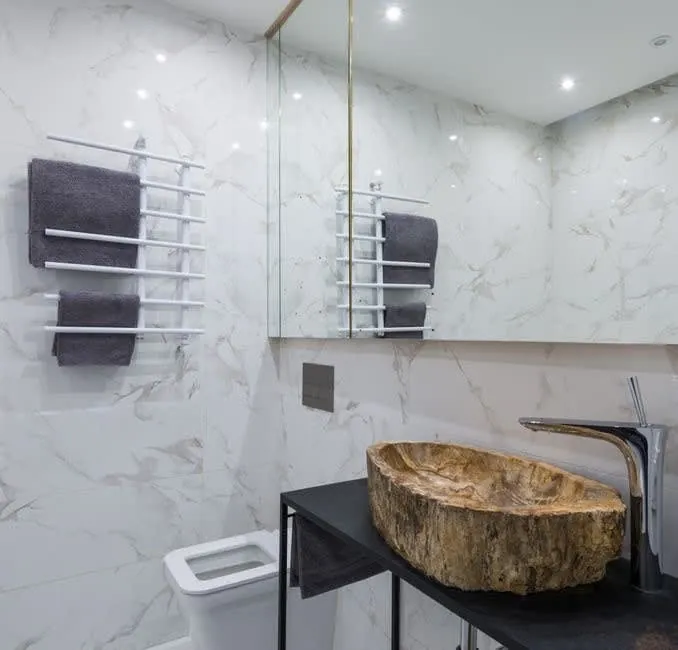
Budget
What Bathroom Renovation Costs In Exeter
£10,000 – £28,000
The range reflects how much has to be put right before the new bathroom can start. A sound room in a 1960s house is at the bottom. A listed Georgian property needing consent, service renewal, floor stiffening and breathable build-ups is at the top.
Guide range based on recent Exeter projects, VAT included. Your figure comes from the survey and written specification, not from this page.
Full cost breakdownQuestions
Renovation Questions
- Can you tile over the existing tiles?
- We can, and occasionally it is the right call on a sound solid wall. Usually it is not. It adds weight, raises the finished surface into door and window reveals, and puts your new bathroom's lifespan entirely at the mercy of whatever the old adhesive is doing. If we recommend it, we will explain why in your specific case.
- How do you price for what you cannot see?
- We survey as far as access allows, then list the specific risks we think are likely with a cost against each. Those sit in the quote as named possibilities, not as a vague contingency percentage. If a risk does not materialise, you do not pay for it. If we find something nobody could have anticipated, you hear the same day with a price before we continue.
- My bathroom keeps going mouldy. Will a renovation fix it?
- Only if we correctly identify why. Mould is a symptom of surface moisture, and the cause is a leak, a cold bridge or inadequate ventilation. Each needs a different fix. A renovation that replaces the finishes without diagnosing the cause will look excellent and go mouldy again.
- Our house is cob. Is that a problem?
- Not a problem, but it does change the build-up. Cob and lime-rendered walls manage moisture by absorbing and releasing vapour, so sealing them with impermeable backer board and a vapour barrier traps water in the wall. We use genuinely waterproof finishes only where water actually lands and breathable build-ups elsewhere. The Devon Retrofit Guide, published by a partnership of all Devon local authorities, covers the principle if you want to read up.
- The property is listed. What changes?
- The sequence. We establish the consent position before fixing the design, we plan around reusing existing pipe and vent routes rather than cutting new openings, and we expect the timeline to be longer. Mid Devon's guidance puts it starkly for its area: unauthorised works to a listed building are a criminal offence. It is not a reason to avoid renovating - it is a reason to do it in the right order.
- Will you have to replace the soil stack?
- Sometimes, and it is better to know early. Original cast iron stacks on the rear elevations of Exeter's Victorian housing are often serviceable and often not. Where it is in a conservation area or on a listed building, replacement raises its own consent questions, which is one more reason the survey comes before the price.
Feedback
What Clients Say
Rated 5 out of 5
“We had put off doing the main bathroom for years because the house is Georgian and we were nervous about what was behind the panelling. They took the whole wall back, found the old lead feed we suspected was there, and re-ran it properly before any tiling started. The set-out on the marble is what sells the room - the cuts all land in the corners.”
Rated 5 out of 5
“Our en-suite is a small room in a Victorian villa with a horrible drainage run. Three other firms told us a wet room was not possible. This lot spent an hour with a laser level working out the falls, then built it. Two years on there is no movement and no damp anywhere near the joists.”
Rated 5 out of 5
“What I appreciated most was the drawings. We saw three layouts before committing, including one that moved the door - which we would never have thought of and which made the whole room work. Being able to see it properly first was worth every penny of the design fee.”
Rated 5 out of 5
“Freestanding bath on a first floor in a 1930s semi, so the joists needed checking and doubling up in one place. They flagged it on the survey rather than discovering it halfway through, which is presumably why the quote did not move once. Filler position was marked out and agreed before the floor went back down.”
Rated 5 out of 5
“The thing nobody warns you about is the dust. They sheeted the landing and the stairs every single morning and hoovered before they left. Eleven working days, one team, same two faces throughout. My neighbour has now booked them.”
You Might Also Need
Coverage
Areas We Cover
We work across Exeter and out into East and Mid Devon. If your town is not listed, it is still worth asking - the practical limit is travel time rather than a fixed radius.
Or jump straight to a service
Let Us See What You Are Working With
No showroom to walk around and no sales appointment to sit through. We come to the house, measure up, and tell you honestly what the room can and cannot do.