
Luxury Bathroom Renovation In Sidmouth And Budleigh Salterton
Luxury Bathrooms Exeter
Sidmouth and Budleigh Salterton sit a few miles apart along the same red cliffs, with the mouth of the Otter between them, and from Exeter they get lumped together as “the coast”. For a luxury bathroom renovation they are two quite different jobs. Sidmouth has six separate conservation areas in and around the town, the oldest of them designated in 1970, and a seafront of late Georgian and Regency terraces built for wealthy visitors who could no longer get to the Continent. Budleigh is later, mostly Victorian and Edwardian villas, with a single conservation area designated in 1983 and an average sale price of £553,945 in the year to April 2026, the highest of any town we cover. It also had a median age of 62 at the 2021 census, which puts it among the oldest small towns in England. Both towns drink hard water from boreholes, and both have town-centre streets where parking a van is half the battle. Here is how those things shape the work.
A luxury bathroom renovation in Sidmouth or Budleigh Salterton starts with the building
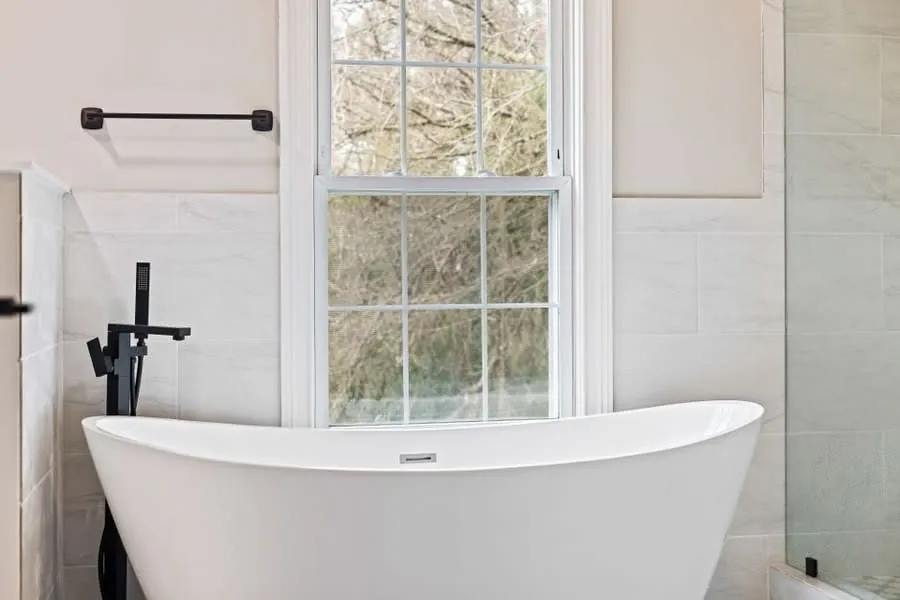
The house type tells us more on the first visit than any mood board. In Sidmouth the grand stock is the seafront: Fortfield Terrace, the Esplanade, and the villas climbing Cotmaton Road and up towards Peak Hill. These are tall, often narrow houses with high ceilings and rooms that were laid out long before anyone expected to plumb them. A bathroom tends to sit wherever someone could find a route for a soil pipe in about 1930, which is rarely where you would put it now.
Budleigh is a different shape. Big detached villas along Northview Road, Boucher Road and around Little Knowle, plenty of them former guest houses, with generous bedrooms that convert well into en-suites. The rooms are bigger, the ceilings lower than Sidmouth’s best, and the main limit tends to be the old pipework improvised under the floors rather than the walls.
In both towns we would rather spend an hour lifting boards than guess. It is the cheapest hour of any bathroom renovation we price, because what is under the floor decides where the bath, the WC and the shower can actually go. If you want the town-by-town detail first, our pages for Sidmouth and Budleigh Salterton cover the local stock in more depth.
Consents in Sidmouth and Budleigh: what East Devon District Council looks at
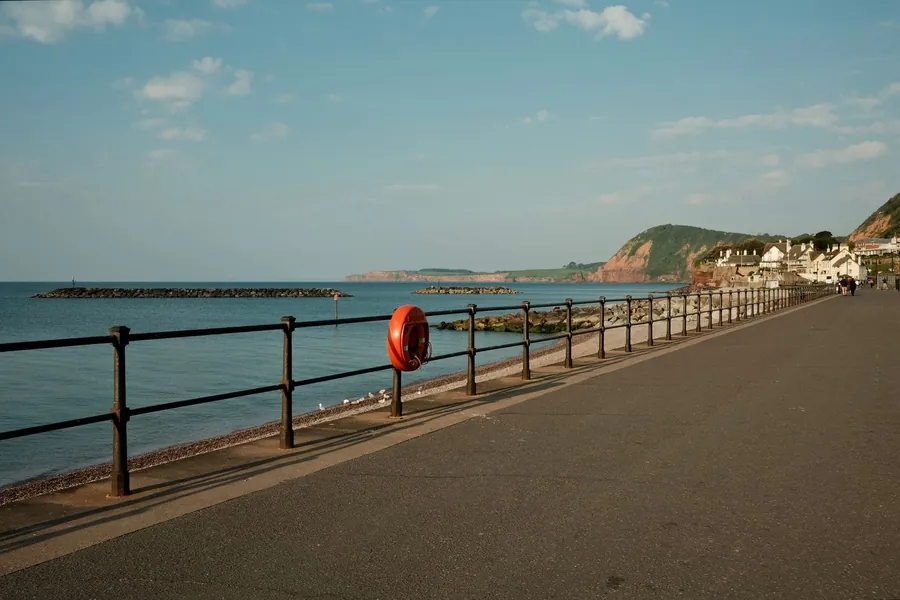
Planning here sits with East Devon District Council, at least until Devon’s councils are reorganised later this decade. People worry about consent more than they need to, and occasionally less than they should, so it helps to separate two things.
A conservation area mostly controls what you see from outside. Sidmouth’s Town Centre and Sid Vale areas date from 1970, Elysian Fields and Salcombe Regis from 1977, Bickwell Valley from 1978 and Sidford from 1981. Budleigh’s covers Marine Parade, the town centre and the terraces behind it. Inside an unlisted house in any of them, a new bathroom normally needs no consent at all. What can need thought is the outside: a new extractor terminal on a front elevation, a soil pipe run down a visible wall, or a change to a window.
Listing is the bigger deal. If the house is listed, the interior is protected as well as the facade, and moving a partition, cutting a new waste route through an old floor or removing a historic fireplace from a room you want to turn into an en-suite all need listed building consent first. Sidmouth has far more listed property than Budleigh, so a Sidmouth job is more likely to start with drawings and a conversation with the conservation officer before anything is ordered. Building regulations still apply either way for new drainage, electrics in the bathroom zones and ventilation.
Accessible luxury for the next twenty years
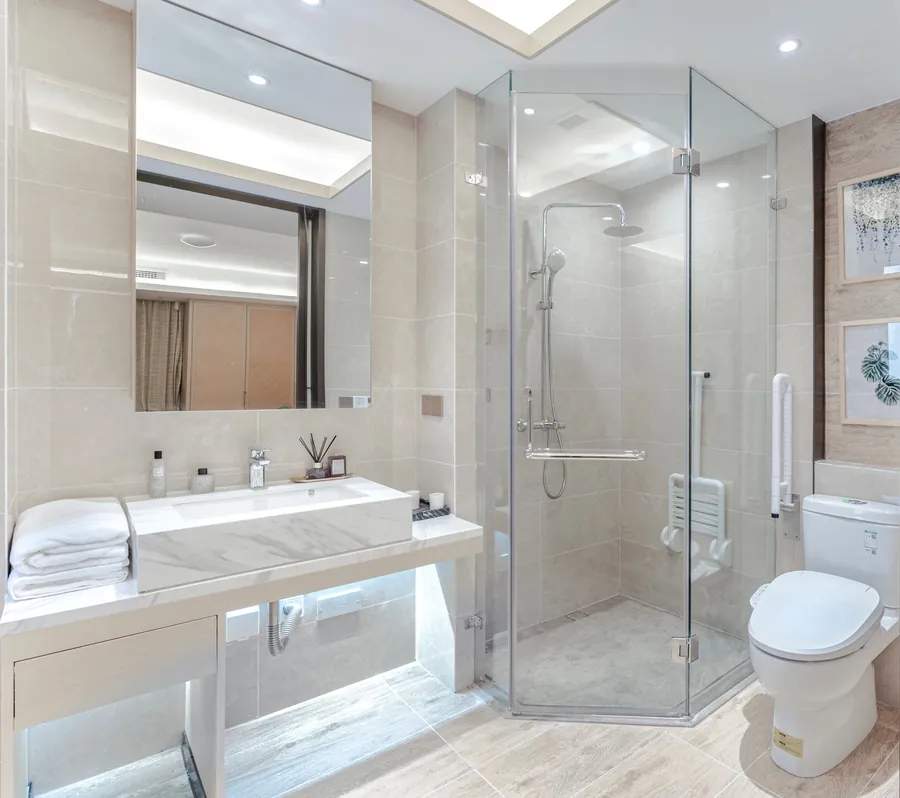
Plenty of people move to these towns at sixty-odd with the intention of staying for good. That changes the brief in a way the brochure photos never show. Nobody asks us for grab rails. They ask for a room that looks like a good hotel bathroom now and will still work if their knees or balance change in ten years.
Most of the answer is invisible. Timber or ply noggins fixed into the stud walls at the right heights, so a rail or a fold-down seat can be added later with no tile removed. A level-access shower floor rather than a stepped tray, which on a Victorian timber floor means dropping the deck between the joists. A WC set a little higher than standard. A thermostatic valve with a lever you can work with wet hands. Doors that open outwards, so nobody can be trapped behind one.
The government’s guidance on accessible and adaptable homes, Approved Document M, is written for new dwellings, but its standard for adaptable homes is a sensible benchmark for clear floor space and door widths in an existing house. We walked through the fittings in more detail in our guide to planning a bathroom for later life. Done well, none of it looks clinical. Done badly, it looks like a care home bolted onto a marble wall.
Second homes and the bathroom that sits empty
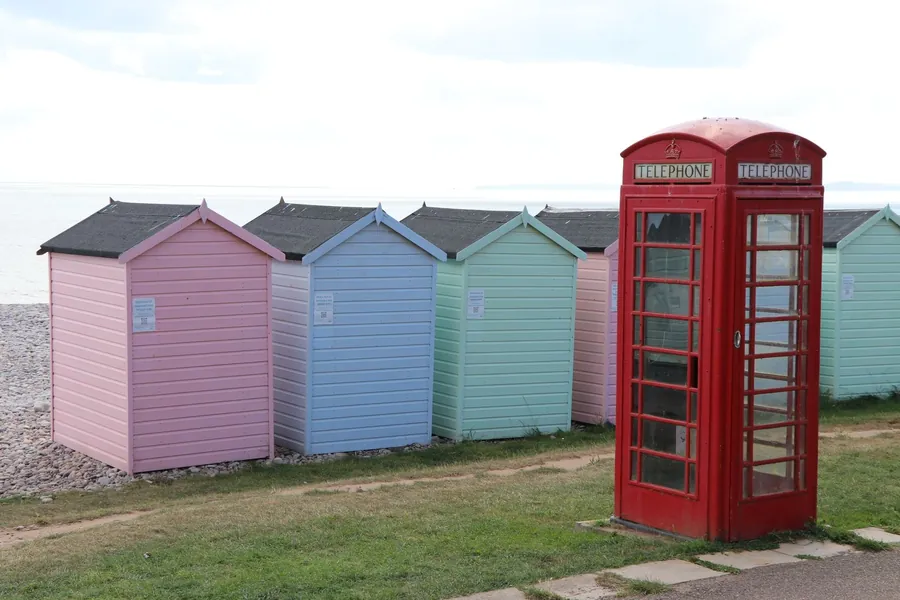
A share of the houses we see in both towns belong to people who live elsewhere for most of the year. That is a separate brief from a holiday let, which we covered in our post on holiday let bathrooms in East Devon. A second home bathroom gets light use from careful owners, and then nothing at all for weeks.
Empty weeks cause their own problems. Water sitting in a trap slowly evaporates, and once the seal goes, drain smells come straight back into the room. Pipes in an unheated house can freeze on the rare cold snap. A slow leak from a flexible hose can run for a month before anyone notices. So for an absentee owner we tend to specify isolation valves you can reach easily, a smart thermostat on the heating and the towel rail so the house can be kept above freezing from your phone, and a leak sensor or automatic shut-off valve on the incoming main.
The other practical point is running the job while you are not there. We agree key arrangements up front, send photographs at each stage, and plan the decisions that need you, such as tile set-out and the position of the valves, for days you can be on site or on a video call.
Narrow streets, no parking and a skip licence
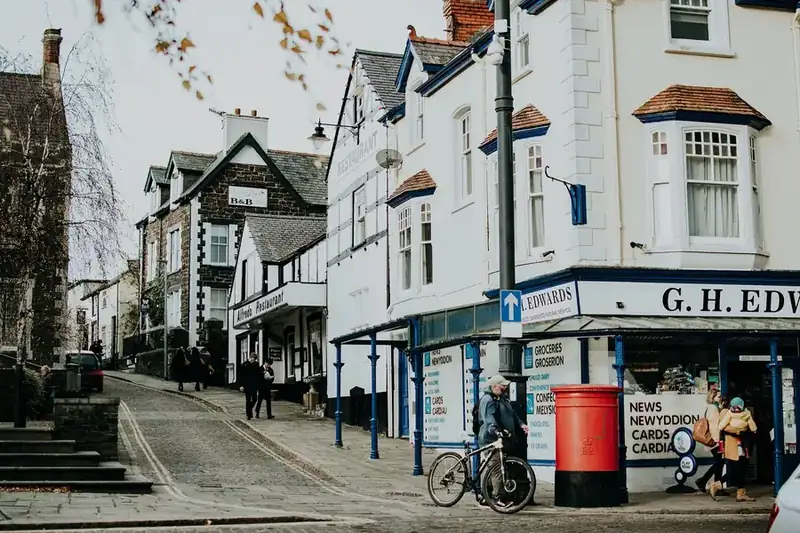
Sidmouth’s Old Fore Street and the lanes behind the seafront were not laid out for a builder’s van, and Budleigh’s town centre is not much roomier in summer. Access is a real line in the programme, and occasionally in the price.
Waste is the first thing to sort. A bathroom strip-out fills a skip quickly, and if the only place for it is the road, it needs a licence. Devon County Council handles these, not the district council, and the skip licence application has to come from the skip firm on your behalf. It costs £110.50, needs at least ten working days’ notice and lasts up to 28 days. Where there is a drive or a front garden, none of that applies. Where there is neither, we often skip the skip and run waste away in the van daily instead.
Materials are the second problem. A stone resin tray or a cast iron bath is heavy and awkward, and a three-storey Regency house with a winding staircase can mean planning the delivery route before the order goes in. Large-format porcelain and stone slabs are the same story. We measure the stairs on survey, not on delivery day.
Hard water from East Devon’s boreholes
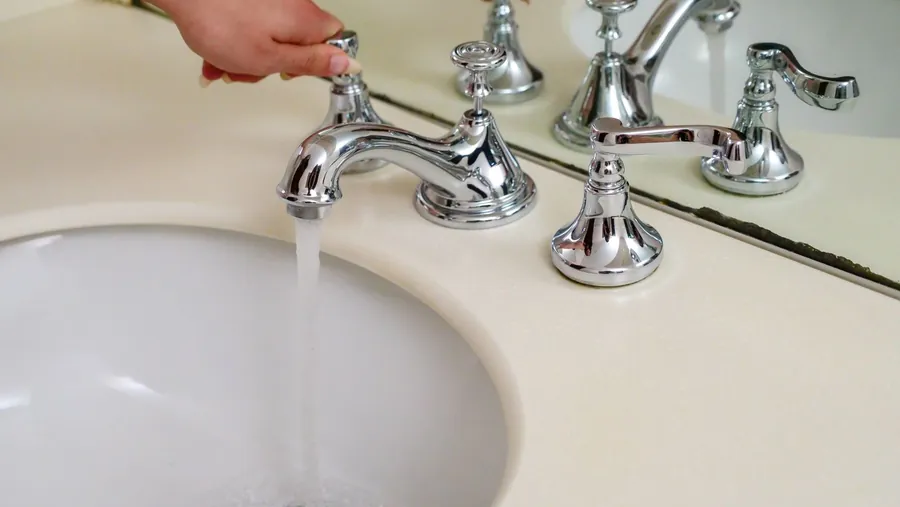
South West Water is unusually specific about this. Its hard water guidance says East Devon is the only area it supplies that is considered hard, because the water comes from underground through boreholes. Back in Exeter the supply is soft. In Sidmouth and Budleigh you will see the difference within a fortnight on clear glass and polished chrome.
That changes what is worth paying for. Factory-coated glass on the shower screen, which sheds droplets before they dry into white spots. Brassware with replaceable cartridges, because scale wears out the internals of a mixer long before the body. Brushed or satin finishes, which hide marks better than mirror polish. Shower heads with flexible rubber nozzles you can rub clean. And in a house where the whole spec is high, a water softener on the incoming supply, usually £900 to £1,800 fitted, protects the boiler and the heating as well as the bathroom. Keep one unsoftened tap in the kitchen for drinking water.
What a high-end bathroom costs in the two towns
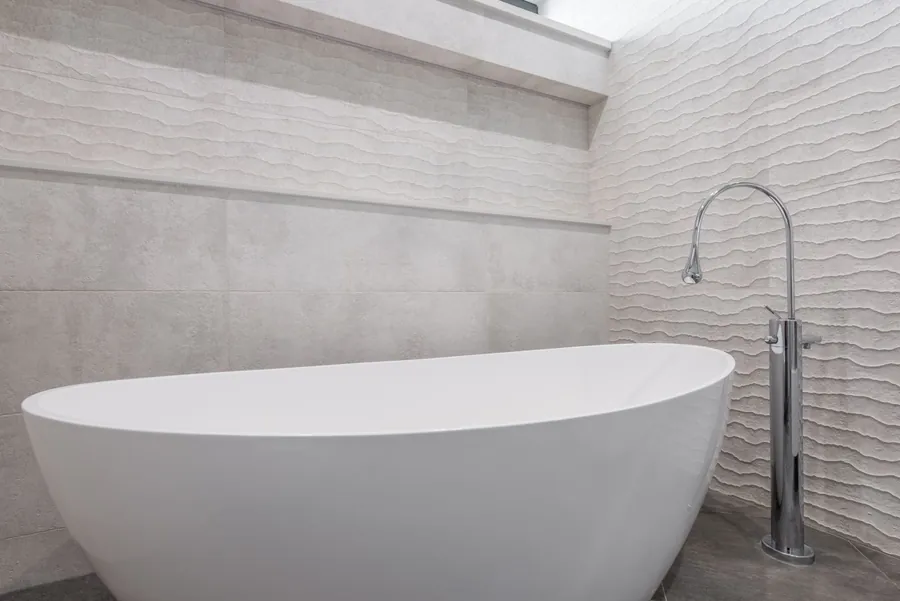
Our prices are the same along the coast as in the city, and our Exeter bathroom cost guide gives the three bands we work in: roughly £12,000 to £18,000 for a high-quality replacement in the same layout, £18,000 to £26,000 where the layout changes, and £26,000 to £35,000 or more for stone, bespoke joinery and larger rooms. All supplied and fitted, VAT included.
Where a Sidmouth or Budleigh job lands within those bands is fairly predictable. In Sidmouth the big variable is listing: drawings, a consent application and the slower methods a listed interior needs all add time, and time is most of the cost. In Budleigh it is size. A villa bedroom turned into an en-suite takes more tile, more underfloor heating and more days than a terrace bathroom, and people there are usually asking for level access too. A properly tanked level shower floor with concealed supports behind the tiles costs more than a raised tray, and it is the last line we would cut from a quote.
The smaller items are the softener and coated glass, which add a little at the start and save a lot of scrubbing, and the access costs, which rarely come to more than a few hundred pounds unless a delivery needs extra hands on the stairs.
We would also hold back around ten per cent as a contingency on any house of this age, because the floor and the old pipework only show what they are hiding once the room is stripped.
Common questions
Do I need planning permission for a new bathroom in Sidmouth or Budleigh Salterton?
Usually not for the bathroom itself. Being in a conservation area mainly affects outside changes, such as a new vent on a front wall or a visible soil pipe. If the house is listed, though, internal changes like moving walls or cutting new waste routes need listed building consent from East Devon District Council before work starts.
Is the water in Sidmouth and Budleigh Salterton hard?
Yes. South West Water says East Devon is the only part of its area with hard water, because it comes from boreholes. That makes coated shower glass, replaceable tap cartridges and a water softener worth considering in both towns.
Do I need a skip licence for a bathroom renovation in Sidmouth?
Only if the skip goes on the road or pavement. Devon County Council issues the licence, the skip firm applies for you, and it needs at least ten working days’ notice. A skip on your own drive or garden needs no licence.
Can a luxury bathroom also be accessible?
Yes, and in these towns it is often the brief. Level-access showers, hidden wall reinforcement for future rails and seats, thermostatic controls and outward-opening doors can all be built into a high-end design without looking clinical.
How much does a luxury bathroom cost in Budleigh Salterton?
Our bands run from about £12,000 for a high-quality like-for-like replacement to £35,000 or more for stone and bespoke joinery, supplied and fitted with VAT. Budleigh projects often sit towards the upper end because the villa rooms are larger and level-access showering is a common request.
Book a free survey for your Sidmouth or Budleigh Salterton bathroom