
The Best Flooring For A Bathroom
Luxury Bathrooms Exeter
There is a lot of confident advice about bathroom flooring online, and much of it skips the one thing that matters most: a bathroom floor lives with water, warmth and, in a wet room, a genuine soaking. A material that is perfect in a hallway can be a slow disaster in a shower room, and the differences between the options are practical rather than aesthetic.
Before any of the choices, one correction that sits under all of them. No floor finish waterproofs a wet area by itself. Tile, microcement, vinyl, whatever you choose, the waterproofing is a separate tanking layer underneath, and the finish sits on top of it. Plenty of problems we are called to fix come from someone treating a water-resistant surface as if it were a waterproof floor. Get that clear and the rest of the decision is about how each material actually behaves.
So here is an honest run through the real options for a bathroom in Exeter, what each is like to live with, and the two technical points, slip and heating, that decide more than the look does.
Porcelain and ceramic tile: the default for good reason
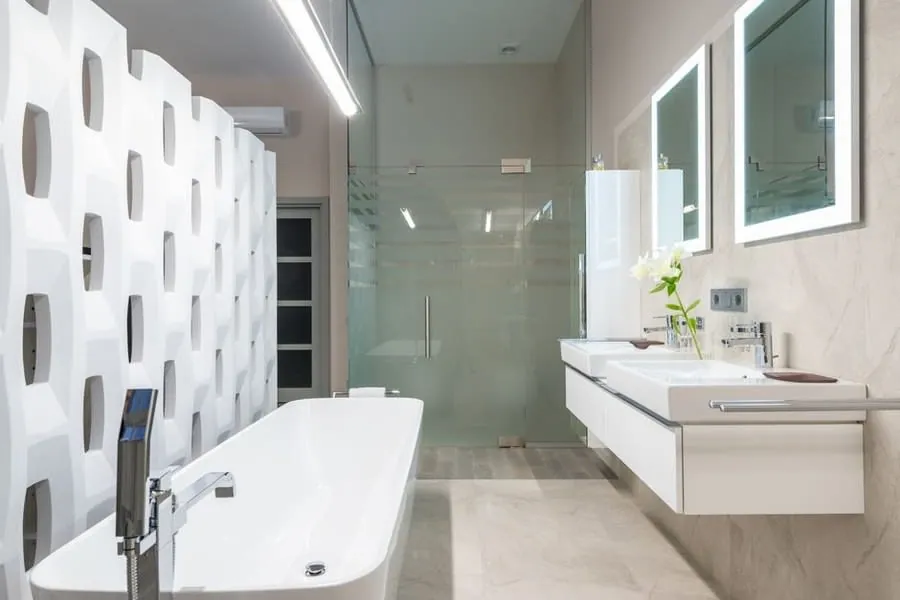
Porcelain is the most common bathroom floor for sound reasons. It absorbs almost no water, under half a per cent by the standard that defines it, so it does not stain from the back, does not swell, and shrugs off a wet floor indefinitely. It is hard, it lasts decades, and it now imitates stone, concrete and wood convincingly enough that many people cannot tell.
Ceramic is porcelain’s softer cousin, higher in water absorption, and it belongs on walls rather than floors in a bathroom. It is lighter and cheaper and cuts more easily, which makes it a sensible wall tile, but it is not the floor material.
The honest drawbacks of porcelain are two. It is cold underfoot without underfloor heating, which in a Devon winter is noticeable, and it is unforgiving if you drop something breakable. The first is solved by heating the floor, which we would usually recommend anyway. Neither is a reason not to use it, which is why it remains the default.
Natural stone: beautiful, and a commitment
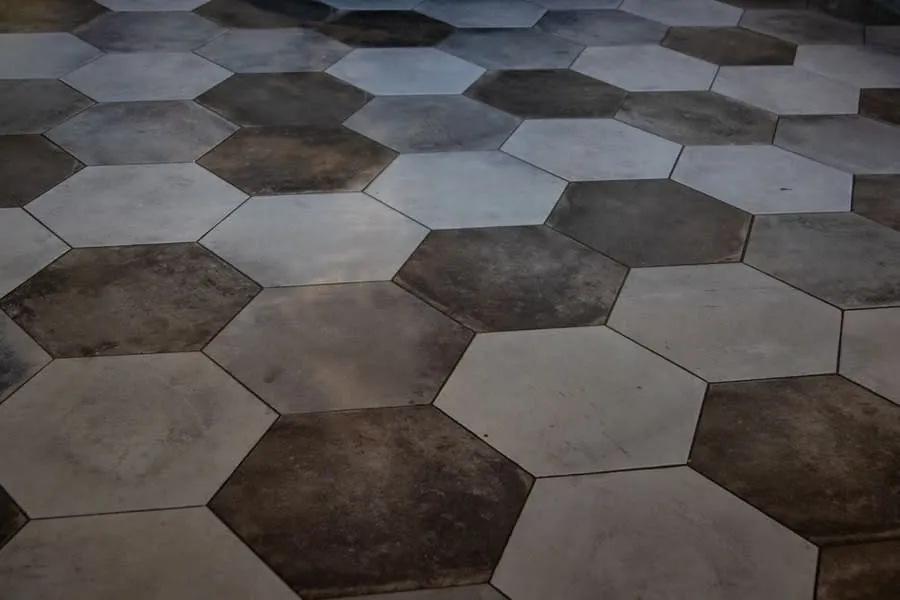
Marble, limestone and travertine have a depth that no printed surface quite matches, and in the right bathroom they are worth every penny. But they are porous by nature, and that changes what owning them involves.
Stone needs sealing when it goes down and resealing periodically after that, and it will etch if anything acidic sits on it, which includes some ordinary bathroom cleaners. On a floor it also has to be the right stone for the job: some limestones are too soft for a floor that takes daily traffic, and honed finishes grip better underfoot than polished ones. None of this makes stone a bad choice. It makes it a choice with a maintenance commitment attached, and the only real question is whether you will keep it up. If a natural material with genuine character matters to you and you will look after it, stone is superb. If the upkeep sounds like a chore, a good porcelain that looks like stone is no compromise at all.
Luxury vinyl: warmer, softer, genuinely waterproof
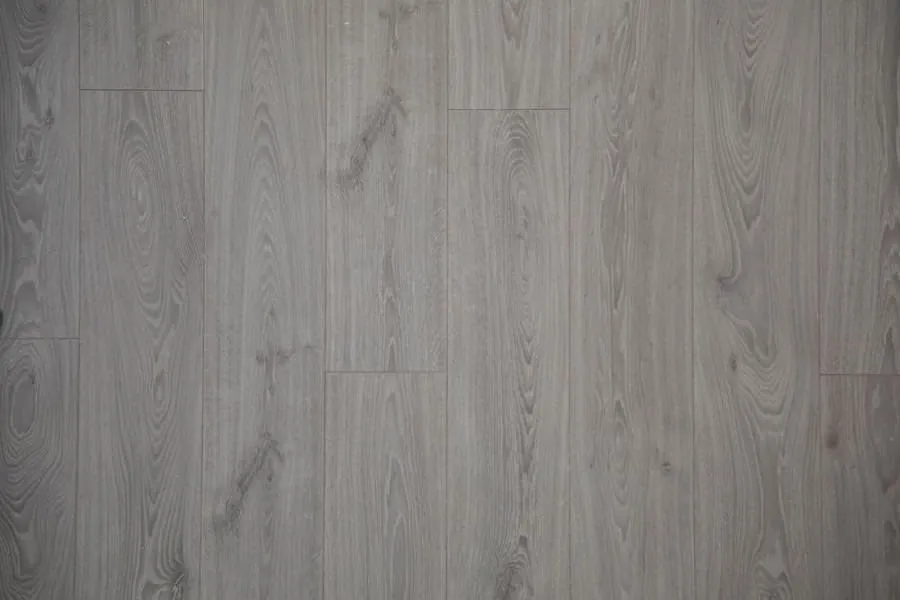
Luxury vinyl tile, usually shortened to LVT, has come a long way from the sheet vinyl people remember, and for a bathroom it has real strengths. The better products, particularly those with a rigid stone-composite core, are fully waterproof, warmer and softer underfoot than tile, quieter to walk on, and comfortable to stand on cold mornings without heating. Good ones convince as wood or stone from standing height.
It is the practical, cost-effective choice, and it suits a family bathroom or a busy household well. It is compatible with underfloor heating within the manufacturer’s temperature limits, which matter and should be checked, because vinyl has a maximum surface temperature that a tile does not.
The honest limitations: it is softer than tile, so a very heavy dropped object can dent it, and while the plank surface is waterproof, the joints and the perimeter still need to be detailed properly in a genuinely wet area so water cannot get underneath. It is not the material for the floor of a walk-in wet room where water lands directly and constantly. For a standard bathroom with a shower enclosure or a bath, it is an excellent and underrated option.
Wood: lovely in the wrong room
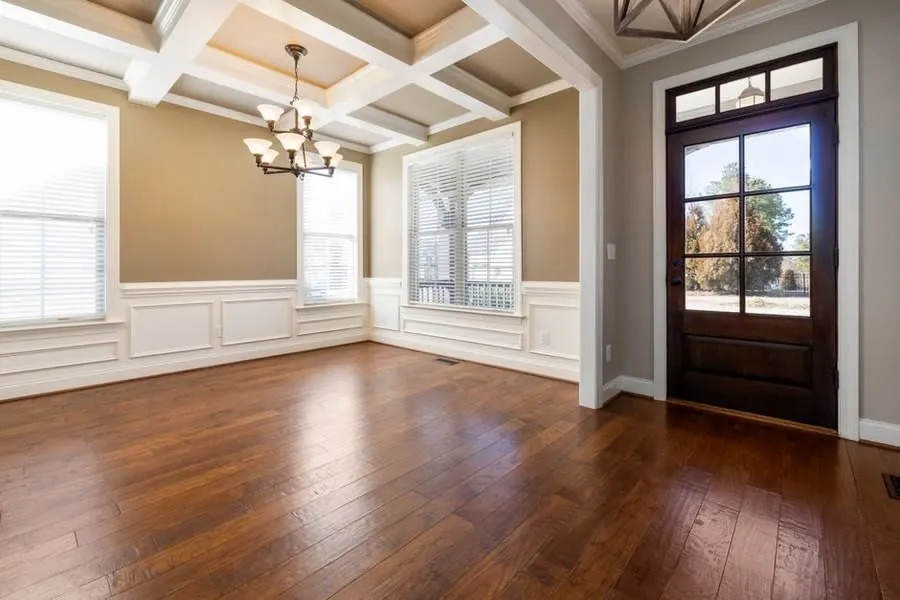
This is the one where we most often talk people out of their first instinct, gently, because real wood in a bathroom is a genuine risk.
Solid wood and water are a poor match: timber swells, cups and stains when it takes on moisture, and a bathroom is the wettest room in the house. Engineered wood, which is a real wood veneer over a stable plywood core, copes better than solid, but it is still not waterproof. It can work in a well-ventilated bathroom with a bath rather than a walk-in shower, provided every edge and joint is meticulously sealed and it never sits in standing water, but that is a lot of conditions, and one failed seal or one overflow undoes it.
Our honest advice is usually this: if you love the look of wood in a bathroom, use a convincing wood-effect porcelain or a wood-effect luxury vinyl instead. You get the warmth of the look without betting the floor on the sealing being perfect forever. Genuine wood belongs in a bedroom or a study, not over a bathroom’s moisture.
Microcement: continuous, premium, and widely misunderstood
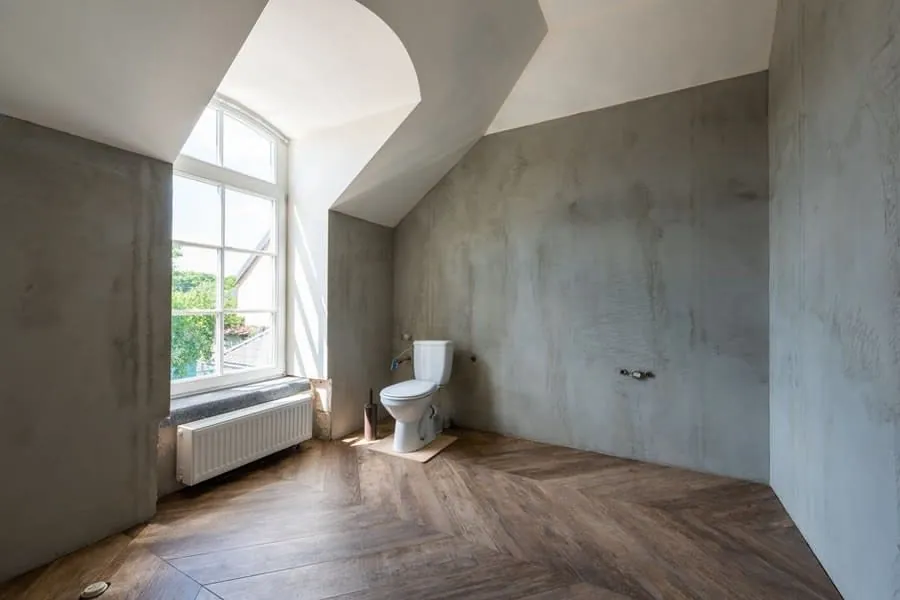
Microcement is a thin cement-based coating, applied and sealed to give a continuous, grout-free, faintly industrial finish that runs unbroken up walls and across floors. When it is right, it is one of the most striking finishes there is. And with no grout lines, it is beautifully easy to keep clean.
Here is the point that catches people out, and it is the same one from the top of this article. A sealed microcement surface is water-resistant, but it is not what makes the bathroom waterproof. In a shower or wet room, the tanking underneath is the waterproof layer, and the microcement is the finish on top of it. Any wet area has to be properly tanked before the microcement goes on, exactly as it would be under tile. Treat the microcement itself as the waterproofing and you will have a problem, which is why the quality of the installation matters even more than usual.
Done properly, over a correctly tanked and prepared substrate, it is a genuinely premium floor. Done as a coat of finish over an unprepared floor, it is a callback waiting to happen. It is not a material to have applied by someone doing their first one.
The two things that decide more than the look
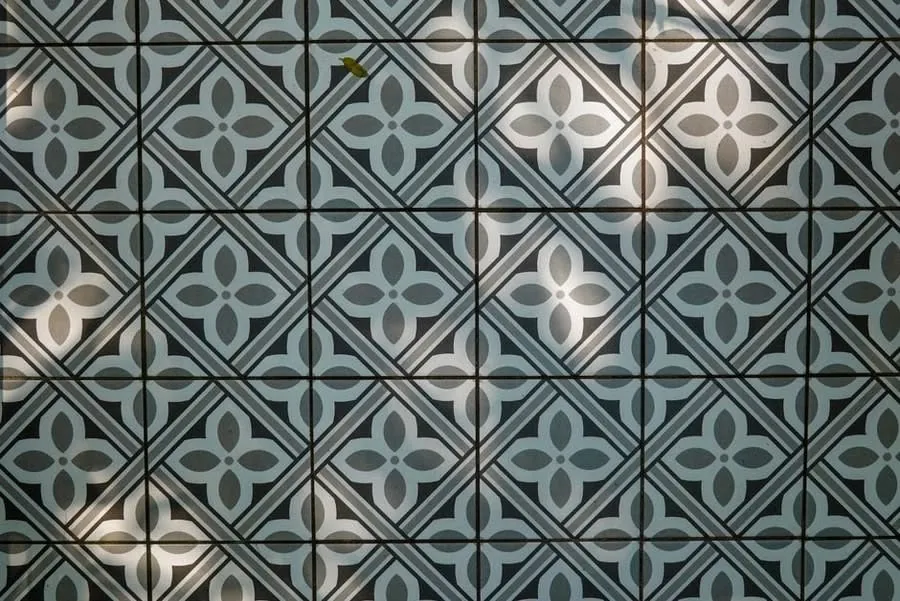
Whichever material you lean toward, two technical questions matter more than the finish, and both are easy to get wrong.
The first is slip resistance, and there is a genuine trap in how it is sold. The R-rating most retailers quote is a test done in boots on oil, which is a shod-area workplace test. The one that matters for a bathroom is the barefoot classification, and for a wet floor you want the barefoot class rated for wet areas rather than the R number. We went into exactly how to read this in our guide to choosing bathroom tiles, and the HSE’s own guidance on slip resistance is the authority behind it. A beautiful floor that is treacherous wet is not a good floor.
The second is heating, because it changes which materials make sense. Tile and stone are the ideal partners for underfloor heating, since their density stores and radiates the warmth well. Vinyl works within temperature limits. Wood is the awkward one, because the heat cycling makes its moisture problems worse. We covered the whole heating decision in our article on whether underfloor heating is worth it.
Older Exeter floors change the answer

There is a local layer to all of this, and it is about what your floor is built on rather than what goes on top.
Most of Exeter’s period stock, the Victorian and Edwardian terraces of Heavitree, St Leonard’s and St Thomas, has suspended timber floors upstairs. Those floors flex, and a rigid finish like tile or microcement laid over a floor that moves will crack, not because the material failed but because the substrate did. The fix is to stiffen the floor first, adding noggins or a rigid overlay, so the surface has something solid to sit on. A floor that was not prepared is the commonest reason tiling cracks in an older house.
Out toward Crediton and the Exe valley, where cob and solid-walled construction is common, there is a further consideration on a ground floor. These buildings manage moisture by letting it move, and an impermeable floor build-up over a solid earth floor can push ground moisture out to the base of the walls, where in a cob building it does real harm. The compatible answer is a breathable build-up, a subject the SPAB’s guidance on historic floors covers well, though it is written for churches so it is directionally right rather than directly about houses. The short version: in a traditional building, the floor build-up is a specialist decision, not a standard one.
Common questions
What is the most waterproof bathroom flooring?
Porcelain tile and a rigid-core luxury vinyl are both effectively waterproof as surfaces. But the honest answer is that the surface is not what keeps a wet area dry: the tanking layer beneath it is. For a normal bathroom the surface matters most; for a wet room, the tanking underneath matters more than which finish sits on top.
Can I put wood flooring in a bathroom?
Solid wood, we would advise against, because it swells and stains with moisture. Engineered wood can work in a well-ventilated bathroom with a bath rather than a walk-in shower, if every edge is sealed and it never sits in water, but it is a risk. For the look of wood without the gamble, a wood-effect porcelain or luxury vinyl is the sensible choice.
Is vinyl flooring any good in a bathroom?
Yes, better than its reputation. A good rigid-core luxury vinyl is waterproof, warm and soft underfoot, quiet, and cost-effective, and it suits a family bathroom well. The limits are that it dents more easily than tile and that its edges must be detailed properly in wet areas. It is not for the floor of a walk-in wet room, but for most bathrooms it is excellent.
Is microcement waterproof?
The sealed surface is water-resistant, but microcement does not make a bathroom waterproof on its own. In a shower or wet room the tanking underneath is the waterproof layer, and the wet area must be properly tanked before the microcement is applied. Installed correctly over a prepared, tanked substrate it is a premium floor; treated as the waterproofing itself, it will fail.
What flooring is best with underfloor heating?
Tile and natural stone, because their density stores and radiates the heat efficiently. Luxury vinyl works within the manufacturer’s temperature limit, which should be checked. Wood is the poor partner, because the heat cycling aggravates its moisture problems. If you are heating the floor, tile or stone gets the most out of it.