
How To Choose Bathroom Tiles
Luxury Bathrooms Exeter
Most people choose bathroom tiles the way they choose a paint colour, which is to say visually and last. Then a slip rating gets mentioned somewhere near the checkout, everyone nods at the letter R and a number, and the decision is made.
Here is the problem with that. The R-rating almost every tile retailer quotes is measured with a person in cleated safety boots walking on motor oil. It is a workplace test for shod areas. It tells you very little about a barefoot person stepping out of a shower, which is the only scenario that matters in a bathroom, and there is a completely separate test for that which hardly anybody mentions.
That is the most useful thing in this article, so it gets its own section below. The rest covers what porcelain actually means as a technical term, why format changes a room more than colour does, and why the right tile in Exeter is not always the right tile twelve miles away in Sidmouth.
Start with the floor, then work up
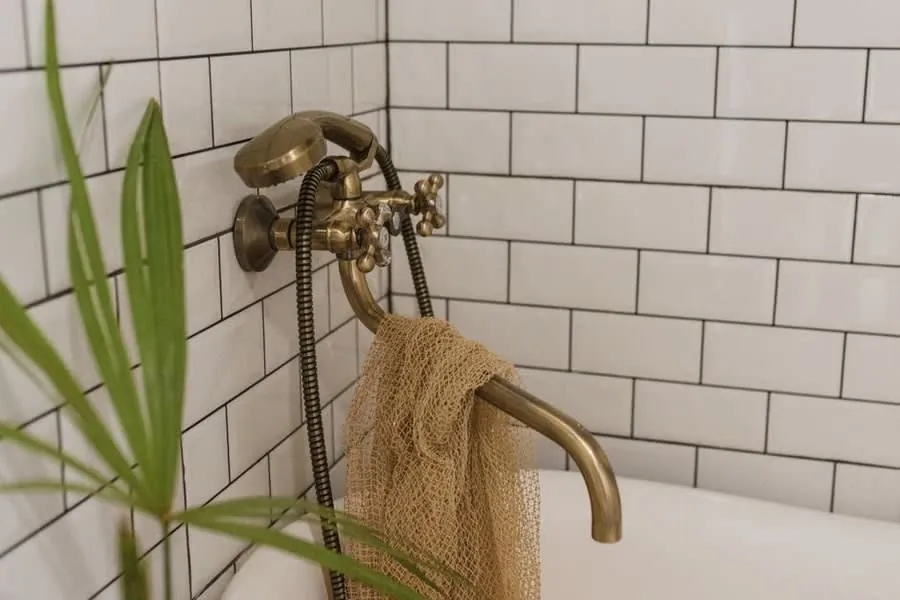
The floor is the constrained decision. It has to be safe wet, it has to survive point loads, and in a wet room it has to work with falls and a drain. The walls are almost unconstrained by comparison, so choosing the wall tile first and then hunting for a floor that matches is doing it in the difficult order.
Pick the floor on performance, then choose walls that sit with it. If you want one continuous surface, the same tile can often run floor to wall provided the floor version has the right slip performance, and that continuity does more for a small room than any other single choice. Our bathroom tiling page covers how the set-out is then planned around it.
A note on porcelain before anything else, because the word is doing more work in marketing than it is in engineering. Porcelain is a water-absorption class, not a quality grade and definitely not a slip grade. Under BS EN 14411 the dry-pressed group BIa is defined as water absorption of 0.5% or less. BIb is 0.5% to 3%, group II runs 3% to 10%, and group III is above 10%. That is the whole meaning of the word. A porcelain tile can be lethally slippery when wet and still be porcelain.
What the labels on the box actually tell you
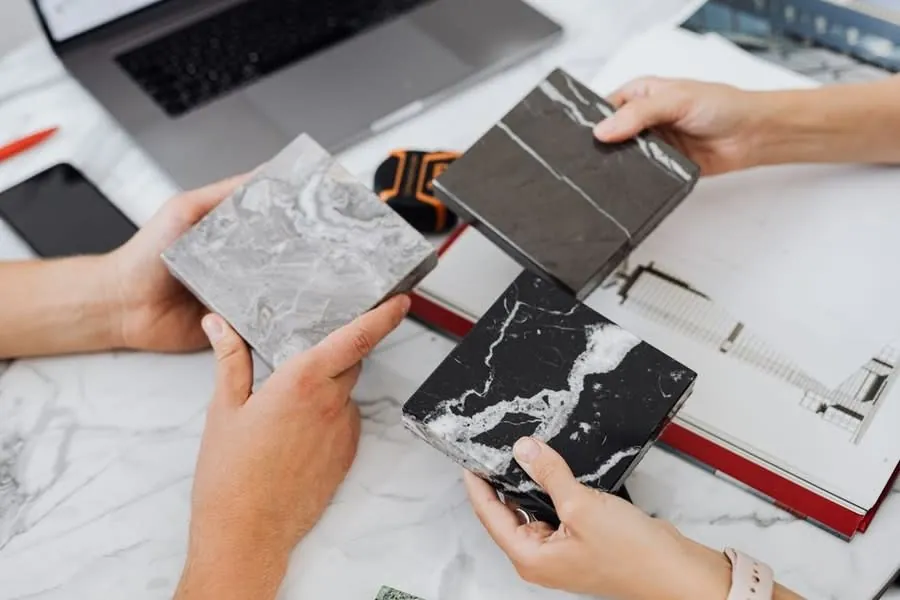
Low water absorption is genuinely useful. It means the tile will not soak up water, will not stain readily from the back, and is frost resistant, which matters if it continues out to a threshold. It is why porcelain has largely displaced ceramic on bathroom floors.
Natural stone is the opposite proposition and it is worth being clear-eyed about. Marble, limestone and travertine are porous by nature. They need sealing, they need resealing periodically, and they will etch if anything acidic sits on them, which includes some perfectly ordinary bathroom cleaners. None of that makes them a bad choice. It makes them a choice with a maintenance commitment attached, and the honest question is whether you will actually do it.
Ceramic is not a lesser material, it is a different one. It has higher absorption, so it belongs on walls rather than floors in a bathroom, and it is often the better answer for a wall because it is lighter, easier to cut cleanly and considerably cheaper. Spending the budget on the floor and the shower walls, and using good ceramic elsewhere, is a more sensible allocation than spreading porcelain evenly across every surface.
The slip rating you are being shown is probably the wrong one

This is the section worth reading twice.
There are two different ramp tests and they measure different things. The R-rating everybody quotes, R9 through R13, comes from DIN 51130. In that test an operator walks an inclined ramp wearing heavily cleated safety boots, with motor oil as the contaminant. The classes correspond to the angle reached: R9 is 6 to 10 degrees, R10 is 10 to 19, R11 is 19 to 27, R12 is 27 to 35, and R13 is beyond 35.
The barefoot test is DIN 51097, and it uses barefoot operators with a soap solution. Its classes are letters, not R numbers. Class A is 12 to 17 degrees, class B is 18 to 23, and class C is above 24. In practice A covers barefoot areas that are mainly dry, B covers showers and wet areas, and C covers steps and ladders into water.
So for a bathroom floor, the letter is the relevant classification and the R number is the wrong test. If a retailer can only tell you the R-rating, they are quoting you a figure generated in safety boots on motor oil.
Two further things the HSE’s own guidance on assessing the slip resistance of flooring says, which the tile trade rarely passes on. The HSE has reservations about both ramp tests, noting the contaminants are not representative and that the classification schemes have “led to some confusion, sometimes resulting in the wrong floor surfaces being installed”. And it states plainly that surfaces classified A, and in many instances B, will be slippery when wet.
The more rigorous measure is the pendulum test, which produces a Pendulum Test Value. The HSE bands are straightforward: 0 to 24 is high slip potential, 25 to 35 is moderate, and 36 or above is low. The critical detail is that the number only means something in the condition you tested. Almost any tile passes dry. For a bathroom you want PTV 36 or above measured wet, and specifically measured with the Slider 55 rubber, which is the barefoot slider. Slider 96 is for shod areas. A supplier who can give you a wet PTV on Slider 55 is a supplier who has genuinely thought about it.
One currency point, because a lot of published tile advice is now out of date. BS 7976 and both DIN ramp standards were superseded in December 2021 by BS EN 16165, which gathers the barefoot ramp, the shod ramp and the pendulum into one standard as annexes. The R and A/B/C labels have survived commercially and everyone still uses them, so they remain useful shorthand. They are just no longer the live standards they are usually presented as.
And the honest caveat: none of this is a legal requirement in a private home. These are workplace and public-building instruments. Approved Document M does require slip-resistant bathroom floors, but its second volume applies to buildings other than dwellings, so it does not reach your house. Specifying a barefoot-rated floor in a domestic bathroom is best practice rather than compliance. We think it is worth doing anyway, particularly given how much of our work is in East Devon, where the median age in some towns is over 60.
Format changes a room more than colour does
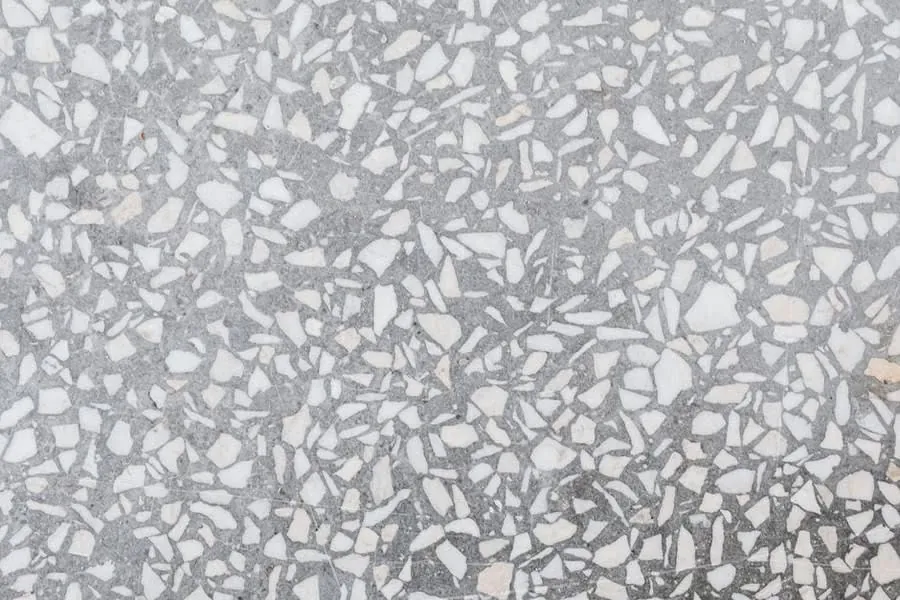
People agonise over shade and barely consider size, which is backwards. Grout lines are what the eye reads as boundaries, so the number of them does more to set the perceived scale of a room than the colour of the tile between them.
Large format is why small bathrooms have changed so much in the last decade. Fewer interruptions, a surface that reads as continuous, and less grout to discolour. The trade-off is real though: a large rigid tile cannot follow an uneven wall, so any deviation shows as lipping between tiles. In a Victorian terrace with lath and plaster or a wavy solid wall, that means boarding and levelling first. It is a genuine cost and it is one of the things that separates a cheap quote from a complete one.
Small formats still have their place. Mosaic remains the sensible answer on a shower floor with falls in two directions, because the sheet can follow a curved plane in a way a 600mm tile cannot, and all those grout lines add grip exactly where you want it. Metro and other small wall tiles suit period property and cost less to cut around awkward features.
Set-out is decided before you order, not after
Here is the part that catches people out commercially rather than aesthetically: the arrangement of the tiles determines how many you need, so it has to be settled before you place the order.
Two rooms of identical area can need different quantities of the same tile. A layout planned around the sightlines will generate different cuts, and different waste, from one started arbitrarily in a corner. Change the plan after ordering and you can find yourself a box short, which is a problem because tile is manufactured in batches and shade varies between them. A replacement box ordered three weeks later may not match the ones on your wall.
The stakes rise sharply with natural stone. Book-matched slabs are cut in sequence to produce a mirrored veining pattern, and they only work in the order and orientation they were cut in. Reorder that and the effect is lost. There is no ordering more of it either, because the next slab came out of a different part of the block.
So the sequence is: measure, plan the layout, then order against that plan with a proper allowance on top. Doing it the other way round is how people end up with a beautiful tile arranged badly, which is a much more expensive mistake than a cheap tile arranged well.
How your water will treat the tile
This is where a national tile guide stops being useful and local knowledge starts.
South West Water classes almost all of its supply region as soft or moderately soft. Exeter’s water is surface water off Exmoor and the Exe. East Devon is the exception: Exmouth, Sidmouth, Budleigh Salterton and Honiton draw from boreholes through the Triassic sandstone of the Otter Valley, and that water is genuinely hard.
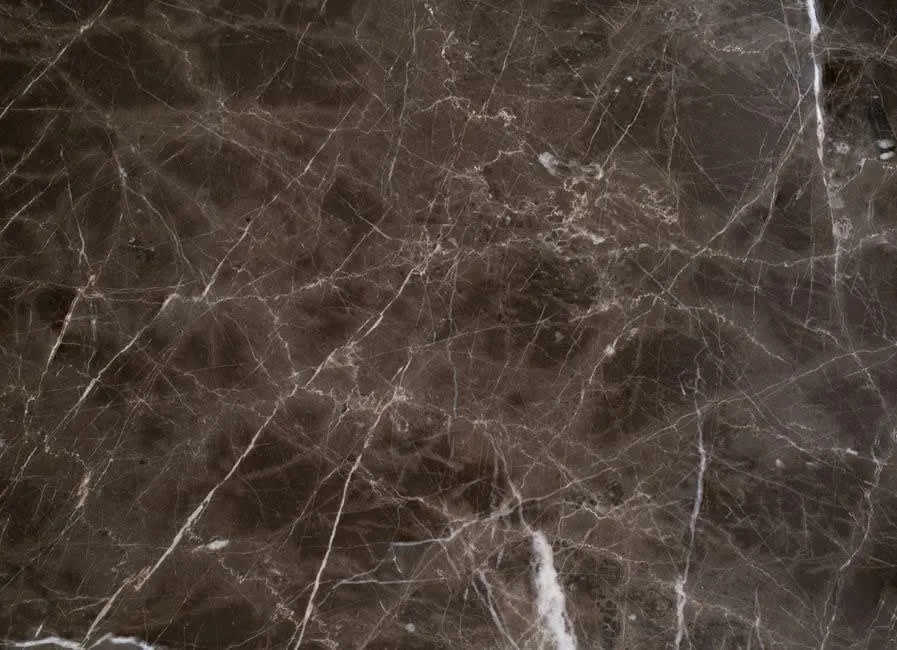
The consequence for tile is straightforward and it catches people out. In the hard-water towns, dark polished surfaces show every dried droplet, and a large dark marble wall in a Sidmouth shower will need wiping after most uses to look the way it did in the showroom. Honed finishes and mid-tones are far more forgiving. In Exeter, Topsham, Exminster, Crediton and Newton Abbot that constraint largely disappears and dark polished stone is a much easier thing to live with.
Nobody is going to tell you this in a national showroom, and it is the single most common reason a client is disappointed with a finish they genuinely chose well.
What we would actually specify
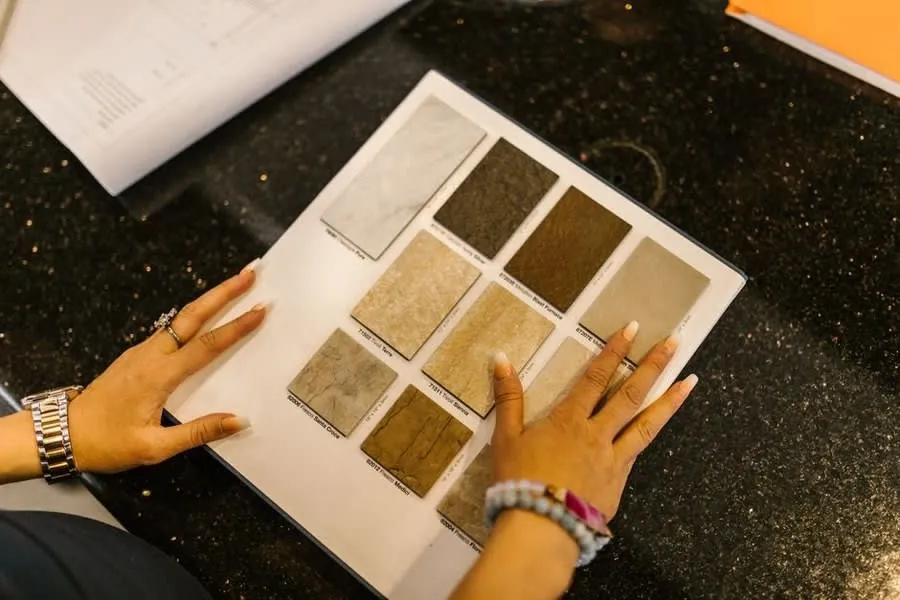
For a family bathroom floor: large-format porcelain with a barefoot classification of B, in a honed or textured finish rather than polished. Ideally a wet PTV of 36 or above on Slider 55, and if a supplier offers 40 plus, better again, because it absorbs the variation between one tile and the next.
For a shower floor or wet room: mosaic or a small format, because it follows falls properly, and class B as a minimum. Class C exists but it is designed for steps into water and is unpleasantly rough underfoot in a domestic shower.
For walls: whatever you like, within reason. Slip is irrelevant, so this is where natural stone earns its keep and where a beautiful ceramic is a perfectly good decision.
And for anywhere in the four hard-water East Devon towns: think hard before specifying large-format dark polished stone, and take a sample home to see it in your own light before committing. Devon light is flat and overcast for a good part of the year, and a tile chosen under showroom spotlights can look like a different material on your wall. If you want the wider picture on how tile choice sits within a whole project budget, our guide to bathroom costs in Exeter breaks it down.
Common questions
Can I use the same tile on the floor and the walls?
Often yes, and it is one of the most effective things you can do in a small room. The condition is that the floor version has adequate barefoot slip performance. Many ranges offer the same appearance in both a polished wall finish and a textured floor finish, which gives you visual continuity without putting a polished tile where you stand wet.
Is natural stone a bad idea in a bathroom?
Not bad, but it is a commitment. It needs sealing, resealing and non-acidic cleaning, and it will mark if neglected. If that sounds like a chore, current stone-effect porcelains are genuinely excellent and we will not think less of the choice. If you want the depth that only real stone has, we will tell you exactly what looking after it involves first.
What slip rating should I actually ask for?
Ask for the barefoot classification, not the R-rating, and aim for class B on any floor that gets wet. If the supplier can also give you a wet Pendulum Test Value measured on Slider 55, aim for 36 or above. If they can only quote an R number, they are giving you a shod-area figure.
Does underfloor heating affect the tile choice?
It affects the adhesive and the movement joints more than the tile. Flexible adhesive is essential, perimeter movement joints have to be respected rather than grouted over, and the heating must be commissioned and then left off until the adhesive has fully cured. Natural stone works well over underfloor heating because of its thermal mass.
How much extra should I order?
Ten per cent over the measured area as standard, and fifteen for a diagonal or herringbone layout because the cuts waste more. Order it all in one go so it comes from the same batch, and keep the offcuts. Matching a discontinued tile three years after a leak is a genuinely miserable exercise.