
Steam Showers And Spa Bathrooms: What They Actually Involve
Luxury Bathrooms Exeter
Ask ten people in Exeter what a spa bathroom is and you will get ten answers, most of which describe a mood rather than a specification. That is the root of nearly every disappointing spa project we get called in to correct. Somebody bought the fittings that appear in the photographs - the ceiling shower head, the row of body jets, the bench - without anyone checking whether the house could supply them. A wall of body jets can want 20 litres a minute or more, while South West Water only guarantees a pressure of seven metres static head at your boundary, which is 0.7 bar. A steam generator wants its own circuit and a ceiling built to shed water. Get the order right and this is some of the most rewarding work we do. Get it wrong and you have an expensive shower that runs cold.
The short version first, in well under a minute:
Three different things go by the same name
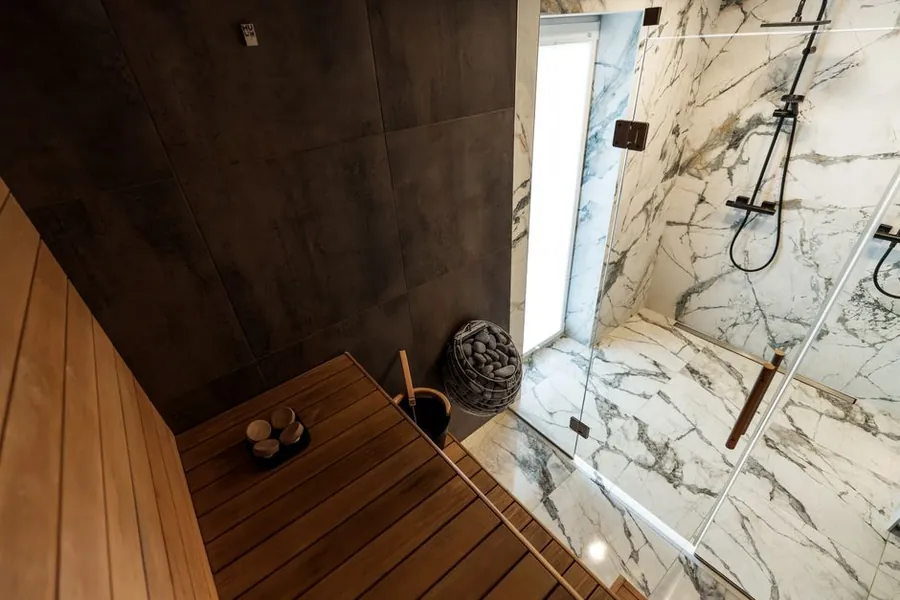
Before anything can be priced, the brief needs splitting into its parts, because they have almost nothing in common technically.
The first is a genuine steam room: a sealed, tanked enclosure fed by a generator, running at roughly 45 degrees and total humidity, with a sloped ceiling and a door that shuts properly. The second is a high-performance shower - multiple outlets, a drencher, body jets, sometimes a hand shower on the same valve - which is a plumbing and hot water problem rather than a building one. The third is atmosphere: warm floors, lighting that drops to something low and indirect, sound, storage that hides everything, a bench you can actually sit on.
Most people who ask us for a spa bathroom want the third, would enjoy the second, and have not thought hard about the first. The three cost wildly different amounts and involve different trades, so we separate them on day one of a bathroom design rather than letting them blur into a single line on a quote.
A steam room is a small building, not an appliance
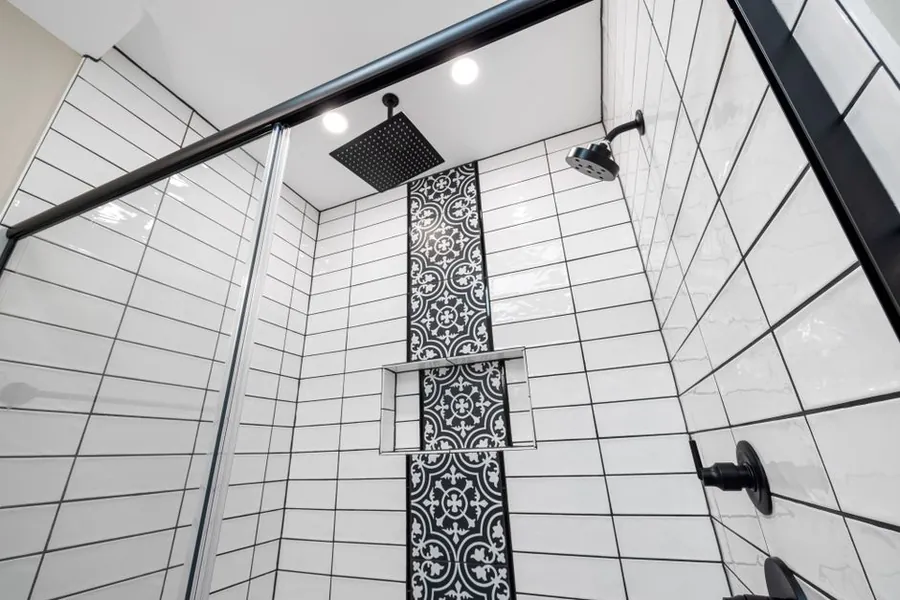
The generator is the cheap bit, which surprises most people. The enclosure around it is where the money and the skill go, because you are building something that spends half an hour at a time saturated.
Every surface has to be tanked, not just the lower walls, and the tanking has to be continuous over the ceiling. Standard plasterboard has no business in there. We build on tile backer board over a fully bonded membrane, and we detail the corners and the ceiling junction as though the room will be underwater, because in vapour terms it will be. The ceiling gets a fall of roughly one in twenty towards a wall so condensate runs off rather than dropping on the person underneath, which is the single most common complaint about steam rooms built by people who have not built one before.
Then there is the enclosure itself. Glass to the floor, a door that seals along its full length, no gap over the top, and a ceiling height kept low - around 2.1 to 2.4 metres. Steam collects at the top of a room, so a generous Victorian ceiling is actively unhelpful and you end up heating a metre of air nobody stands in. The bench needs to be built and tiled as part of the structure, sloped slightly for drainage, and warm to sit on, which usually means it is built over the same substrate rather than bought in.
Where the generator lives, and what it needs
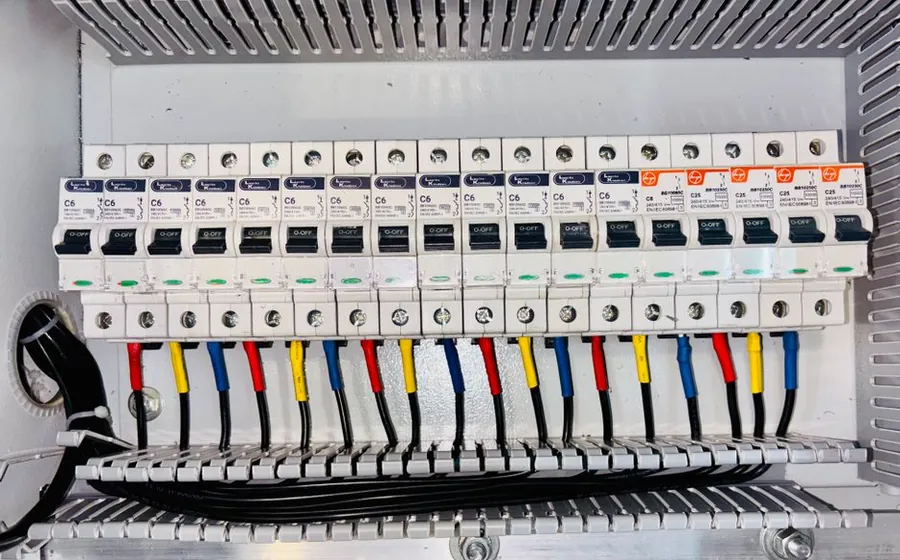
A domestic generator for a room of three to six cubic metres is usually somewhere between 6 and 9 kilowatts. It is roughly the size of a small suitcase, it needs a cold feed, a drain for the flush cycle, and it has to sit within a sensible run of the steam head, because a long uninsulated pipe simply makes condensate on the way.
In practice it goes in an airing cupboard, a loft space above the room, or in the void behind the enclosure. Whatever it is, it needs to stay accessible: the descaling routine matters here more than anywhere else in the house, since every litre it boils leaves its minerals behind.
The electrical side is where corners get cut and should not be. A 9kW unit needs its own circuit run from the consumer unit, correctly sized and protected, and installed by someone competent to certify it. Electrical work in a room containing a bath or shower is treated as a special case in the building regulations, and a new circuit is notifiable either way - Approved Document P, the electrical safety guidance for England, sets out what that means in practice, and Electrical Safety First is the plainest explanation of why the zoning around water matters. If a quote for a steam room does not mention a certificate, it is not a quote for a steam room.
The flow rate arithmetic nobody does until it is too late

Here is the sum that decides whether a multi-outlet shower feels expensive or feels broken. A large drencher head takes perhaps 15 to 20 litres a minute at a decent pressure. Four body jets take a similar amount again between them. Run them together and you are asking the house for 30 litres a minute of blended water, which is more than many Exeter properties can deliver at all, and far more than a combi boiler can heat on the way past.
Start with a measurement, not a wish. South West Water’s own advice on checking your water pressure at home is to time a one-litre jug filling from the cold kitchen tap: under seven seconds and your incoming flow is healthy. That test takes a minute and tells you more than any brochure. We measure both flow and static pressure before specifying anything with more than one outlet, and we do it at the time of day the shower will actually be used.
If the numbers do not support the brief, there are three honest answers. Fit an unvented cylinder sized to the household - a 250 to 300 litre cylinder with a fast recovery coil is what most genuine multi-outlet showers in this city run on. Reduce the brief to a single generous outlet, which most people prefer once they have stood under it. Or, on a vented system, pump correctly rather than hopefully, a subject we go into in more depth in our guide to choosing between electric, mixer and digital showers. What you cannot do is fit six outlets to a supply that feeds two.
What Exeter’s houses do to the plan

The city’s stock splits into a few types and each one pushes a spa project somewhere different. The Victorian and Edwardian terraces around St Leonard’s, Newtown and Mount Pleasant have generous ceiling heights and awkward small bathrooms, often built over a rear extension with a suspended timber floor. That combination favours a compact steam enclosure with a dropped ceiling inside it, built off a properly stiffened floor. The weight is not trivial once you add backer board, screed, stone and a body of water, and the joists below deserve a look before anything is ordered.
The larger detached houses out towards Pennsylvania, Exwick and the Topsham road tend to have the space and, more usefully, the cylinder cupboard and the electrical capacity. These are where full spa rooms genuinely make sense. Newer properties around Newcourt and Cranbrook are the opposite case: excellent mains pressure, often a combi with no cylinder at all, and stud walls that will happily take a frame but will not take a 9kW circuit without a conversation about the consumer unit.
Whatever the house, the work is notifiable to Exeter City Council’s building control for the electrical element, and in a listed building or a conservation area the enclosure and any new external vent need thinking about before, not after.
What it costs, and what moves the number
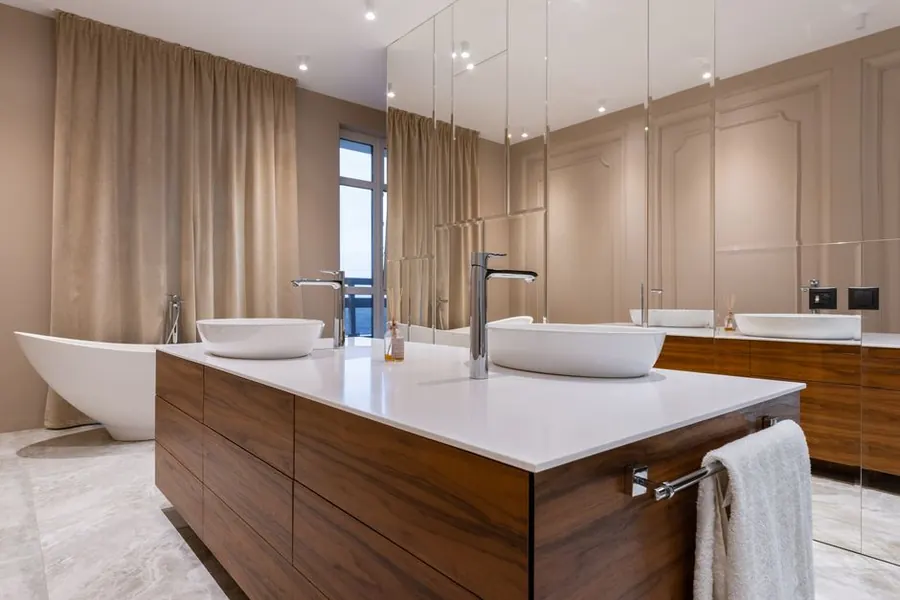
Nobody enjoys a vague answer here. The generator and controls for a domestic steam room are a few thousand pounds, and are rarely the largest line. The enclosure - tanking, backer board, glass made to measure, a built and tiled bench, the ceiling fall, the drainage - is typically two to three times the cost of the equipment. Add the electrical work and certification, and add the hot water upgrade if the flow test says the shower needs it.
What moves the figure most is not the brand of anything. It is whether the room already has the right footprint, whether the floor needs strengthening, whether an unvented cylinder has to be installed and a cupboard given up for it, and whether the glass is a stock size or made for the opening. Made-to-measure glass on a room that is not square is a bigger number than most people expect, and it is worth setting out the walls to suit the glass rather than the other way round.
Running cost is easier. A 9kW generator on a thirty minute cycle uses about 4.5 kWh, which at current unit rates is a little over a pound a session. That is genuinely cheap compared with the household’s assumption, and much cheaper than the same half hour with four body jets running.
When we say don’t
We turn down more spa work than we take, and it is always for one of the same three reasons.
The room is too small to be both. A steam enclosure needs to be a sealed box, and a family bathroom needs to be a room you can dry your hair in. Trying to make one space do both usually produces a shower that is permanently damp and a steam room nobody uses more than twice.
The house cannot feed it and the owner does not want the disruption of the plant that would. That is a perfectly reasonable position, and the right answer then is one excellent outlet, a warm floor and good light, which delivers most of the daily pleasure for a fraction of the work.
Or nobody in the household will actually use it. A steam cycle is a twenty minute commitment. Households who take long baths tend to love it. Households where everyone showers in six minutes on the way out of the door do not, and the honest conversation is better had at design stage than in year two.
Common questions
Do I need planning permission for a steam room at home?
Not for the room itself, since it is internal work. The electrical installation is notifiable to building control, and any new mechanical ventilation that involves a new opening in an external wall needs consideration - in a listed building or a conservation area, that external element is the part likely to need consent rather than the enclosure.
Can a steam room go in a standard Exeter terrace bathroom?
Often yes, if you accept a compact enclosure rather than a separate room. The two practical limits are floor strength on a suspended timber floor, and ceiling height, since dropping the internal ceiling to about 2.1 metres makes a steam room work far better than a tall one does.
Will a steam shower cause damp problems in the rest of the house?
Not if the enclosure is genuinely sealed and the room outside it is ventilated to the required rate. Problems arise when a steam function is added to an ordinary shower cubicle with a gap over the door, at which point half a litre of water vapour per cycle goes into the room and then into the fabric.
Is a steam room better than a sauna in a Devon house?
For most homes here, yes. A sauna needs a dedicated dry room, decent ceiling height and a lot of heat, and it sits idle unless someone is committed to it. A steam enclosure can share a wet room’s footprint, runs at a much lower temperature, and suits the damp Devon winter better than dry heat does.
How much hot water do body jets actually need?
More than most houses have. Assume 30 litres a minute of blended water for a drencher and four jets running together. That is an unvented cylinder of at least 250 litres with a fast recovery coil, or a substantially reduced specification. It is not a question a combi boiler can answer.