
Shower Toilets, Bidet Seats Or A Separate Bidet In Exeter?
Luxury Bathrooms Exeter
Ask a hotel guest returning from Tokyo what they miss most and the answer is rarely the food. Japan has had warm-water washing built into the toilet seat since the early 1980s, and the habit has spread through much of Europe. Britain has been slower, partly out of reserve and partly because, until a few years ago, the only option was a separate bidet that most people used as a laundry basin. That has changed. Across the projects we quote for in Exeter, roughly one in four clients planning a principal en suite now ask about a shower toilet, where five years ago almost nobody did. There are three ways to get the same result in a bathroom - a complete shower toilet, a washing seat fitted to an ordinary pan, or a bidet as its own fitting - and they differ in cost, in what has to happen behind the wall, and in how much paperwork the water company might want. Showrooms are good on the first point and quiet on the other two, so that is where most of this piece goes.
Three routes to the same clean
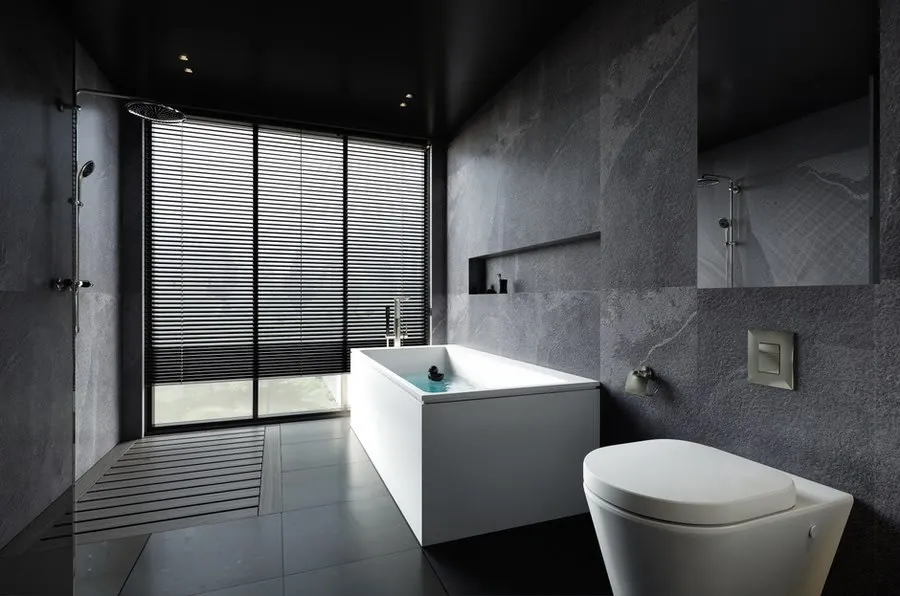
A shower toilet is a single appliance. The pan, the seat, a retractable wand, a small water heater, a warm-air dryer and usually an odour extractor are designed together and sold as one unit. Geberit’s AquaClean range and TOTO’s integrated models are the names most people come across. Because the electronics and plumbing live inside the ceramic, the finished thing looks almost like a normal toilet, which is the whole point in a room you have spent serious money on.
A retrofit bidet seat replaces the lid and seat on a pan you already own, or one you are buying anyway. The wand, heater and controls sit in a slightly thicker seat unit. It is the cheaper door in, and a good one can be very good indeed. The compromise is visual: on a standard close-coupled suite you will often see a braided hose and a cable running to the side of the seat, although some premium seats now route both behind the pan.
A separate bidet is the traditional answer and still the right one for some households, particularly where two people want to use the bathroom at once or where someone prefers to sit facing the taps. It needs its own floor space, its own waste and its own supply, and it carries the strictest water-regulation rules of the three if it has a spray rising from the bowl. On a full luxury bathroom installation we talk through all three at the design stage, because the choice changes what goes into the wall weeks before anything is tiled.
What each one costs
Prices below are typical UK retail figures for the hardware, before fitting, and they move about with promotions.
Retrofit seats begin at a few hundred pounds for basic models with unheated water or a battery remote. The well-regarded seats from the big Japanese and Swiss makers sit nearer £1,200 to £1,700, which buys a heated seat, a properly heated water supply, adjustable wand position and the sort of build quality that survives daily use for a decade.
Complete shower toilets start where the best seats stop. Geberit’s entry-level Tuma models are generally advertised at around £2,400 to £2,700, the Sela is a little higher, and the Mera, which is the one most of our clients end up looking at, sits roughly between £4,400 and £5,700 depending on specification. TOTO’s top integrated range goes beyond that.
A separate bidet is the cheapest hardware of the three. A good wall-hung bidet pan costs a few hundred pounds, plus a mixer. Where it gets expensive is the room around it: a second frame, a second waste run, more tiling and, in most Exeter bathrooms, simply finding the floor.
On labour, the honest position is that a shower toilet adds very little to the cost of fitting an ordinary wall-hung WC, provided the power and water were planned at first fix. Retrofitting the electrics after the tiles are on is where the bills arrive, and that is the next section.
Why there is no plug beside the pan
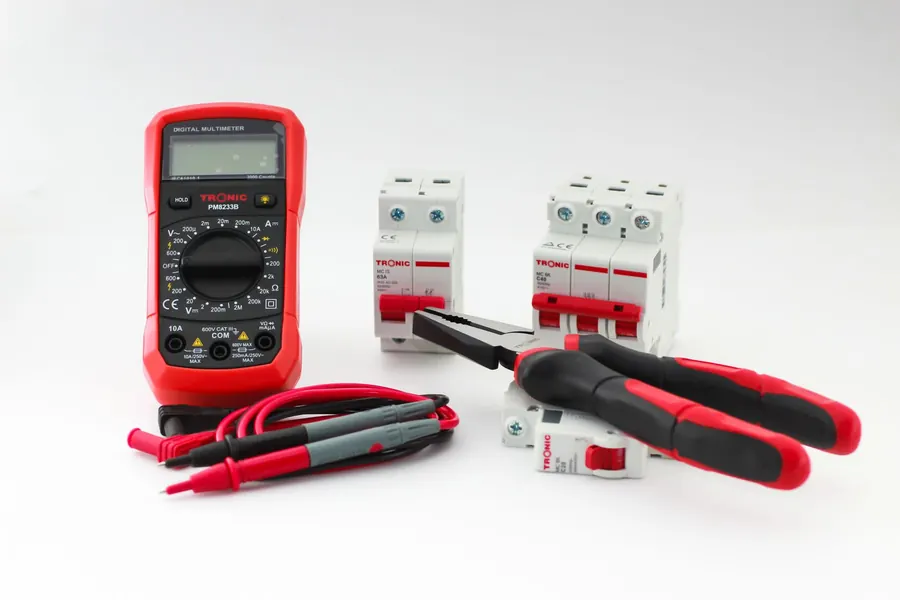
Every washing seat and shower toilet needs mains power, typically a modest 230V supply. Most buyers picture a socket behind the toilet and a plug. In a British bathroom that is almost never allowed. The wiring regulations, BS 7671, prohibit ordinary socket outlets within 2.5m horizontally of the boundary of zone 1 around a bath or shower, and in most bathrooms the WC sits well inside that distance.
The usual answer is a fused connection unit, often called a fused spur. The appliance is wired into it permanently, the unit is placed where the manufacturer’s flex can reach and where it stays dry, and some installers put the switched part outside the room so the supply can be isolated without touching anything wet. Every circuit serving a room with a bath or shower must also be protected by a 30mA RCD, which most modern consumer units provide but older boards in Exeter’s Victorian terraces frequently do not.
Whether the job needs notifying under Part P depends on where it happens. As the government’s Approved Document P on electrical safety sets out, only three kinds of domestic work are notifiable: a new circuit, a replacement consumer unit, or adding to a circuit inside a special location. In a bathroom, the special location is the space within 0.6m of the bath or shower tray and up to 2.25m high. A spur taken from an existing circuit for a WC on the far side of the room usually falls outside it. A WC tucked hard against a shower tray in a compact en suite may well fall inside, and so may the wiring route. Shower toilets themselves are generally rated IPX4 and are designed to sit outside the edge of the tray, which settles the layout question before the electrics do.
The water rule most people have never heard of
This is the part that catches out installers as well as homeowners. Under the Water Supply (Water Fittings) Regulations 1999, water inside a toilet bowl is Fluid Category 5, the highest risk class there is. Any fitting that sprays water upwards from within a bowl, or has a hand spray long enough to reach into one, could in theory let contaminated water be drawn back into the pipe that also feeds your kitchen tap.
The Water Regulations Approval Scheme’s installation note on bidets spells it out: bidets with an ascending spray, and WCs adapted as bidets, must not be fed straight from a supply pipe. They need Category 5 protection, which in practice means a physical air gap. A non-return valve on its own is not enough, however reassuring it sounds.
Good shower toilets solve this inside the casing, with a built-in air gap before the water reaches the heater and wand. That is one of the reasons the reputable brands cost what they do. Cheap imported seats sometimes rely on a simple check valve, and those should not be connected to a UK mains supply at all. Ask for evidence the unit meets UK requirements, not just a CE mark.
The awkward one is the hand-held douche spray on a hose beside the toilet, sold cheaply online and increasingly popular. It is treated as a Category 5 risk whatever bowl it sits next to, and the textbook compliant answer is a small break tank with an air gap, which is rarely what the buyer had in mind. A separate bidet with taps mounted above the rim is far simpler: with the correct gap between spout and rim, it can drop to a lower risk class. In England a bidet with an ascending spray or hose is notifiable to the water company, which for Exeter and East Devon is South West Water, unless the work is done by a contractor in an approved plumbing scheme.
Hard water on the coast, soft water in the city

A shower toilet heats water and pushes it through very fine jets, which makes it sensitive to limescale in a way a cistern never is. Here the Exeter area splits neatly in two.
The city itself, along with Topsham, Exminster and Crediton, is on soft water. South West Water notes that East Devon is the only part of its patch with hard water, because the supply there is drawn from boreholes rather than surface reservoirs. Sidmouth, Exmouth, Budleigh Salterton and Honiton are the towns that matter for our clients.
In soft-water Exeter a well-made shower toilet will run for years with little more than wiping the wand. On the coast, scale builds inside the heater and around the nozzle tip, and the spray pattern slowly loses its shape. The better units rinse the wand before and after each use and prompt you to run a descaling programme every so often, using a descaler the manufacturer sells. Before buying for a house in Sidmouth or Budleigh, check how easy that routine is on the model you like, because it is the single biggest factor in how the unit will feel in year five. If the house already has a softener, the seat can be fed from the softened side, as long as the drinking tap stays on hard water.
Space, layout and the wall behind the pan
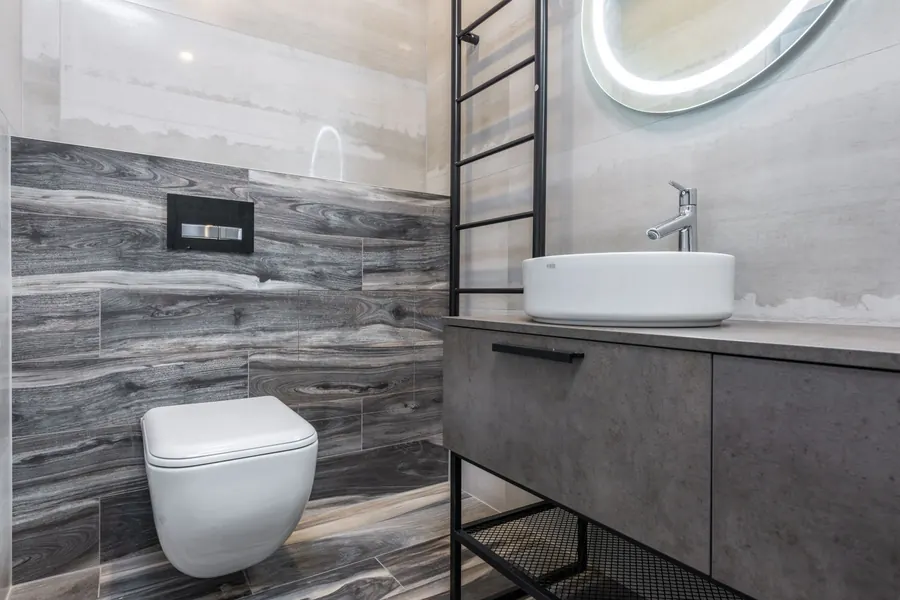
A shower toilet needs exactly the floor area of an ordinary toilet. Some models are a little longer than a standard pan, so check the projection against the door swing in a tight en suite, but that is the only real penalty. A separate bidet is a different matter: allow for a second appliance at least as wide as the first, with comfortable space between them and in front of both. In the rear outriggers of Heavitree and Polsloe, where many bathrooms are barely two metres across, that is often the end of the conversation.
The real planning happens behind the wall. A wall-hung shower toilet needs a frame designed to carry it, a cold supply in the right place and an electrical feed brought out within reach of the unit’s own flex. Most frame manufacturers sell a version with a water connection and a conduit for the cable built in, and it costs very little more than the plain frame. Most units heat their own water, so only a cold supply is needed. We covered frames, flush plates and access panels in depth in our guide to choosing between a wall-hung and close-coupled toilet, and everything there applies, with power added to the list.
Even if a shower toilet is not in the budget today, ask for the frame, the conduit and a capped cold feed to be installed anyway. It adds very little at first fix. Without it, adding one later in a Regency house in St Leonard’s or a new-build at Cranbrook means lifting tiles you were happy with.
Living with one
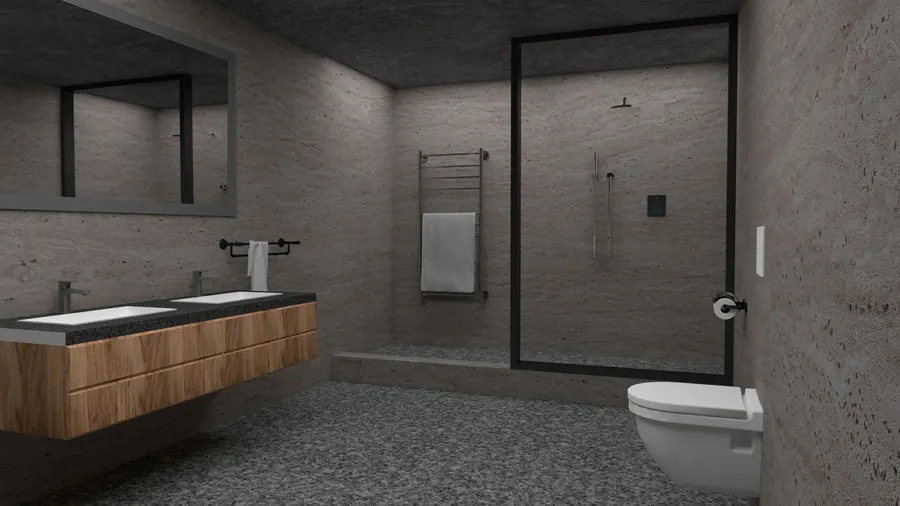
The features that sound like gimmicks in a showroom tend to be the ones people mention months later. A heated seat on a January morning. A soft night light that means nobody needs to switch on the main lights at 3am. Automatic lid opening, which divides opinion, and user profiles for different water temperatures and spray strengths, which do not. Odour extraction on the better models is quiet, and it works.
There are practical reasons too, beyond comfort. For anyone with limited shoulder movement, arthritis in the hands or recovering from surgery, warm-water washing means not having to ask for help, which no grab rail can offer. We see shower toilets specified more and more in bathrooms planned for later life, often alongside a level-access shower.
Two things are worth sorting before you commit. Find out who services the unit locally and how quickly parts arrive, because a shower toilet with a fault is still a working WC but an expensive one. And leave the manual somewhere sensible: the descaling and filter routines are simple, but only if someone knows they exist.
Common questions
Is a shower toilet worth it over a bidet seat?
If the bathroom is being refitted, usually yes. A complete shower toilet hides its pipework and wiring entirely and is designed as one unit, so it looks cleaner and tends to be easier to clean. A retrofit seat makes more sense when the existing pan is staying, or when the budget is better spent elsewhere in the room.
Do I need an electrician to fit a shower toilet?
Yes. It needs a permanent fused connection rather than a plug, the circuit must have 30mA RCD protection, and the work may be notifiable under Part P if it falls within 0.6m of a bath or shower tray. A registered electrician can self-certify notifiable work.
Are bidet seats legal under UK water regulations?
They are, as long as they include acceptable Fluid Category 5 backflow protection, typically a built-in air gap. Reputable brands design for this. Cheap seats that rely only on a check valve should not be connected directly to a UK mains supply.
Will hard water damage a shower toilet?
It shortens the life of the heater and nozzle if it is ignored. In Exeter the supply is soft, so it is rarely an issue. In East Devon towns such as Sidmouth, Exmouth and Budleigh Salterton, where the water is hard, run the descaling programme as the manufacturer recommends.
Can I add a shower toilet later?
You can, but it is far easier if the frame, cold feed and electrical conduit were installed at first fix. Asking for that preparation during a renovation costs little and avoids lifting finished tiles later.