
How Long Should A Bathroom Last, And When To Replace It
Luxury Bathrooms Exeter
Nobody replaces a bathroom because a calendar tells them to. They replace it because the silicone has gone black for the third time, or the shower door catches, or the ceiling in the room below has a stain on it. By then the decision has usually been made for them, badly, and at short notice. It is a shame, because the honest lifespan of a well-built bathroom in an Exeter house is somewhere between fifteen and twenty-five years, and most of the rooms we strip out are nowhere near that when they fail.
The reason is that a bathroom is not a single product with a single expiry date. It is roughly nine separate systems sharing a room, and they wear out at wildly different speeds. Some of them are five-minute fixes that people mistake for terminal decline. Others look cosmetic and are actually the room telling you it has already gone. Learning to tell the two apart is worth more than any amount of showroom browsing.
The parts of a bathroom age at completely different rates
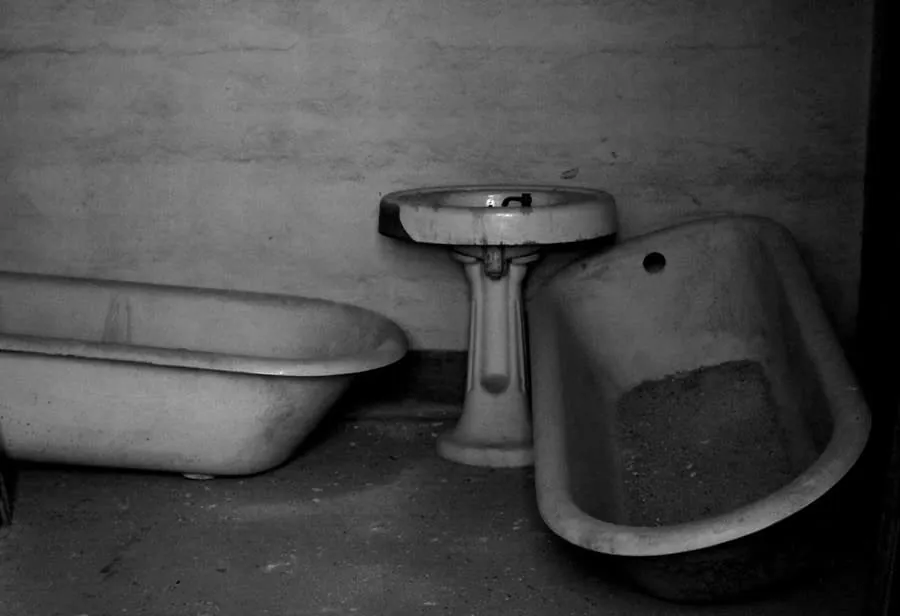
Start with the things that essentially do not wear out. Vitreous china is close to permanent; a toilet pan or basin from 1975 is not failing, it is merely out of fashion. Good porcelain tile is similar. Cast iron and quality steel baths outlive their owners, and even acrylic gives fifteen to twenty-five years before the surface dulls past polishing.
Then the middle group, which is where planning matters. Silicone seals realistically give around five years in daily use before they need cutting out and replacing, and that is maintenance, not failure. Grout lasts ten to fifteen years if it was mixed and finished properly. Tap and shower valve cartridges tend to run eight to fifteen years, and a decent brand will still sell you the cartridge at the end of it. Shower enclosure seals and rollers are three to five year parts, replaceable if the enclosure is from a manufacturer still trading.
And then the short-life items nobody budgets for. Extractor fans are five to ten year components and are usually left in until they stop entirely. Illuminated mirrors and their drivers fail early. Vanity units built from standard MDF in a poorly ventilated room can swell at the plinth within a decade, which is why we specify moisture-resistant board and lift units off the floor whenever we plan a bathroom renovation. Add all that up and you get the real pattern: the room does not die, individual parts do, and only some of them take the room with them.
Five signs a bathroom needs replacing, not repairing
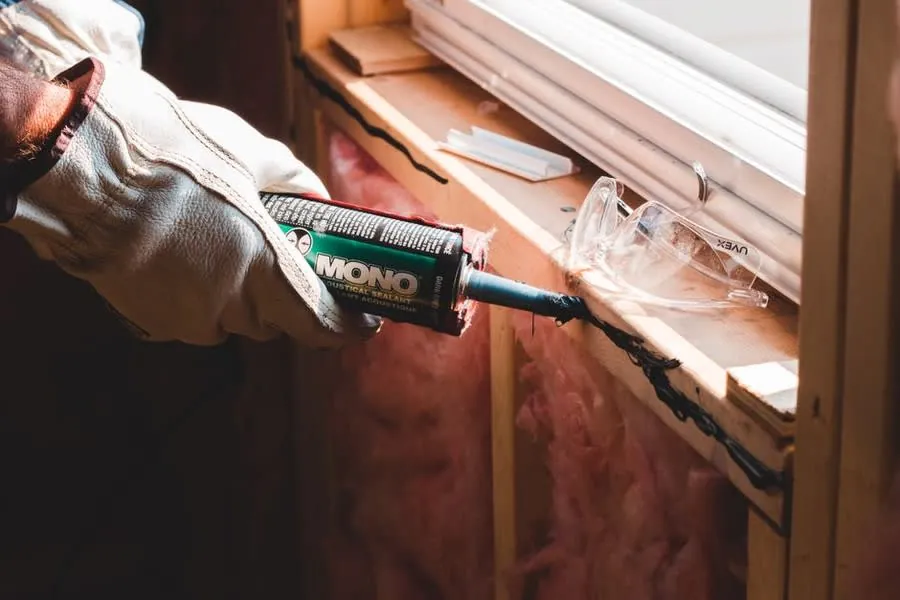
Mould on silicone is not one of them. Silicone is consumable; if it blackens, cut it out and redo it, and if it blackens again within a year, the room has a ventilation problem, not a sealant problem.
Five other things are different, because each one means water has already reached somewhere it should not be.
Tap along the floor and listen for a hollow note. If tiles have debonded, or a grout line has cracked in a dead straight run, the substrate under them is flexing, and no amount of resealing fixes a moving floor. Look at the ceiling of the room below too. Even a small stain, even an old dried one, means something leaked long enough to travel through a floor.
A joint that fails in the same place year after year is the third. That is rarely the sealant; it is usually a bath or tray with too little support beneath it, deflecting a millimetre or two every time somebody stands in it. Fourth, a WC that rocks. The pan is not the problem, the floor it is bolted to is, and rot around a WC spreads quietly under tiles for years before anything shows.
The fifth you tend to find by accident, when a tile comes off the shower wall and there is grey plasterboard behind it. Plasterboard was never a waterproof backing. Once it is wet, the wall is on a clock, and the tiles still look perfect while it runs down.
Any one of those and the sensible money goes on a strip-out instead of another round of patching. One caveat, and it works in your favour: if a survey turns any of them up while you are buying, they are negotiating points. RICS explains how survey condition ratings work, and bathrooms are a common source of the urgent category.
What shortens a bathroom’s life around Exeter
Local conditions move these numbers around more than people expect, and in this part of Devon they move in two directions within about twelve miles.
Exeter’s supply is soft surface water, which is kind to the mechanical parts of a bathroom. Thermostatic cartridges, flush valves and shower heads all last towards the top of their range because nothing is furring up inside them. The East Devon towns are the opposite: Exmouth, Budleigh Salterton, Sidmouth and Honiton draw harder borehole water, and scale is what eventually kills valves, spray heads and heating elements there. The practical response is not a different bathroom, it is choosing fittings whose cartridges can be swapped without opening a wall, and descaling shower heads rather than replacing them.
Humidity is the second local factor. Coastal and valley-bottom properties spend a lot of the winter with the air already close to saturated, so a bathroom in Topsham or on the Exmouth seafront has less margin than one on higher ground, and its ventilation has to work properly rather than merely exist. And the third is simply use. A family bathroom serving five people gets three or four times the wet cycles of a couple’s en-suite, and it ages accordingly - the same room, the same fittings, half the life.
What a refresh can genuinely achieve
Sometimes the room is structurally fine and just tired, and there is a real middle option between living with it and gutting it.
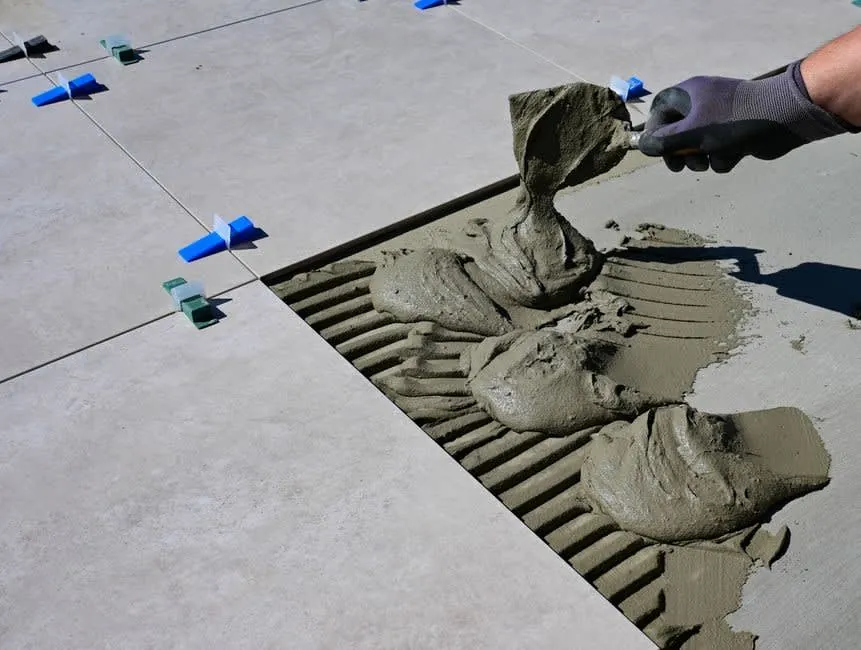
The high-value refresh list is short. Cut out and renew every bead of silicone. Rake and regrout the tiling, or have it professionally cleaned and colour-sealed. Replace the shower enclosure, which is often the single item making the room look old. Swap the taps and the shower valve if the brand still supplies parts. Change the vanity unit and the mirror, upgrade the lighting, and put in a proper fan. None of that moves a pipe, so it is a few days rather than a few weeks, and it typically runs from a few hundred pounds up to two or three thousand depending on the enclosure.
What a refresh cannot do is fix anything behind the tiles. If the waterproofing under the shower is plasterboard, or the floor moves, or the room is fundamentally the wrong shape, you are spending money on a countdown. The test we use is simple: would we be happy to guarantee the result? If the answer depends on something we cannot see, it is a strip-out.
When the room is sound but the layout is finished
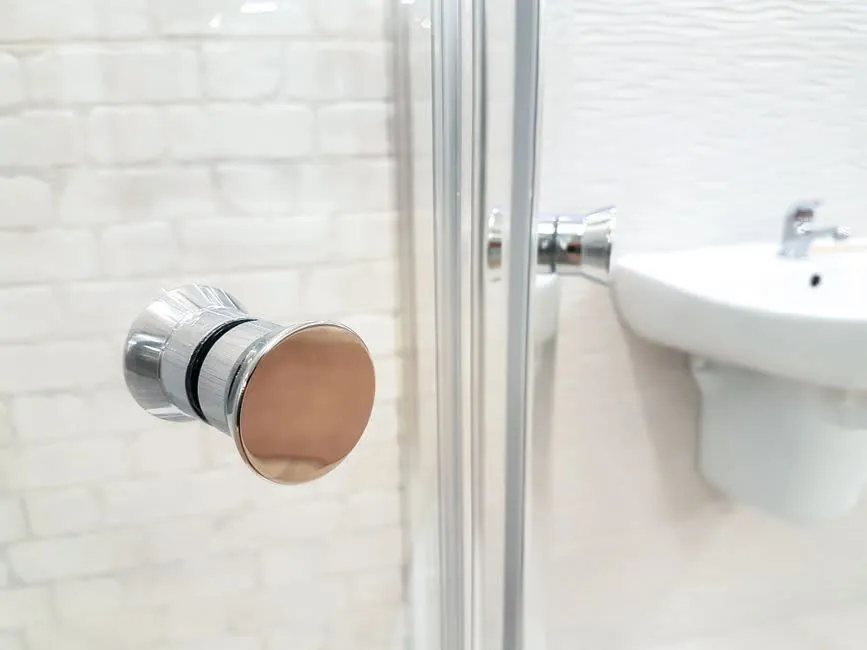
The other reason to replace has nothing to do with wear. Households change faster than bathrooms do.
The commonest version we see is the bath nobody has used in four years, sitting in a room where a shower would be welcome, with a shower over the bath that involves stepping over a rim and pulling a screen nobody likes. Another is the couple whose children have left, who have realised the family bathroom could become one good room instead of two mediocre ones. A third is anticipating the next twenty years rather than the last: a level threshold and a wall that will take a grab rail cost almost nothing when the floor is already up, and a great deal once it is finished.
That last one shows up in resale as well as in daily use. We looked at how buyers here weigh these things in our piece on whether a new bathroom adds value in Exeter. The short version is that a room laid out for how people actually live outperforms an expensive room laid out badly.
What a strip-out finds in an older Exeter house
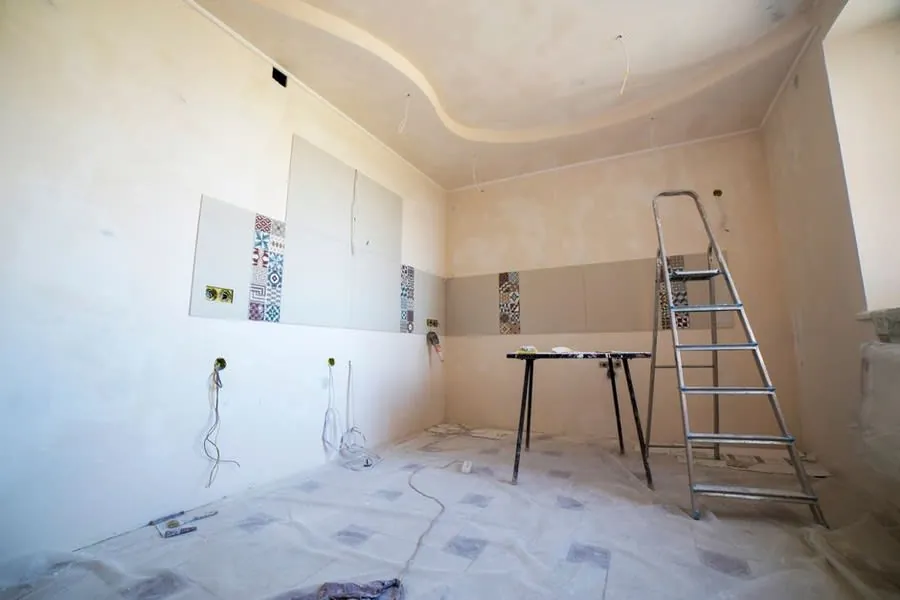
The city’s housing stock is old enough that a strip-out is also a survey, and it is better to expect the findings than to meet them as surprises.
Asbestos is the one to take seriously. It was used in artex textured coatings, floor tiles, some bath panels and insulating board until it was banned in 1999, so any bathroom last done before about 2000 is a candidate. It is not a crisis, but it is not a job for a hammer and optimism either - the Health and Safety Executive publishes what applies to domestic work, and testing before disturbance is cheap.
After that the list is more ordinary. Iron waste pipe and old lead supply in Victorian terraces, both worth replacing while everything is open. Joists notched half through by somebody’s plumber in 1985. Chipboard floors that have already softened around the WC. Pipework buried in a screed without a sleeve. None of these change the decision to renovate, but they change the quote, which is why we would rather look under a corner of the floor at survey than discover it on day two. It is also why our estimate of how long a bathroom renovation takes allows time for what a strip-out uncovers.
New builds have their own version of this. If the property is under warranty, the first two years usually sit with the builder and the structural cover runs to ten, so read what the NHBC standards require before paying to correct something that should have been put right for you.
Doing it once, and making it last
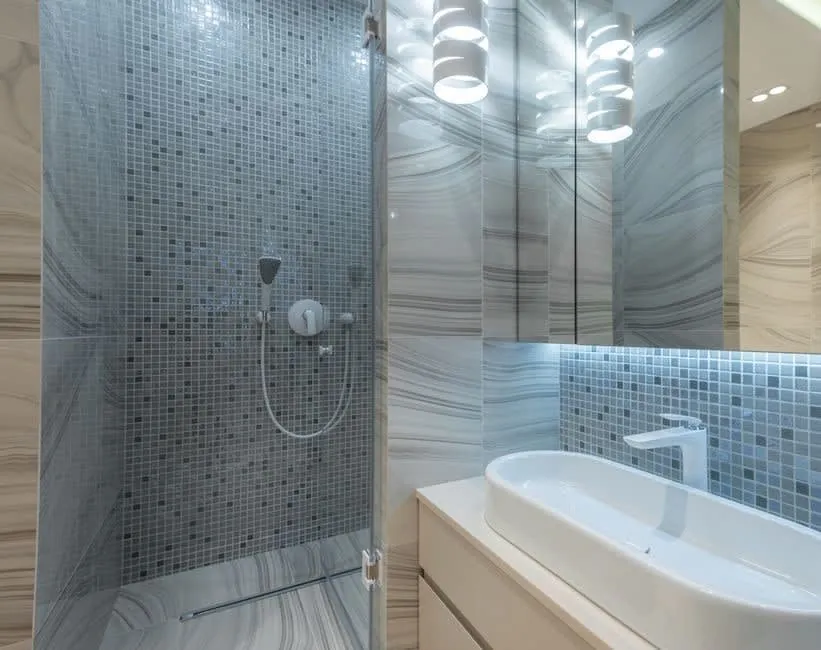
If the lifespan of a bathroom is decided by anything, it is decided in the week nobody photographs: boards, tanking, falls, fixings.
Four choices do most of the work. Waterproof the wet area properly, using cement backer board and a tanking system, not plasterboard and hope. Build a floor that does not flex, which in a Victorian terrace usually means stiffening the joists before anything else happens. Buy fittings from manufacturers who still sell spare cartridges a decade later, and keep a note of the model. And fit a fan sized for the room, ducted in rigid pipe, on an overrun timer.
Then maintain the consumables on purpose instead of in an emergency. Renew silicone when it starts to lift, not when it goes black. Descale the shower head twice a year in the East Devon towns. Run the fan for the full overrun instead of switching the light off behind you. A bathroom looked after that way reaches twenty years still working properly, and gets replaced when its owners want something different - which is a much better reason than a stain on the ceiling downstairs.
Common questions
How long does a bathroom last on average?
A well-built bathroom lasts fifteen to twenty-five years, but the individual parts do not. Silicone is a five-year consumable, grout ten to fifteen years, tap and valve cartridges eight to fifteen, and extractor fans five to ten. Sanitaryware and porcelain tile outlast all of it. Most bathrooms that fail early do so because water reached the substrate, not because anything wore out.
Is it cheaper to refurbish a bathroom than replace it?
Yes, if the waterproofing and the floor are sound. Renewing silicone and grout, changing the enclosure, taps, vanity, lighting and fan can update a room for a fraction of a full renovation. If the shower area was tiled onto plasterboard, or the floor flexes, refurbishment is only postponing the real job.
What are the signs a bathroom needs replacing rather than repairing?
Hollow-sounding or moving floor tiles, a stain on the ceiling below, silicone that fails at the same joint year after year, a WC that rocks, and bare plasterboard behind tiling in the shower area. Each means water has already reached the structure.
Does hard water shorten the life of a bathroom in Devon?
It depends where you are. Exeter’s water is soft, so valves and shower heads last well. Exmouth, Sidmouth, Budleigh Salterton and Honiton are on harder borehole water, where scale shortens the life of cartridges, spray heads and heating elements. In those towns we specify fittings whose cartridges can be replaced without opening the wall.
Should I replace a bathroom before selling my house?
Only if it is failing or badly laid out. Buyers deduct heavily for a bathroom with visible water damage, and they notice a room where the layout does not suit the house. A sound but dated bathroom rarely repays a full replacement made purely for sale, whereas correcting damp, ventilation and a poor layout usually does.