
Concealed Shower Valves And Digital Showering In Exeter
Luxury Bathrooms Exeter
Most people choosing a shower spend their attention on the plate and the handles, because that is the part on the mood board. The plate is the small half of the decision. The valve body it screws onto is buried in the wall, it is the thing that decides whether the shower is steady or temperamental, and once the tiles are on it is a great deal harder to reach than anyone expects.
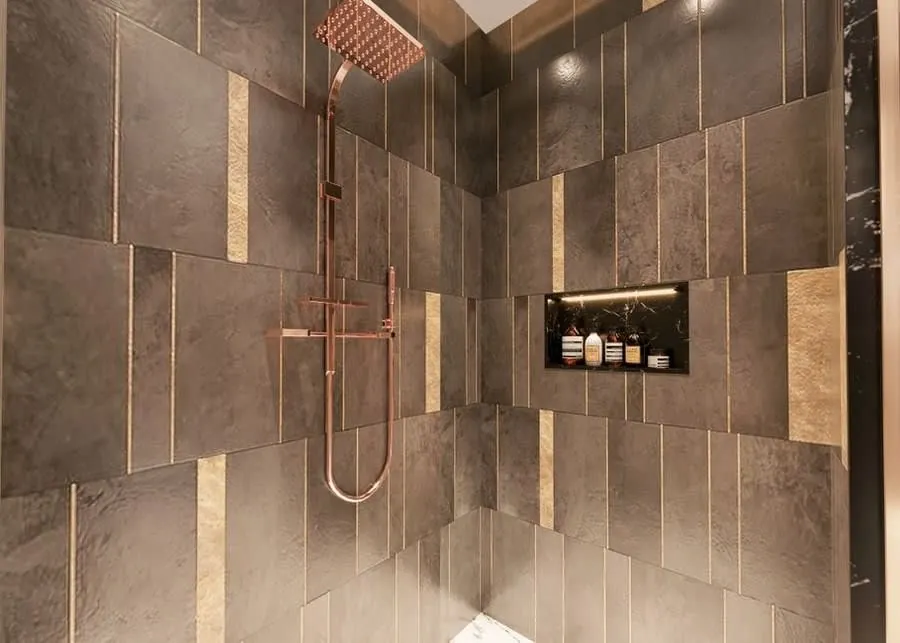
A shower valve does one job: it takes hot and cold, blends them, and sends the result to one or more outlets. Everything else is packaging. The blending happens inside a cartridge, the cartridge sits inside a body, and on a concealed installation that body is chased into masonry or bolted to a stud frame before a single tile is cut. Which means it is specified at first fix, weeks before anyone stands in the finished room, and by the time the shower is switched on every decision about it has already been made permanent. Almost everything else in a bathroom can be swapped later at the cost of a morning’s work, which is why we treat the valve as one of the few irreversible choices in a walk-in shower installation and talk it through at survey rather than leaving it to the brassware schedule.
So there are three things worth asking about any valve before you agree to it: how it holds temperature, how you get back into it, and whether your water supply can drive it. What follows is those three questions in order, and then what the answers cost.
Thermostatic or manual, and why that is a smaller choice than it sounds
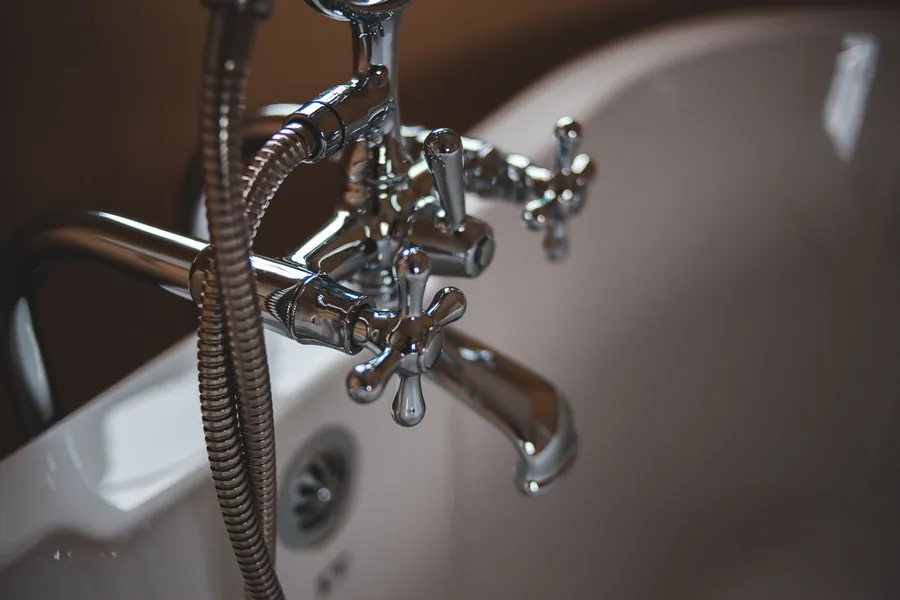
A manual mixer sets a ratio. You turn the handle to a position and it opens hot and cold in a fixed proportion. If the pressure behind either supply changes, the ratio holds but the result does not, which is the mechanism behind the sudden cold blast when someone runs a tap downstairs. On a house where the shower has a hot supply shared with a kitchen and a cloakroom, that happens several times a week.
A thermostatic valve measures the blended water leaving the cartridge and moves the ratio to keep the outlet temperature where you set it. The element doing the measuring is usually wax or a bimetallic strip, and the important behaviour is what it does when the cold supply disappears entirely: a properly made thermostatic cartridge shuts down rather than passing unblended hot water through. That fail-safe behaviour is the whole point, and it is the reason we do not offer a manual valve as an option on a shared supply.
There is a regulation people cite here, usually inaccurately. Approved Document G sets a 48 degree ceiling on the hot water delivered to a fixed bath, and its limits on application restrict that requirement to a dwelling that is newly erected or formed by a material change of use. It says nothing at all about the temperature of a shower, and it does not reach a bathroom being refitted in an existing house. What the document does do, at paragraph 3.66, is name the standards a blending valve should meet - BS EN 1111 for normal pressures and BS EN 1287 for low pressure - and specify that the product must fail safe and must not be easy for the occupier to adjust past its stop. That is a useful specification to borrow even where nothing obliges you to.
Concealed or exposed, and the day you need to get back in
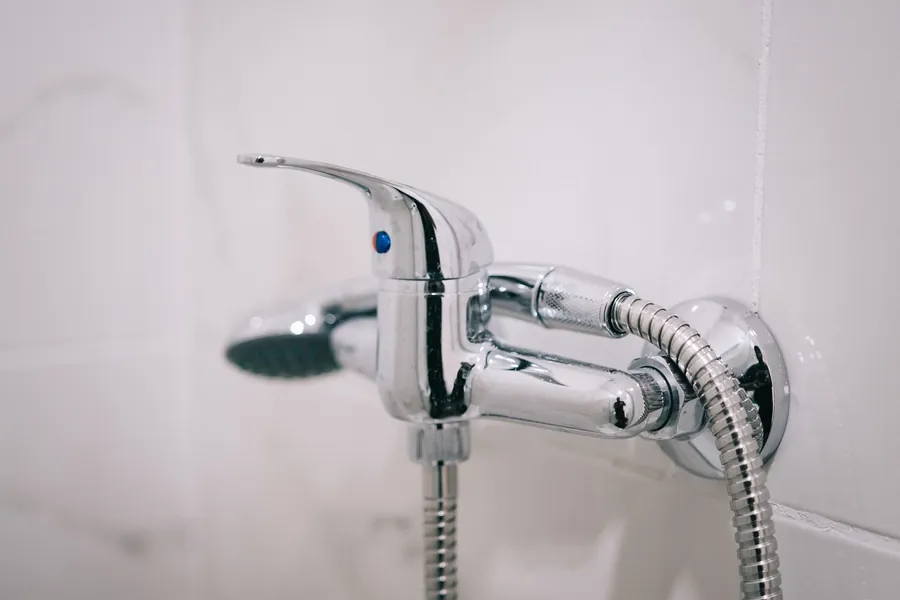
An exposed valve sits on the face of the tile with its body visible. It looks like plumbing, because it is. The compensation is that replacing it is an hour’s work with two spanners and no dust, and if the model is discontinued in 2038 you can fit something else on the same centres.
A concealed valve puts the body behind the tile and leaves only a plate and handles on the surface. It is quieter to look at, it is what most people picture when they picture a considered bathroom, and it introduces a problem that almost nobody is told about at the point of sale. Cartridges wear. Check valves stick. Filters silt up. On a well-designed concealed valve, all of those are serviceable through the front once the plate is off, which is the specification to insist on. On a poorly designed one, or where the installer has buried the body without leaving working clearance around it, getting the cartridge out means taking tiles off.
So the question to put to whoever is fitting it is this. How do I get back in? Two answers are acceptable. The first is a valve whose entire service kit comes out through the wall plate, verified against the manufacturer’s own service documentation rather than assumed. The second is a deliberate route in from behind - a removable panel in the back of a bedroom wardrobe, a hatch in an adjoining cupboard, or a tiled access hatch cut on a grout line so it reads as part of the pattern. On a stud wall that costs almost nothing to plan and is close to impossible to add later. If the answer is a shrug, that is information.
Outlets, diverters and the decisions you cannot revisit
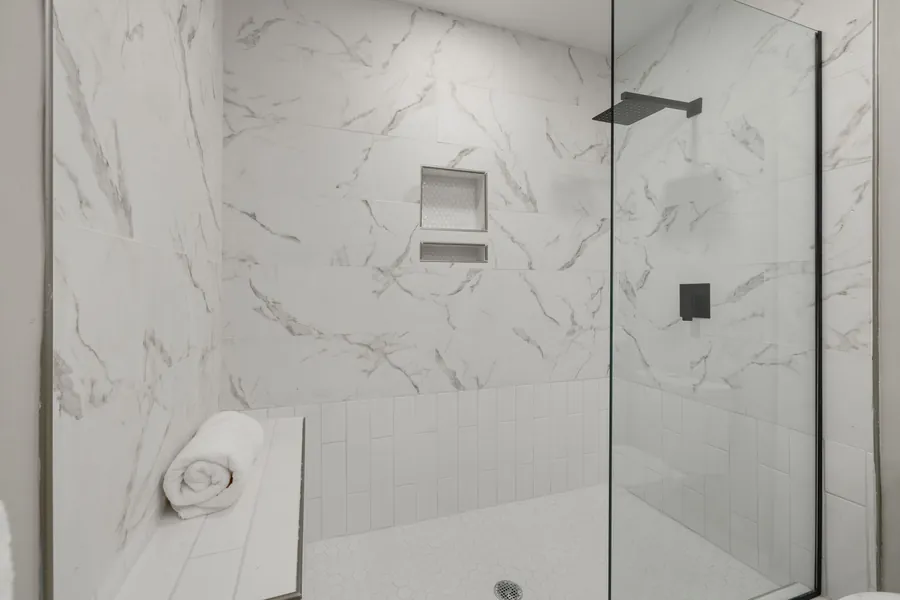
The number of outlets is fixed at first fix. A one-outlet valve feeds an overhead. A two-outlet feeds an overhead and a handset. Three and four outlet valves add body jets, a bath filler, or a second position in a large enclosure. Adding an outlet afterwards is not a valve swap, it is a strip-out, because the pipework behind the wall has to change.
How the outlets share water is a separate decision and it is the one that catches people. A diverter sends the flow to one outlet at a time, so the shower always asks the hot supply for one head’s worth. A twin or triple flow control lets you run outlets together, which is a better shower and which doubles or triples the demand at the moment you turn the second one on. We have seen more disappointment come from this than from any other single specification error: two outlets running at once on a boiler that could comfortably serve one.
There is a useful sanity check hiding in the water efficiency part of the same Approved Document. Its fittings approach, which applies to new dwellings rather than refits, treats a shower as compliant at up to 10 litres a minute, dropping to 8 litres where the tighter optional standard has been imposed through a planning condition. Those are not limits you are bound by in an existing Exeter house, but they tell you what the regulations consider a full-sized shower, and they make it obvious what running three outlets simultaneously asks of a system.
Digital showering, and the ten-year question
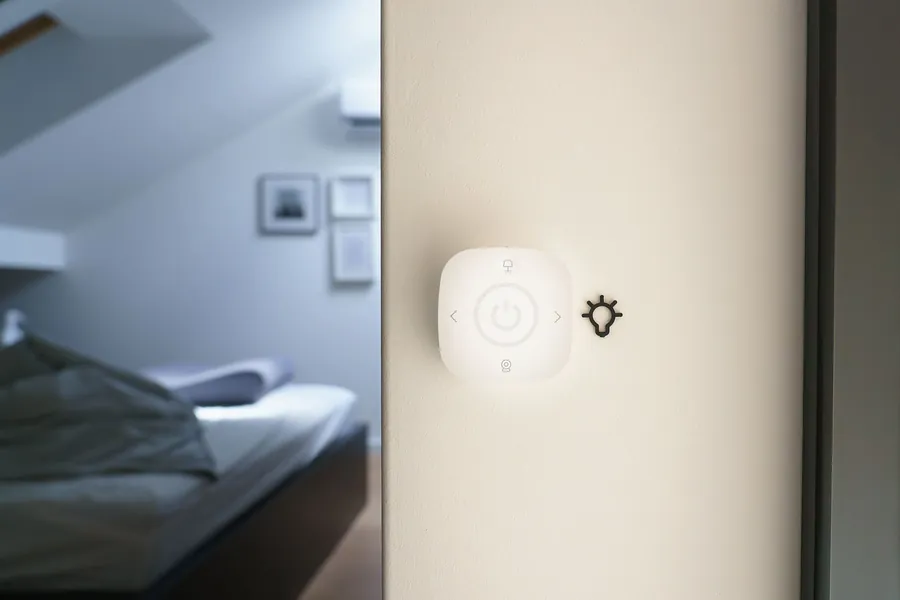
A digital shower moves the mixing away from the wall entirely. A processor unit does the blending and sits somewhere else in the house - an airing cupboard, a loft, occasionally under a bath - while the thing in the shower is a low-voltage control that tells it what to do. You get exact repeatable temperatures, a start button you can press from the landing, and on multi-outlet systems the ability to sequence outlets properly rather than fighting a diverter.
Three practical points decide whether it is a good idea in a particular house. The processor needs mains power, which means a fused spur within reach of it. It needs to be somewhere that is not going to freeze and not going to be boxed in behind plasterboard, because it is the part that will eventually need attention. And the pipe runs from processor to outlet want to be short, for the same reason Approved Document G asks for short runs between a blending valve and its outlet: long dead legs of warm water are not something to design in.
Then there is the question nobody enjoys. A brass thermostatic cartridge from a mainstream manufacturer is a commodity, and the odds of getting one in 2036 are good. A control board is not a commodity. Electronics get discontinued, and a shower that cannot be repaired because a circuit board is no longer made is an expensive thing to own. If you want digital showering - and there are houses where it is clearly the right answer - ask the manufacturer directly how long they commit to holding spares, and get it in writing rather than taking a showroom’s word for it.
Flow, pressure and the number on the box
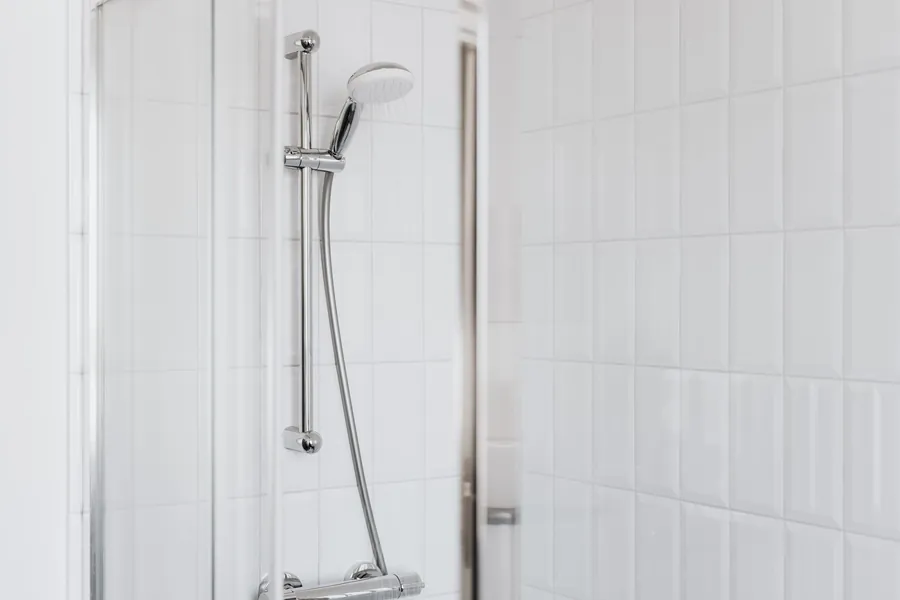
Every valve carries a minimum operating pressure, and it is the specification most often ignored. A valve built for mains-pressure systems typically wants around a bar to work properly. A low-pressure variant, the sort BS EN 1287 covers, will open and hold temperature down at a fraction of that. Fit the first on a gravity system and it does not fail exactly. It just never delivers, and everyone blames the head.
The headline flow rate on a datasheet is equally slippery, because it is quoted at a stated pressure. Twenty litres a minute at three bar tells you nothing about what the same valve does at half a bar. Read the pressure alongside the number, or the number means nothing.
None of this requires instruments. Put a bucket under the existing outlet, run it wide open for fifteen seconds, and multiply what you collect by four. That figure, and the answer to whether there is a cold tank in the loft, tells a fitter almost everything they need before specifying. What the house can supply is the constraint every other decision sits inside, which is the argument we made at length in our guide to choosing a shower and which is worth reading first if you have not settled on a shower type yet.
Exeter walls, and what a chase will allow
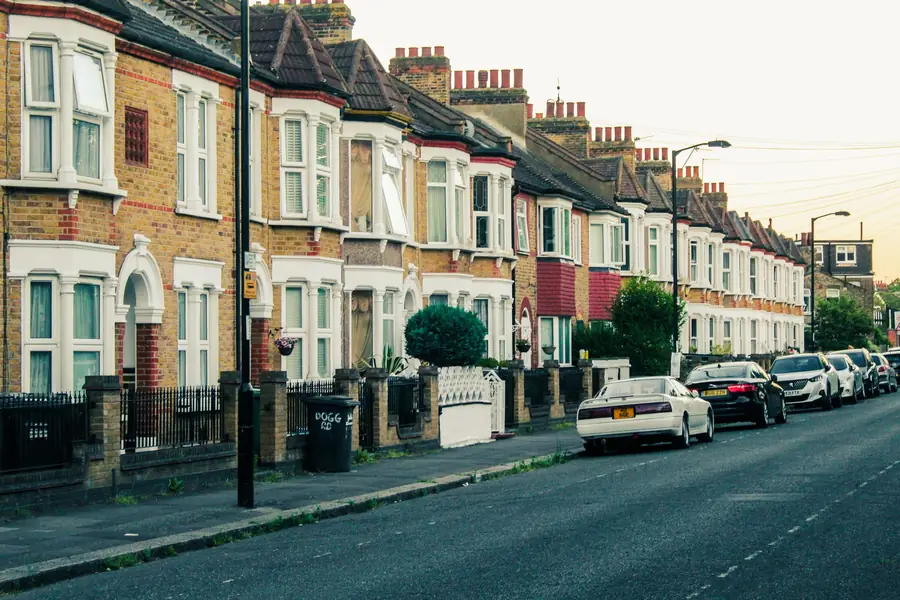
A concealed valve body needs a recess. Depending on the model that is usually somewhere between 75 and 100mm, plus clearance behind for the connections and enough room around the sides to get a spanner in. On a modern stud wall that is unremarkable. On the older stock around the city it is the single biggest constraint on the whole design, and it is usually discovered late.
A solid nine-inch brick wall is about 215mm thick. Chasing 100mm into it removes close to half its section, and on a party wall between two terraced houses that is simply not a thing to do. Further out, towards Topsham and Exminster and in the villages, cob and rubble-stone walls have no consistent depth to work to at all and do not respond well to being cut into. The city’s Georgian terraces around Southernhay and St Leonard’s add a consent question on top, because chasing into historic fabric in a listed building is not a decision for a site visit.
The answer is nearly always a battened or metal-stud false wall in front of the masonry, which gives a clean, serviceable void for the valve and its pipework. It costs somewhere between 100 and 125mm off the finished floor plan. In a generous room that is invisible. In the sort of narrow Victorian bathroom that runs off the half-landing in a Newtown or Mount Radford terrace, 125mm is a real loss. It needs to be drawn before it is agreed, not discovered on the day the tray will not fit.
What the extra money actually buys
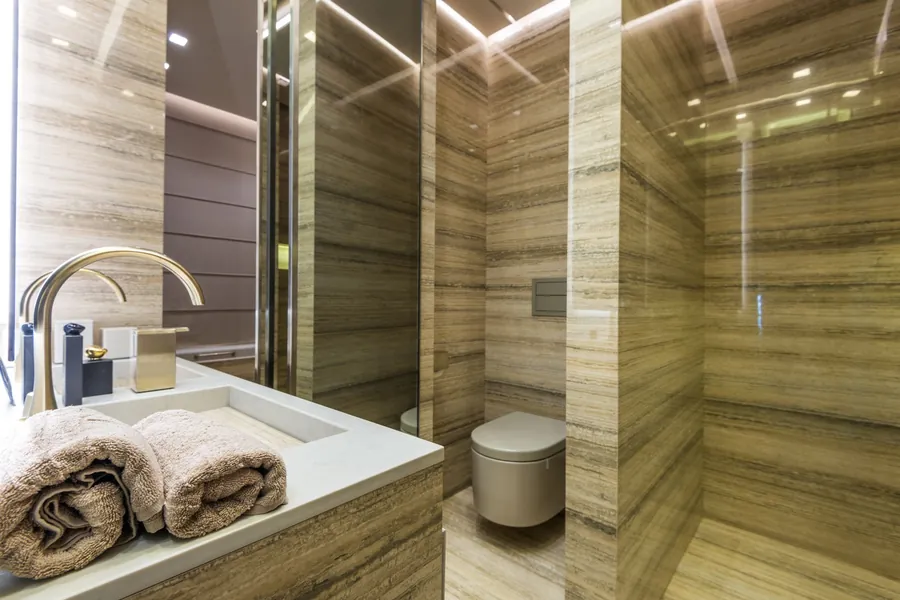
The gap between a budget concealed valve and a good one is smaller in cash than people assume and larger in consequence. What the money goes on is a solid brass body rather than a brass-effect one, ceramic rather than plastic internals, a cartridge that is a catalogued part with its own order code, and published service documentation that says how to get it out. Water fittings are also legally required to be suitable for the job - the Water Supply (Water Fittings) Regulations 1999 put it as being of an appropriate quality and standard, and installed in a workmanlike manner - and the usual way of demonstrating that is a WRAS approval or an equivalent recognised scheme.
Finish is worth separating out here, because it confuses the conversation. Behind the wall, finish is irrelevant: the body is brass or it is not, and nobody will ever see it. The PVD coating you are paying for lives on the plate and the handles, and an unlacquered living brass that patinas over a few years does so on those visible parts only. Choosing a warm finish therefore has no bearing whatever on serviceability, which is not obvious and is occasionally sold as though it were.
The local factor is water, and it runs the opposite way to what most bathroom sites will tell you. South West Water’s water hardness factsheet classes most of the region as soft or moderately soft, because it comes off moorland rivers and reservoirs, and singles out East Devon as the exception - borehole water, and slightly to moderately hard. So in Exeter, Topsham, Exminster and Crediton, scale is not what eventually finishes a cartridge, and copy claiming otherwise is copy written somewhere else. In Exmouth, Sidmouth, Budleigh Salterton and Honiton it does contribute, and a serviceable cartridge stops being a nicety and starts being the reason the shower is still working in 2040.
Common questions
Can a concealed shower valve be repaired without removing tiles?
On a well-chosen valve, yes. The cartridge, check valves and filters should all come out through the wall plate once the handles are off, and that is the specification to insist on before it is buried. Where it goes wrong is a valve fitted without clearance around the body, or a cheap unit whose service parts are not designed to come out from the front. Ask to see the manufacturer’s service instructions before first fix rather than finding out later.
Is a thermostatic shower valve required by building regulations?
No, not for a shower. Approved Document G caps the hot water delivered to a fixed bath at 48 degrees, and that requirement applies only to newly built dwellings or a material change of use, so it does not reach a bathroom being refitted in an existing house and it never covered showers in the first place. We fit thermostatic valves regardless, because a valve that shuts down when the cold supply is lost is worth having whether or not anything obliges you to.
Where does the processor for a digital shower go?
Somewhere with mains power, somewhere that will not freeze, and somewhere you can still reach in ten years. An airing cupboard is usually the best answer, a loft is workable if it is insulated above the unit and the hatch is close by, and under a bath is acceptable only if the panel comes off without a fight. Short pipe runs from the processor to the outlet also matter, for the same reason the regulations ask for short runs after any blending valve.
Will a shower valve work on a gravity-fed system?
Only if it is rated for it. Valves designed for mains pressure generally want around a bar, and on a gravity system fed from a loft tank there is nothing like that available, so the valve holds temperature badly and the shower runs weak. Low-pressure valves built to BS EN 1287 open and regulate at a fraction of a bar, and are what belongs on that system unless you are adding a pump.
Does hard water damage shower valves in Exeter?
Much less than people expect. South West Water classes Exeter’s supply as soft, because it comes from moorland rivers and reservoirs rather than boreholes, so cartridges here are not fighting scale. East Devon is the exception - Exmouth, Sidmouth, Budleigh Salterton and Honiton draw from boreholes and get slightly to moderately hard water, and in those towns a valve with a replaceable cartridge is a more important specification than it is twelve miles inland.