
Why Bathroom Quotes In Exeter Vary So Much - And How To Compare Them
Luxury Bathrooms Exeter
A homeowner in Pinhoe showed us three quotes for the same bathroom last spring: £11,400, £14,800 and £17,900. Same room, same rough brief, a spread of £6,500 between the lowest and the highest. Her assumption was that somebody must be trying it on. Ours, after ten minutes with the paperwork, was that the three fitters had priced three different jobs. One had allowed £400 for brassware, one £1,600. One included stripping the room and taking the waste away, one mentioned neither. Only one had priced the floor preparation at all. Roughly one comparison in four that gets shown to us at survey has this problem: the numbers differ because the documents describe different bathrooms, not because one firm is greedy. This post is about how to read the documents themselves - what a provisional sum is, where exclusions hide, why VAT moves the total by a fifth - so the quote you pick is the one that is actually cheapest for the bathroom you want.
Two quotes are rarely for the same bathroom
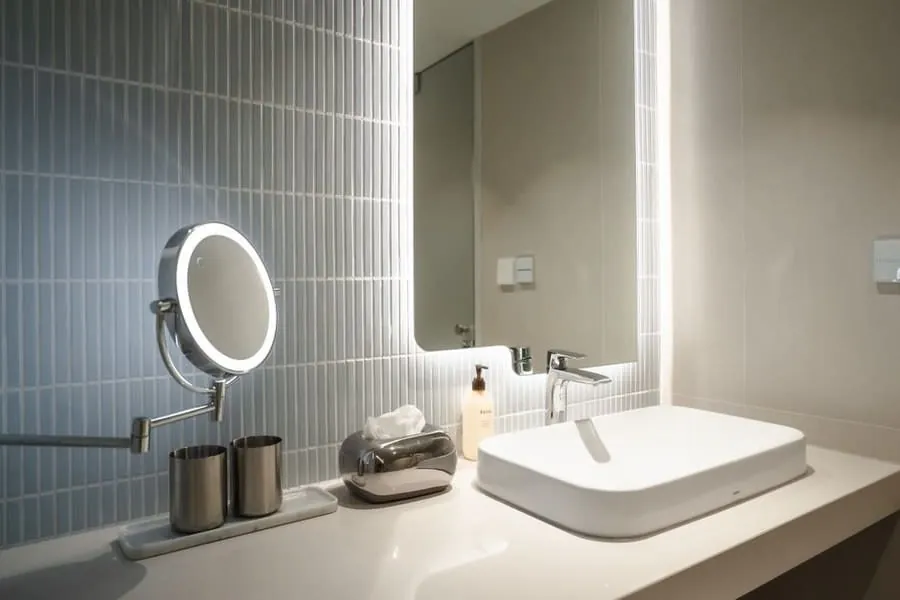
The phrase doing the most damage in any bathroom quote is “supply and fit”. It sounds complete. It commits to almost nothing. Supply what, exactly? A shower valve can cost £70 or £700 and both satisfy the sentence. A quote that reads “supply and fit new bathroom suite, tile walls and floor, £13,500” has told you the destination and nothing about the vehicle.
This is why the totals scatter. Fitters at the budget end price around builder-grade sanitaryware and £25-per-square-metre ceramic because that is what most of their customers choose. Firms like ours price around the fittings we actually expect to install, which sit several times higher. Neither number is dishonest. They are answers to different questions, and until you know which question each fitter answered, the totals cannot be compared. Our Exeter bathroom cost guide sets out what full projects genuinely land at across the finish levels; the point here is narrower - before judging any figure, find out what is inside it.
The practical move is to ask every fitter for an itemised specification: each product named with a manufacturer or at least a supply budget per item, each area of tiling measured, each trade listed. A firm that resists itemising is telling you something useful too.
The specification gap is usually the biggest number in the pile

Take two real lines from that Pinhoe comparison. Quote A: “brassware allowance £400”. Quote C: “Crosswater basin mixer, bath filler and thermostatic shower valve, £1,640”. That single category explains £1,200 of the gap between them, and it repeats across every product in the room. Sanitaryware, the enclosure, the vanity, the tiles - a £250 gap here, £600 there, and suddenly £3,000 of the difference between two quotes is products, not workmanship or margin.
Quotes handle this with either a named product or a PC sum - a prime cost sum, an allowance for an item not yet chosen. PC sums are legitimate and normal at quote stage, because most people have not picked their taps before choosing their fitter. What matters is whether the sums are realistic for the finish you have in mind. A £300 tile allowance prices a bathroom in ceramic; if you are imagining large-format porcelain or natural stone, that line will double or treble later and the “cheap” quote will catch up with the expensive one after you have signed.
So compare the allowances line by line, and compare them against your intentions rather than against each other. The lowest quote with the lowest PC sums has not saved you money. It has deferred the spending until the point where you can no longer walk away.
Provisional sums: the number that is allowed to change

A provisional sum is different from a PC sum, and the difference matters. A PC sum covers a product you have not chosen. A provisional sum covers work nobody can price yet because nobody can see it - most often the floor, the wall behind old tiles, and whatever the strip-out reveals.
In Exeter housing this is not a technicality. A large share of the city’s terraces and older semis stand on suspended timber floors, and until the old vinyl and boards come up, no honest person knows whether the joists need attention or the deck needs replacing before it can carry tile. Solid walls that have worn tiles for forty years rarely give them up without taking plaster along. A fitter who prices “floor preparation: provisional sum £450, confirmed at strip-out” has been straight with you. A fitter whose quote never mentions the floor has either assumed perfection or kept the number out of sight, and in both cases you will meet it later as an extra.
When comparing, list every provisional sum in each quote and add them up. Then note what each quote is silent about, because silence is the expensive version of a provisional sum. The quote that names its unknowns is almost always the more accurate forecast of your final bill, even when its headline total is higher.
What the cheaper quote quietly leaves out

Every quote excludes something, and the exclusions section - or its absence - is where totals get flattered. The lines we see missing most often, and roughly what they cost when they surface later as extras:
- Strip-out and waste removal. A full rip-out fills a skip or several tonne bags; disposal in Devon runs £250 to £450 by the time it has left your drive.
- Making good outside the bathroom - the hallway ceiling below a new shower, plaster damage around a moved doorway, redecoration of anything the pipework passed through.
- Electrical certification. New circuits and zone work must be certified under Part P; if the quote does not say who certifies, budget for the electrician who will.
- Second visits to fit a new floor deck, extra tanking to wet zones, or upgrading stopcocks and isolation valves that turn out to be seized.
- The door. Old bathroom doors frequently do not survive new floor heights, and nobody has ever included a door.
The consumer guidance from Which? on bathroom installation makes the same point from the other direction: agree in writing what happens when something unexpected appears, before it appears. Read the exclusions of the dearest quote first. It usually has the shortest list, which is part of why it is the dearest.
VAT, day rates and the £90,000 question

Here is a structural reason two competent fitters can be 20 per cent apart without either doing anything different. A business only has to register for VAT once its turnover passes the £90,000 registration threshold. A sole trader below that line charges you no VAT on labour. An established firm above it must add 20 per cent. On £6,000 of labour that is £1,200 of gap that says nothing about the quality of either tradesperson - though it does tell you something about the size and workload of each business, and an unregistered fitter is by definition a small operation, usually working alone.
Check whether each total says “including VAT”, “plus VAT” or nothing at all. “Nothing at all” needs a direct question, because a plus-VAT figure mistaken for an inclusive one is the single most painful surprise a quote can hold.
The other structural gap is fixed price versus day rate. A quote of “£220 a day plus materials, probably three weeks” is not a price; it is a rate with an estimate attached, and the risk of overrun sits entirely with you. Fixed-price quotes carry a small premium precisely because the fitter now owns that risk. In our view the premium is nearly always worth paying on a full renovation, where the unknowns run deeper than anyone’s estimate.
Make the quotes comparable before you compare them

Once you can read the documents, the fix for a mismatched set of quotes is mechanical. Write one page: every product with a named budget, every area of tiling in square metres, strip-out and waste included, floor preparation as a provisional sum, electrics certified, VAT stated, fixed price. Send the same page to every fitter and ask them to re-price against it. Ten minutes of their time, and suddenly the totals mean something.
When we did this for the Pinhoe comparison, the £6,500 spread collapsed to about £1,800 - which is a normal, honest spread reflecting different overheads, lead times and margins. That remaining gap is the real decision, and it is worth checking it against softer evidence: whether the firm is on a vetted register such as TrustMark, the government-endorsed quality scheme, how their references sound on the phone, and how the payment schedule is structured. On that last point, the shape of the deposits and stage payments tells you as much about a fitter as the total does - we have written separately about what a normal bathroom deposit looks like in Exeter, and the same logic applies across the whole schedule.
When the expensive quote is the better buy

Level the specifications and a gap usually remains. What the higher number tends to buy is time: a day protecting floors and sealing doorways before anything is touched, a setting-out session where every tile course and fitting height is agreed on the wall before adhesive is mixed, levelling systems and flatness checks through the tiling, a commissioning and snagging day at the end instead of a wave from the van. None of those line items shows up in a photo of a finished bathroom. All of them show up in year five.
There is also a version of the opposite mistake. An expensive quote with vague paperwork - no itemisation, no exclusions, round numbers - deserves exactly the same suspicion as a cheap one. Price is not a proxy for rigour in either direction; the document is.
So the method, in one paragraph: get each quote itemised, line up the product allowances against the finish you actually want, total the provisional sums, read the exclusions, confirm VAT and fixed price, then re-price everyone against a single written page. The quote to sign is the one that describes your bathroom most completely at the best price - which, about half the time in our experience, is not the lowest number in the pile.
Common questions
Why are bathroom quotes so different from each other?
Mostly because they price different things: different product allowances, different assumptions about hidden work, different exclusions, and VAT included on one and absent from another. Genuine differences in labour pricing are usually the smallest part of the gap. Itemise all the quotes against one written specification and most of the spread disappears.
How many quotes should I get for a bathroom renovation in Exeter?
Three is the practical number. Fewer gives you no sense of the market; many more wastes good fitters’ survey time and tends to pull in firms quoting blind. Make sure all three visit the room in person - a bathroom priced from photographs is a guess, whatever the paperwork says.
What is a provisional sum in a bathroom quote?
A stated allowance for work that cannot be priced until it is exposed, most commonly floor preparation and wall repairs behind old tiles. It is confirmed or adjusted at strip-out. A quote with honest provisional sums is more reliable than one that ignores the same risks, because the risks exist either way.
Should I accept a day-rate quote for a full bathroom renovation?
For a full renovation we would advise against it, because overrun risk sits with you and three estimated weeks can become five real ones. Day rates are reasonable for small, well-defined jobs. For a strip-to-brick renovation, ask for a fixed price against an itemised specification with any unknowns ring-fenced as provisional sums.
Is a fitter who doesn’t charge VAT a red flag?
Not at all - it simply means their turnover is below the £90,000 registration threshold, which is normal for a sole trader. It does mean the business is small, so ask who covers tiling, plumbing and certified electrical work. The red flag is a quote that never mentions VAT either way and turns out to mean “plus VAT” after you have signed.