
How To Choose A Vanity Unit And Basin
Luxury Bathrooms Exeter
Ask anyone to describe a bathroom they love and they will talk about the bath, the shower, maybe the tiles. Then watch how they actually use the room. The vanity is where every day starts and ends, it is the only storage most bathrooms have, and it is the piece of furniture your eye lands on from the doorway. In the projects we fit across Exeter, no single choice shapes how a finished room looks and functions more than this one, and no single choice is made faster or with less information.
It is also where the market is at its most confusing. The same 800 millimetre wall-hung unit exists at four hundred pounds and at two thousand, often looking near-identical in a photograph, and the listing will not tell you where the difference lives. This guide is the conversation we have with clients at the design stage: what the price gap actually buys, which configurations suit which houses, and the handful of details that decide whether a vanity still looks good when it is ten years old and has been wet twice a day the whole time.
Start with the vanity, not the tiles
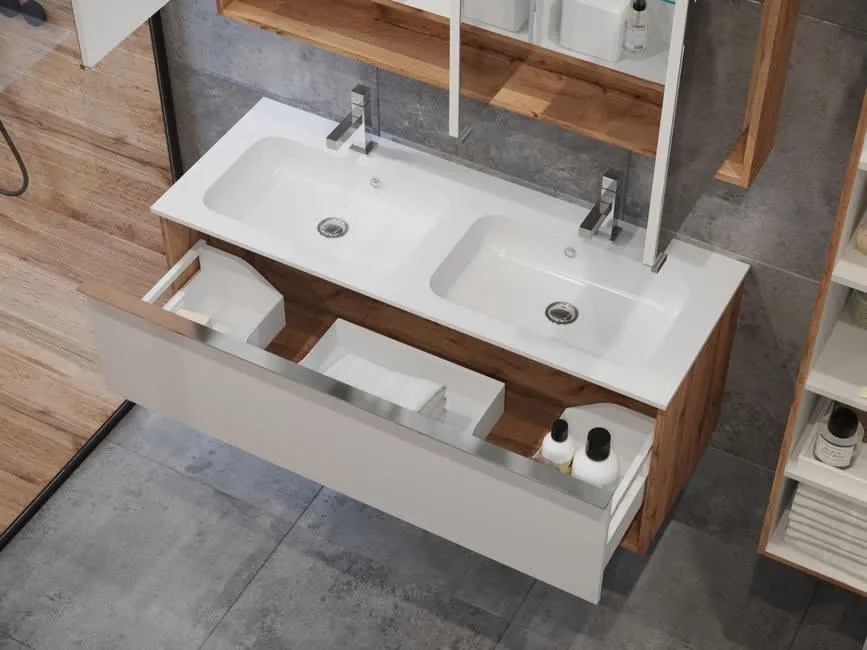
Most people choose the vanity last, once the layout is fixed and the tiles are ordered. We plan rooms the other way round, and the reason is storage arithmetic.
Count what actually lives in a family bathroom: the bottles, the dryer, the spare towels, the cleaning kit, a bag of children’s bath things. It fills more drawer space than anyone expects, and the vanity is usually the only place any of it can go. A room that looks serene in the showroom photograph and has one 600 millimetre unit ends up with everything on display around the bath edge within a month. Serenity is mostly drawer volume.
So we size the vanity first, off an honest count of what it needs to swallow, and let it claim its wall before anything else is positioned. Two other decisions hang off it - the mirror above and the lighting either side - which is why our design process treats the vanity wall as one composed piece rather than three separate purchases. Drawers beat doors, almost always: a deep drawer brings everything to you in one pull, where a cupboard hides half of it behind the waste pipe.
Wall-hung or floor-standing
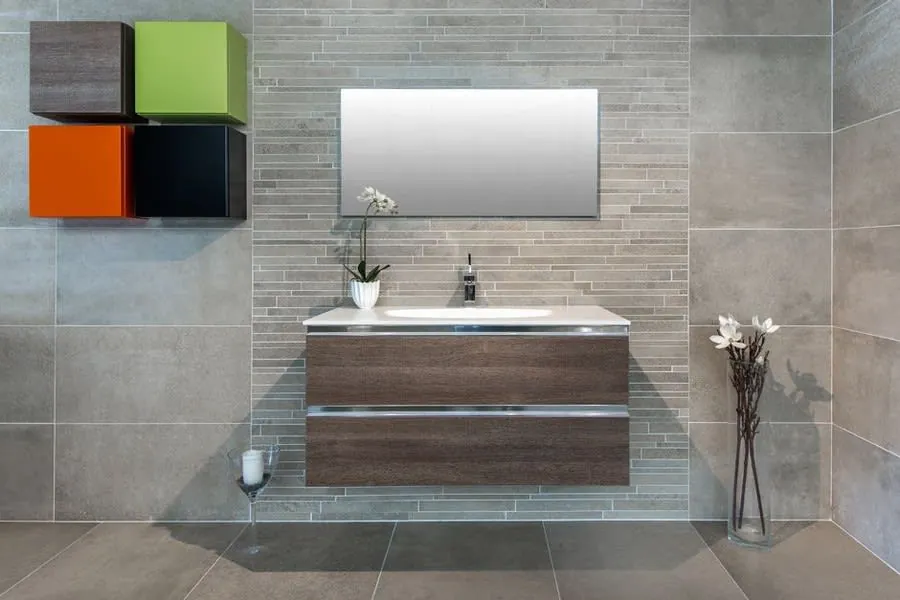
Wall-hung units carry the contemporary look, and they earn it practically: the floor runs clean underneath, which makes a small room read larger and makes mopping trivial, and you set the height to suit the household rather than accepting the standard 850 millimetres or so that floor-standing units dictate. In a compact space that strip of visible floor is worth real perceived square footage.
The caveat is the wall itself, and in Exeter this is a live question rather than a footnote. A loaded double vanity with stone top can hang the better part of a hundred kilos off its brackets. On a masonry wall, fine. On the stud partitions and original lath-and-plaster walls we open up in the city’s Victorian terraces, that load needs proper noggins fixed between the studs before boarding - which is easy during a renovation and miserable to retrofit afterwards. It is a first-fix decision, not a furniture decision.
Floor-standing units ask nothing structural of the wall, offer more litres of storage for the same width, and suit period rooms where furniture that visibly stands on the floor simply looks more at home. Neither is the better unit. The house usually casts the deciding vote.
Basin styles, honestly compared
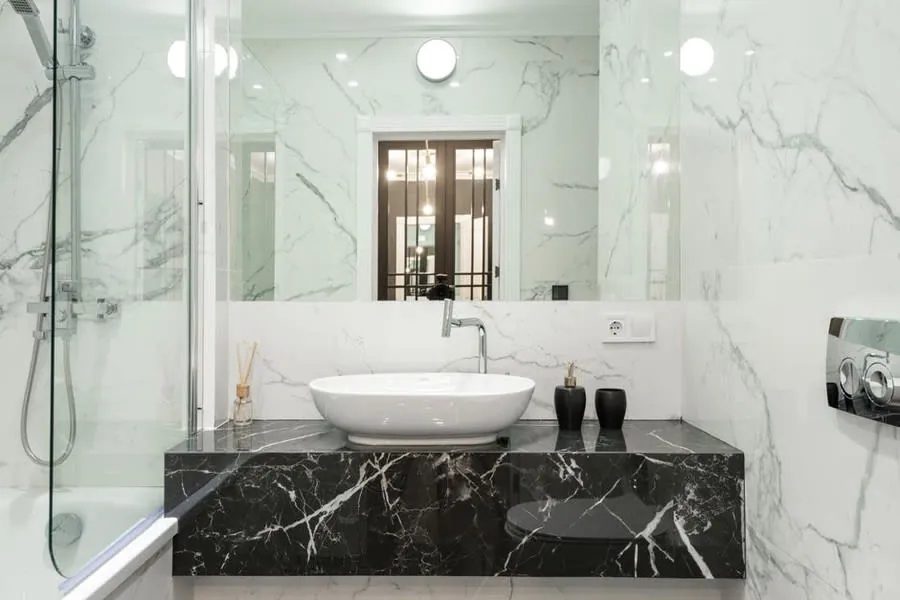
The basin decision is a straight trade between looks and living, and it helps to be blunt about both sides.
A countertop basin - the bowl sitting proud on the surface - is the most sculptural option and the current favourite in every showroom. What the photographs never show is the tight junction where bowl meets counter, which collects toothpaste splash and needs a cloth worked around it, and the water that lands on the counter rather than in the bowl. We still fit plenty, they can be beautiful, but they are a choice for people happy to wipe a counter daily.
An inset or under-mounted basin sits in the counter with the surface running to its edge, so splash wipes straight into the bowl. It gives up the sculpture and gains the easiest daily life of any style. An integrated basin, where bowl and counter are moulded as one piece of cast mineral or ceramic, goes further still: no junction at all, one seamless surface. Its weakness is the future - chip it and you replace the whole top, and the crisp white of cheaper cast versions can dull with aggressive cleaning.
Semi-recessed basins, half in and half out of a slim unit, are the space-saver’s compromise and earn their keep in cloakrooms where a full-depth unit will not fit.
The carcass matters more than the colour

That four-hundred-to-two-thousand-pound gap lives almost entirely inside the box, and a bathroom is the cruellest room in the house for furniture: steam twice a day, splash constantly, temperature swinging with every shower.
A budget unit is standard MDF in a foil wrap, and its weak points are the edges and the back panel. Steam finds any edge where the wrap is not sealed, the board swells, and a swollen edge cannot be repaired. A well-made unit uses moisture-resistant board or plywood, doors that are lacquered or vinyl-wrapped over every face and edge, and a solid back rather than a stapled hardboard sheet. Real timber and veneer sit at the top, want a lacquered finish to live happily in the steam, and reward the care by ageing rather than failing. Established makers - the sort represented by the Bathroom Manufacturers Association - will state their board grades and test their finishes for exactly this environment, which is precisely the information a bargain listing omits.
The five-second showroom test: pull the drawer. Soft-close runners with a smooth, weighty action, a drawer box that is solid rather than folded thin metal, adjustable hinges. The company that spent money where you can feel it has usually spent it where you cannot.
Getting the size right
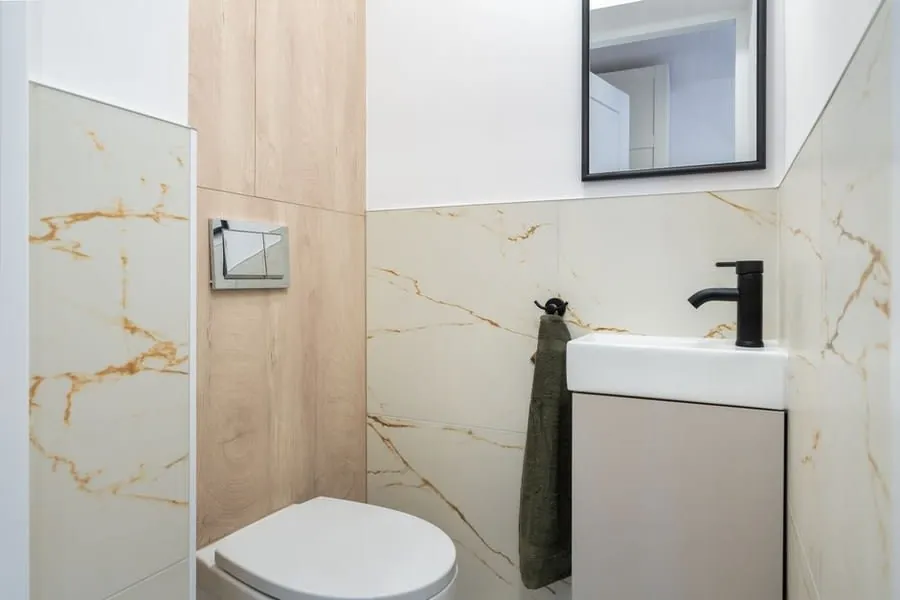
Vanities run in standard widths - 500 and 600 millimetres for compact rooms, 800 as the family workhorse, 1000 and 1200 where a double basin becomes possible - and the temptation is always to take the biggest one the wall allows. Resist it slightly. A bathroom needs circulation space more than it needs the last hundred millimetres of counter: keep a comfortable clear zone in front of the unit, around 700 millimetres, or the room works badly forever after. Depth is the quieter dimension worth studying, because several ranges come in slimline versions around 350 to 400 millimetres deep that free up a narrow room’s traffic while giving up surprisingly little storage.
Double basins deserve honesty too. Where a big main bathroom serves a busy household they genuinely change the morning. In a room that cannot spare a 1200 unit gracefully, one generous basin with counter either side is better company than two cramped bowls touching elbows. And in the compact en-suites being squeezed into Exeter bedrooms - we wrote about what adding an en-suite really involves - a 500 unit with a full-height mirror above works harder than anything wider would.
Taps and heights, where it goes wrong
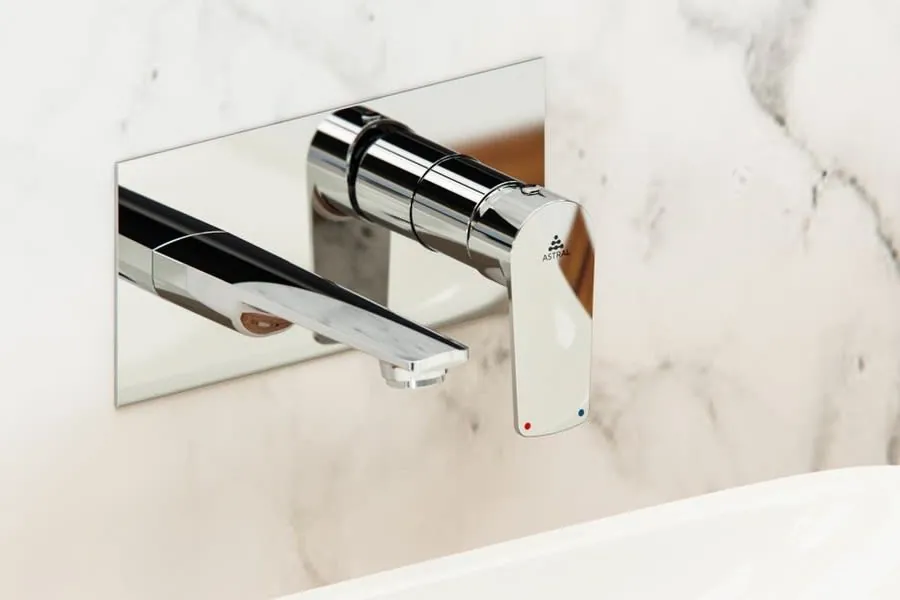
The vanity and its tap are a matched pair, and mismatching them is the most common self-inflicted wound in bathroom shopping. A countertop bowl adds its own height to the counter, so it needs a tall pillar mixer or a wall-mounted tap; a standard basin mixer beside a proud bowl cannot physically reach the bowl. Get the spout’s reach right as well as its height - water should land over the waste, not against the basin’s back wall, which is the little error behind endless mysterious splashing.
Wall-mounted taps look wonderful and free the whole counter for cleaning, but they are a first-fix commitment: the valve body and pipework go into the wall before tiling, positioned to suit a basin you must therefore have already chosen. Swapping to a different basin late in a project is easy; swapping after the tap is in the wall is not. It is the single best argument for choosing this whole ensemble early.
Flow is worth a glance while you are comparing. Basin taps are labelled under the industry’s Unified Water Label scheme, and a moderate flow rate around four to six litres a minute is entirely comfortable for a basin while quietly cutting the hot water a household heats each day.
Finishes, and what Devon’s water does to them
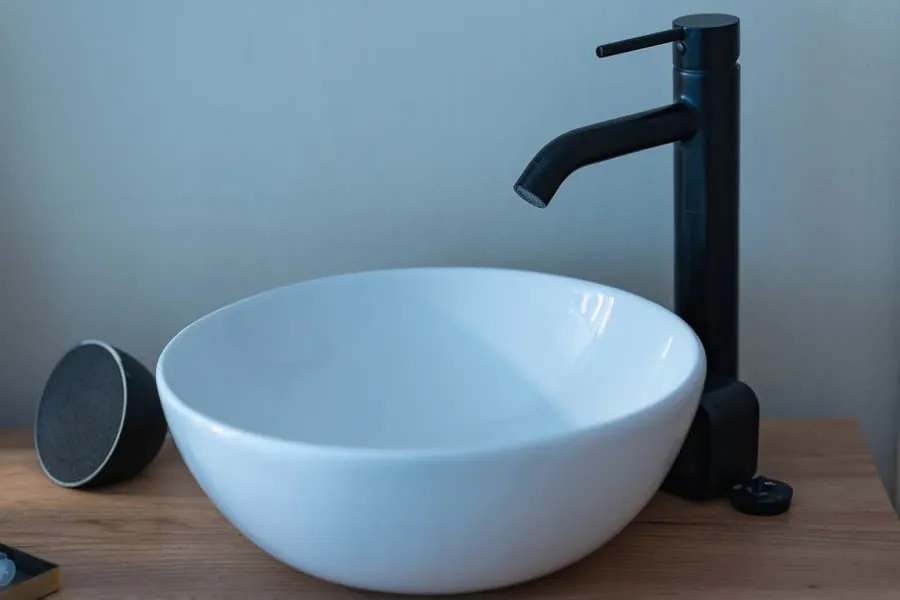
Brushed brass, matt black and gunmetal have overtaken chrome in the brochures, and there is a plain question to ask before following them: how is the colour applied? Chrome and PVD finishes are bonded hard enough to shrug off years of cleaning; cheaper painted or powder-coated colour can lift at the edges and cannot take an abrasive cloth even once. Two taps the same shade of black can be a decade apart in how they wear.
Then there is the water coming out of them. Exeter itself is lucky - the city’s supply is soft, so mineral spotting is a light, occasional chore and dark finishes stay dark with a weekly wipe. Cross into East Devon, though, and clients in Exmouth, Sidmouth and Honiton are on chalky borehole water; South West Water’s own hardness guidance confirms the split. On that water, every droplet that dries on a matt black spout leaves a white mineral mark, and dark matt finishes become a daily wiping commitment rather than a weekly one. We still fit them there for clients who love them and know the deal - but polished chrome and brushed nickel forgive hard water in a way the fashionable finishes do not, and honesty about your postcode belongs in the decision.
Common questions
Are wall-hung vanity units a good idea?
In the right room, yes - they make small bathrooms feel bigger, let you choose the mounting height, and leave the floor clear to clean. The condition is the wall: a loaded unit needs solid masonry or properly reinforced studwork, which in older Exeter houses means planning the fixings at first fix rather than hoping the plasterboard copes.
What is the best material for a vanity unit?
Judge the carcass before the colour. Moisture-resistant board or plywood with fully sealed edges survives bathroom steam; standard MDF with foil-wrapped faces swells at the first unsealed edge and cannot be repaired. Real wood and veneer are the most beautiful option and age well, provided they carry a proper lacquered finish.
Are countertop basins practical?
They are the best-looking option and the most demanding to live with. The junction where the bowl meets the counter collects splash and needs wiping daily, where an inset or integrated basin lets water wipe straight into the bowl. Choose one for its sculpture with open eyes, or choose inset for the easiest daily routine.
What size vanity unit do I need?
Count what must live in it, then size from that: 500 to 600 millimetres suits cloakrooms and small en-suites, 800 is the family standard, and doubles start needing 1200. Keep roughly 700 millimetres of clear space in front, and remember slimline 350 to 400 millimetre depths exist for narrow rooms.
Do matt black taps mark in hard water?
On hard water, yes - dried droplets leave visible white limescale spots that dark matt finishes show far more than chrome. Exeter’s soft supply is kind to them, but the harder borehole water in parts of East Devon makes them a daily-wipe finish. If that sounds like a chore, chrome or brushed nickel hides water marks best.