
Brushed Brass, Matt Black Or Chrome: Which Bathroom Finish Lasts
Luxury Bathrooms Exeter
Finish is the decision people agonise over longest and research least. Everything else in a bathroom gets specified against a number: a bath is 1700mm, a fan moves 15 litres a second, a valve needs a bar of pressure. Brassware gets chosen from a lit display in a showroom where nothing has ever been cleaned. Then it goes into a real house, gets touched with wet hands ten times a day for fifteen years, and either keeps looking like it did or does not. Roughly half the design queries we take include a question about brass or black at some point, and almost none of them start with the question that actually decides the outcome, which is what the water in that particular town does to a coating. Devon makes this unusually interesting, because the answer is genuinely different in Exeter than it is eight miles down the estuary.
The short version first, in well under a minute:
What is actually underneath the finish
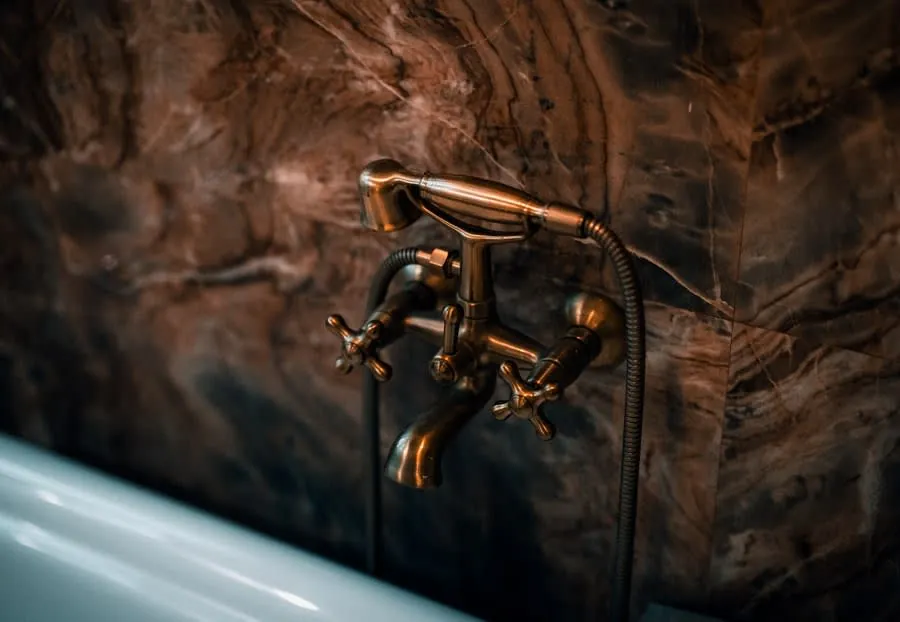
Nearly every quality tap and shower valve sold in the UK is a solid brass casting. The colour you are buying is a coating a few microns thick sitting on top of it, and the coating is where the durability lives.
There are four main types. Electroplated nickel-chromium is the traditional one, an electrochemical process that deposits nickel then chromium onto the brass, and it is what almost all chrome is. Physical vapour deposition, always abbreviated to PVD, is a vacuum process that bonds a thin ceramic-hard layer to the metal, and it is what good brushed brass, nickel and gunmetal are. Lacquer is a clear organic coating over polished or brushed brass, cheaper than PVD and softer. Powder coating and paint are what a lot of matt black is, particularly at the budget end.
The price difference between two brass taps that look identical online is nearly always the difference between PVD and lacquer. It is also the difference between a finish with a ten or fifteen year warranty and one with two. When we specify brassware as part of a luxury bathroom installation, the coating type is the first thing we check on a datasheet and the last thing most brochures mention.
Devon’s water is the deciding factor, and it changes across the county
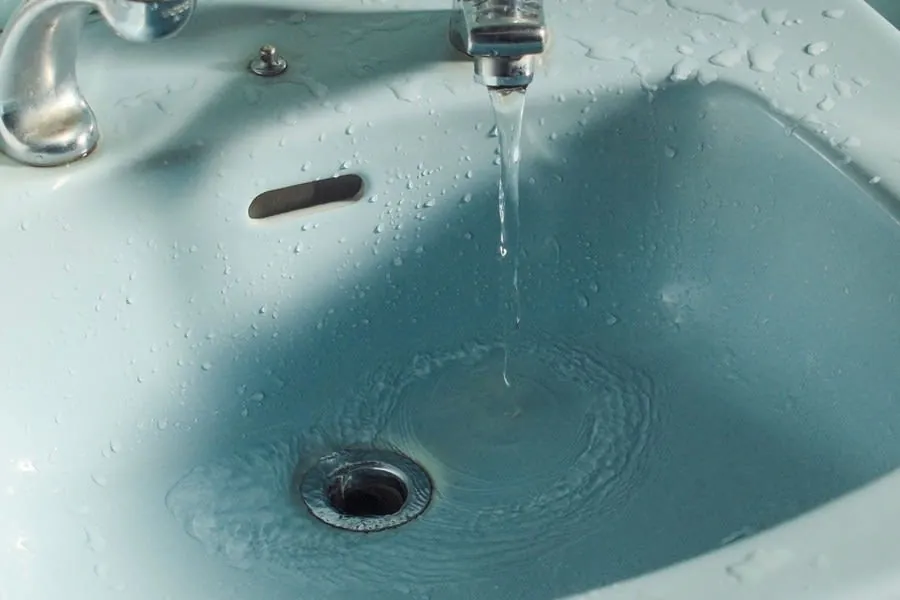
This is the part that gets missed, and it is the reason a recommendation that is right for a house in Heavitree can be wrong for one in Sidmouth.
South West Water classes almost all of its region as soft or moderately soft, because the rain falls on granite and picks up very little on the way down. Exeter’s supply averages somewhere around 90mg per litre as calcium carbonate. The exception is East Devon, supplied from Otter Valley boreholes, where the water passes through permeable rock and comes out genuinely hard. South West Water’s own water hardness factsheet sets out the figures by supply area, and the split is stark for such a small distance.
The consequences run in both directions, which is the interesting bit. The Drinking Water Inspectorate summarises the World Health Organisation position: water above roughly 200mg per litre produces scale, and water below about 100mg per litre is more corrosive to pipework. So in Exmouth, Sidmouth, Budleigh Salterton and Honiton the enemy is limescale, which means white spotting on dark finishes and scale inside spray heads and cartridges. In Exeter, Topsham, Exminster, Crediton and Newton Abbot there is barely any scale to speak of, and the finish is only ever fighting what you clean it with.
That flips the usual advice. In the East Devon towns we steer people away from matt black and toward finishes that hide spotting, and we specify shower heads with rub-clean nozzles as standard. In Exeter itself, black is a perfectly sensible choice and the risk moves elsewhere, to bleach-based cleaners and abrasive pads.
Chrome, the default that is hard to beat
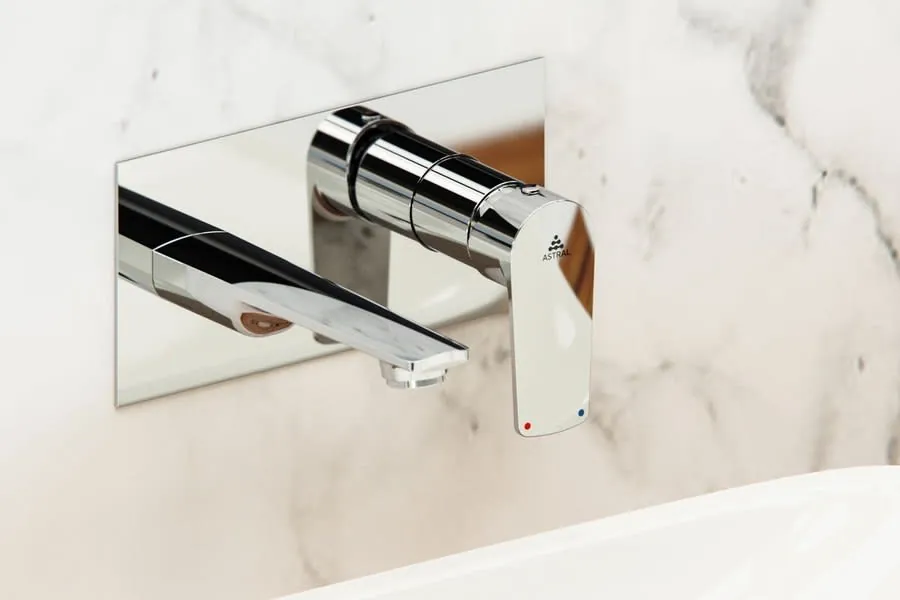
Chrome is what most people move away from because it feels ordinary. It is also, on the evidence of pulling out other people’s bathrooms for a living, the finish most likely to still look right after fifteen years. That is not the answer anyone wants in a showroom.
The reason is metallurgical rather than aesthetic. A properly plated chrome tap made to BS EN 248 has a nickel underlayer for corrosion resistance and a very hard, chemically inert chromium top layer. It does not oxidise, it does not care about soft water, and it survives cleaning products that would ruin a lacquered brass tap in a year. Where it fails is at the bottom of the market, where the plating is thinner than it should be and blisters around the base after a few years of standing water.
Chrome’s real weakness is visual. In a soft-water area it shows fingerprints and water spots more than any other finish, and in a dark scheme it can read as cold. Polished chrome in a room of pale marble is timeless. Polished chrome in a room of dark stone and walnut often is not, which is why so many of our Exeter clients arrive having decided against it before we have said anything.
Brushed brass, and why PVD is the word that matters
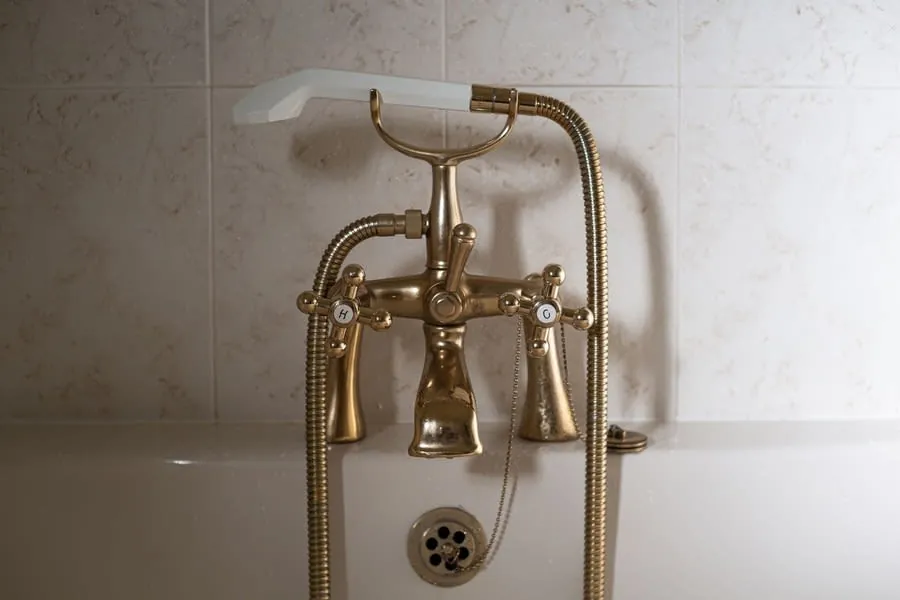
Brushed brass has been the dominant request in this part of Devon for several years now, and it deserves the popularity as long as you buy the right version of it.
PVD brass is exceptionally durable. The coating is harder than the brass under it, it resists the mild acids in most bathroom cleaners, and its warm tone hides both fingerprints and limescale far better than chrome or black. In Exmouth and Budleigh Salterton, where scale is a fact of life, a brushed PVD finish is the single most forgiving choice on the market. It is also the one we most often recommend for a family bathroom where the same tap will be handled by children with wet hands several times a day.
Lacquered brass is a different product wearing the same colour. The lacquer wears through at the points you touch, first around a lever and then along the spout, and once it has gone the brass beneath oxidises unevenly. Some manufacturers sell this deliberately as a living finish, in unlacquered brass that patinates to a dull gold. That is a legitimate and lovely choice in a period house in Topsham, but it needs to be a choice rather than a surprise, because there is no going back to bright once it has started.
The practical test when comparing two brass taps: look for PVD stated explicitly on the datasheet and a finish warranty measured in double-digit years. Vague words like premium coating usually mean lacquer.
Matt black, honestly
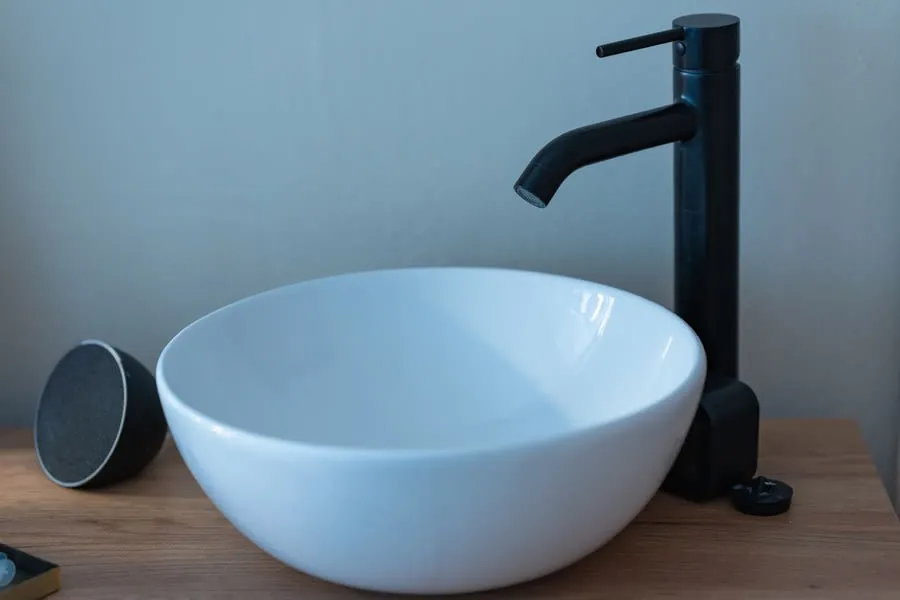
Black brassware photographs beautifully and is the finish we have the most cautious conversations about.
Whether you end up happy with it depends on your water and on the coating. Water first: black shows limescale as white spotting more clearly than any other finish, and in the East Devon towns that means wiping down after use rather than occasionally. The coating matters just as much. Good matt black is PVD or a high-grade powder coat and holds up well. Cheap matt black is paint, and it chips at the aerator and scuffs where a ring catches it.
There is also a maintenance rule that is not optional. Almost every manufacturer’s care instruction for black finishes forbids acidic descalers and abrasives, which are exactly the products people reach for when they see limescale. Descaling a black tap with a supermarket limescale remover is the fastest way to leave a permanent dull patch. Warm water, a soft cloth and a light dry after use is the whole regime, and it works.
Where black earns its place is in a scheme built around it: dark stone, warm timber, plenty of natural light, and a household that does not mind a cloth by the basin. In a family bathroom in a hard-water town, it is the finish we most often talk people out of.
Nickel, gunmetal and the finishes people ask about less
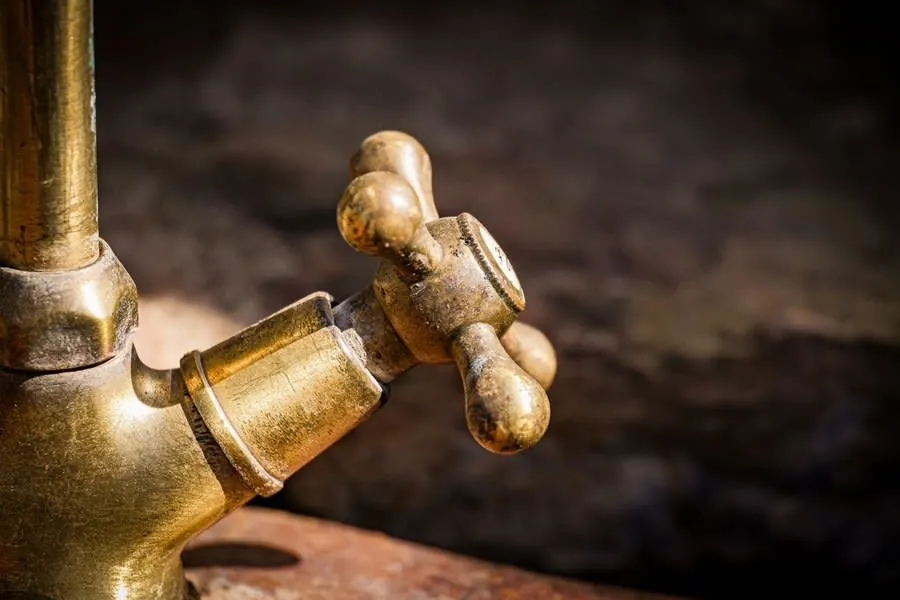
Between the three headline options sit several finishes that solve specific problems, and they come up more often once someone has seen them in a real room rather than a photograph.
Brushed nickel is the quiet one. Slightly warmer and softer than chrome, brushed rather than polished so it hides marks, and available in PVD from most decent manufacturers. In a period property where bright chrome looks anachronistic and brass looks too fashionable, nickel is usually the right answer, and it is what we specify most often in the older houses around St Leonard’s.
Gunmetal and brushed bronze are the darker end of the same family. Both are PVD, both hide water marks well, and both are harder to match across manufacturers than any other finish, so if you want a gunmetal shower valve and a gunmetal basin waste, buy them from the same range or accept a visible difference in tone.
Copper is the outlier. Real copper is a living finish that darkens and patinates, PVD copper stays put, and the two look nothing alike after a year. Which? has published owner satisfaction ratings across the main bathroom brands, which is a more reliable guide to who makes durable brassware than any showroom display.
Mixing finishes, and keeping them alive
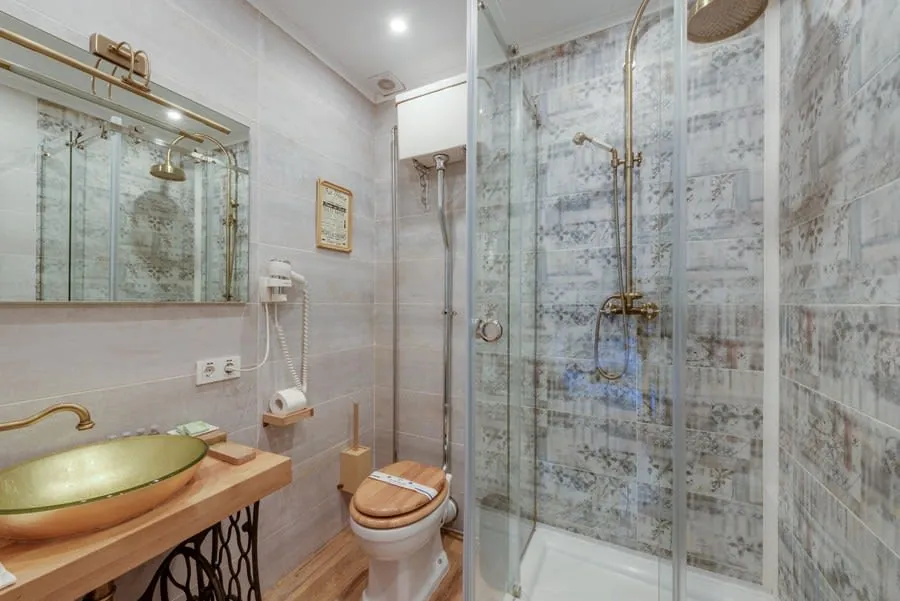
Two questions come up at the end of nearly every design meeting: can I mix, and how do I stop it looking tired.
Mixing works when it is structural rather than accidental. The usual approach that succeeds is one finish for everything that carries water - taps, shower valve, head, waste, bath filler - and a second, contrasting finish for everything that does not, meaning handles, hinges, hooks and the frame of a shower screen. What fails is two water-carrying finishes in one room, because the eye reads them as a mistake rather than a decision. Matt black screen frames with brushed brass brassware is the combination we fit most, and it works precisely because the split is legible.
Keeping any of it alive is mostly about what you do not do to it. Never use anything acidic, abrasive or bleach-based, whatever the label promises. Dry the brassware at the end of the day, which matters in the hard-water towns and barely at all in Exeter. And deal with scale by prevention rather than removal, which usually means a shower head with silicone nozzles you can rub clean in ten seconds. The same logic sits behind our advice on choosing a shower and valve, where the serviceable option almost always outlives the sealed one.
Get that right and the finish stops being something you manage. It just sits there looking the way it did on the day it went in, which is all anyone wanted from it.
Common questions
What is the most durable bathroom tap finish?
Polished chrome plated over nickel, and PVD finishes in brass, nickel or gunmetal, are the most durable in normal use. All three resist the chemicals in ordinary bathroom cleaners and do not wear at the touch points. Lacquered brass and painted black are the least durable, because the coating is organic and wears through where hands go.
Do black taps show limescale?
Yes, more than any other finish, because the scale dries white against a dark surface. In Exmouth, Sidmouth, Budleigh Salterton and Honiton, which are on harder borehole water, that means wiping down regularly. In Exeter, Topsham and Crediton the water is soft enough that black is far less demanding.
Is brushed brass going out of fashion?
It has been the most requested finish in this area for several years and shows no sign of slowing, but that is not really the point. Brushed brass in PVD is a practical choice regardless of fashion because it hides fingerprints and limescale better than chrome or black, so it is one of the few trend-led finishes that also happens to be the sensible one.
Can I mix metal finishes in one bathroom?
Yes, if the split follows a rule. Use one finish for everything that carries water and a second for everything that does not, such as handles, hooks and screen frames. Two different finishes on taps and shower valves in the same room reads as an accident.
How should I clean brass and black brassware?
Warm water, a soft cloth, and dry it afterwards. Avoid limescale removers, bathroom sprays containing acid, bleach and any abrasive pad, all of which will permanently dull PVD, lacquer and powder-coated finishes. If scale has built up, a cloth soaked in warm water and held against the deposit will soften it without chemicals.