
How To Choose A Bathroom Fitter In Exeter
Luxury Bathrooms Exeter
Almost everybody chooses a bathroom fitter the same way. Three quotes, a quick look at some photographs, and a decision made mostly on price and partly on which of the three seemed most likeable. It is an understandable approach and it is a bad one, because the three quotes are usually not for the same job and the differences are invisible unless you know what to ask.
We get called in to fix other people’s bathrooms fairly regularly. In close to every case the failure was not incompetence at the visible end - the tiling was usually fine. It was a tray that had not been bedded, tanking that stopped before the door, a wall-hung pan fixed into soft Victorian brick, or a thermostatic valve specified for water pressure the house never had. All of those were decided before the tiles went on, and all of them would have surfaced from the right question at quote stage.
So this is the list of questions, and what a good answer sounds like.
Ask for a written specification, not a price
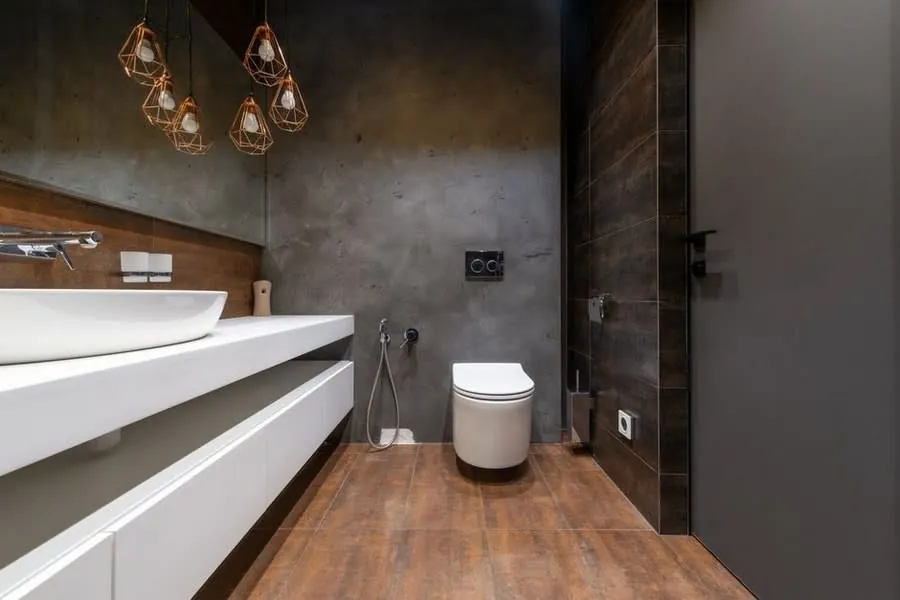
This is the single most useful thing you can do, and it costs you nothing. A quote that reads “supply and fit bathroom suite, tile walls and floor, £14,500” is not comparable with anything. It could describe an excellent bathroom or a very poor one.
A real specification names things. The WC pan and its concealed frame. The basin and its tap. The shower valve, by model, with the cartridge type. The tile, its format, and the adhesive and grout going with it. The tanking system, by manufacturer, because tanking warranties only apply when the membrane, tape, corners and primer all come from the same system. The extract fan and its rate.
Once you have two specifications you can see what the price difference actually buys. Frequently the cheaper quote turns out to be cheaper because it has no tanking system in it at all. That is a genuinely useful thing to discover before you commit rather than in four years’ time. If you would like a sense of what the different bands realistically include, our guide to bathroom costs in Exeter sets out three of them.
If a firm will not put a specification in writing, the reason is almost always that they intend to decide later, when the decision is theirs rather than yours.
Ask what happens when they open the wall
In Exeter this matters more than in a lot of places. The Victorian and Edwardian suburbs - Heavitree, St Leonard’s, Pennsylvania, St Thomas - are largely solid-walled with suspended timber floors, lath-and-plaster partitions and original soil stacks on the rear elevation. Out toward Crediton you get cob. In the postwar rebuild of the bombed city centre you get 1950s construction with services that were adequate for 1955.
None of that is a problem. All of it is a variable. So the question is not whether a fitter can handle it, it is whether they have thought about it before pricing. A good answer sounds like: “Your feeds are probably steel given the age, we would expect to find a modified waste run under the bath, and there is a chance the joist end near the old leak is soft. Here is what each of those costs if we are right.”
That is not hedging. It is the difference between a costed possibility you agreed to in advance and a renegotiation halfway through, when you have no bathroom, no floor and no leverage. Any fitter who tells you there will definitely be no surprises in a 130-year-old house is either inexperienced or is planning to bill you later.
Ask about the water, specifically
Two separate questions live here, and most quotes address neither.
The first is pressure and flow. Not “what boiler have you got” - measured, with a gauge and a timed jug, at the point the shower is going. A gravity-fed system in a period Exeter house frequently cannot supply a large ceiling-mounted head without a pump, and no valve on earth fixes an inadequate supply. If a fitter has specified a rainfall shower without measuring, they have guessed.
The second is hardness, and it is genuinely local. South West Water classes almost all of its supply region as soft or moderately soft - Exeter’s water is surface water off Exmoor and the Exe. East Devon is the exception. Exmouth, Sidmouth, Budleigh Salterton and Honiton draw from boreholes in the Permian and Triassic sandstone of the Otter Valley, and South West Water classes that as slightly to moderately hard.
Twelve miles changes the specification. In the hard-water towns, thermostatic cartridges scale internally and lose temperature stability, glass etches if water dries on it, and cheap plated finishes pit. So a serviceable cartridge that can be replaced without pulling out the valve body is worth paying for in Sidmouth and is unnecessary expense in Topsham. A fitter who gives you the same answer for both has not thought about it.
Ask who does the electrical work, and what gets certified
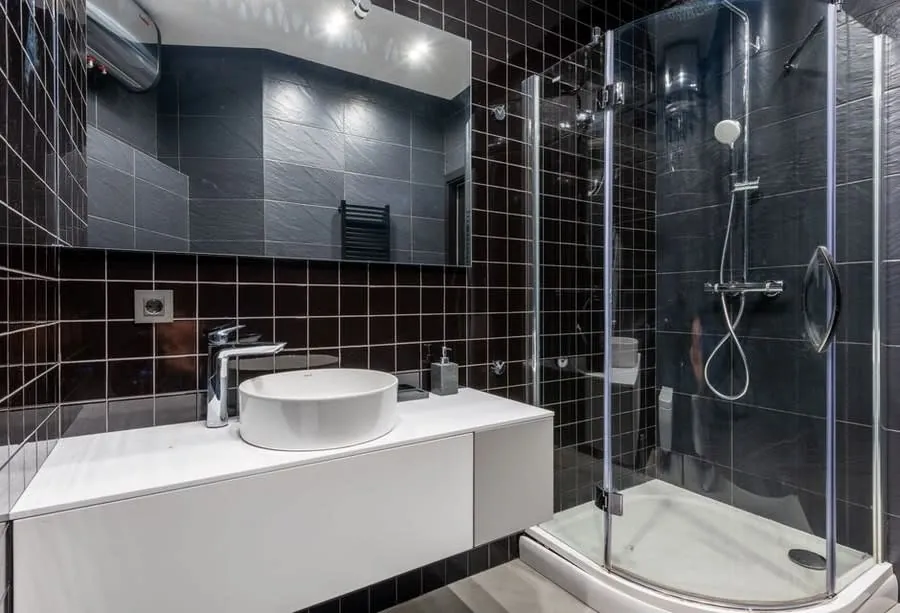
This question is a good competence test, because there is a widespread myth attached to it.
The myth is that all electrical work in a bathroom is notifiable. It is not, and has not been in England since the 2013 edition of Approved Document P. Only three things are notifiable: installing a new circuit, replacing a consumer unit, and any addition or alteration to existing circuits within a “special location”. And the special location is much smaller than people assume - it extends 0.6 metres horizontally from the edge of the bath or shower tray and up to 2.25 metres, or 1.2 metres from the shower head centre where there is no tray. Work outside that envelope, on the far side of a large bathroom, is not notifiable. You can read it yourself in Approved Document P.
Why does the myth matter? Because a fitter who repeats it is telling you they have not read the regulation they are claiming to work to. The separate BS 7671 zone requirements do still apply throughout - IPX4 minimum in zones 1 and 2, 12V SELV only inside the shower basin, 30mA RCD protection on all circuits, and a socket at least 3 metres horizontally from the zone 1 boundary. A fitter who can distinguish between the zones and the notification rules knows what they are doing. One who cannot probably is not doing the certification either, and you will want that certificate when you sell.
Check the accreditation, and check the name is current
There is a specific trap here as of 2025. The British Institute of Kitchen, Bedroom and Bathroom Installation - BiKBBI, the body most bathroom installers cited - rebranded to the British Institute of Fitted Interiors Specialists, BIFIS, from 1 October 2025. If a firm’s website still advertises BiKBBI accreditation, it is worth asking when they last checked their own membership.
Beyond that, TrustMark is the government-endorsed scheme for work in and around the home, and the thing worth verifying is that a business is registered for the specific trade rather than simply appearing in a directory. Which? has a straightforward guide to the checks worth making, and its advice on payment is the part most people skip: do not pay in full upfront. A deposit against materials ordered for your job is reasonable. The whole amount before work starts is not.
Ask to speak to a recent customer, not to look at photographs
Photographs are close to worthless as evidence, and it is worth being blunt about why. Stock imagery is cheap and widely used - including by us, on our own gallery page, where we say so explicitly because the alternative is passing licensed photographs off as our own work. A gallery proves nothing about who built the room.
A phone call with someone whose bathroom was finished eighteen months ago proves a great deal. Ask them whether the quote moved, whether the fitter turned up when they said they would, what the house was like to live in during the work, and - the useful one - whether anything needed attention afterwards and what happened when they rang. Every installer has had something need attention. What distinguishes them is whether they came back.
If a firm cannot put you in touch with anybody, that is your answer.
Ask how the room will be set out before any tiling starts
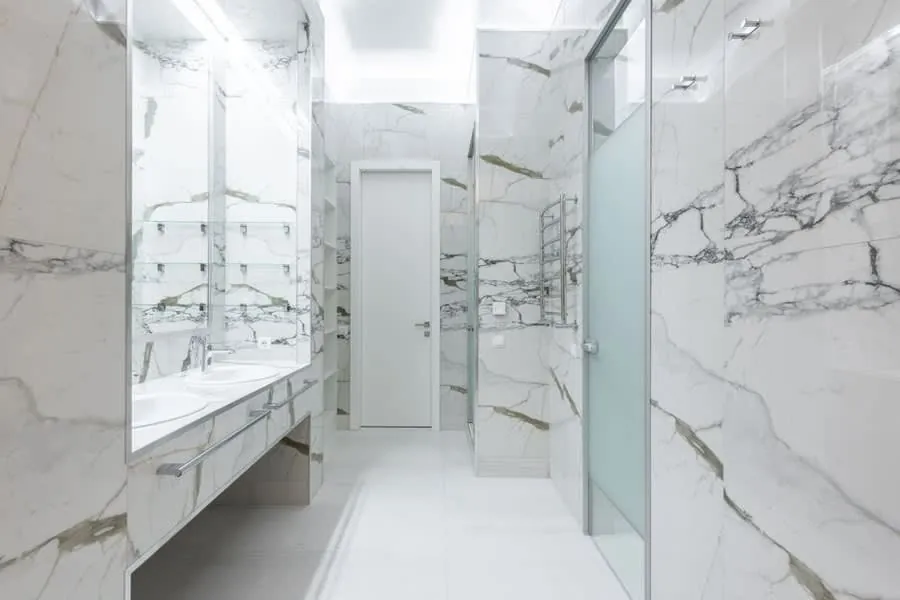
When somebody tells us a previous bathroom looked wrong but they cannot say why, it is the set-out about nine times out of ten. Not the tile - the arrangement of it.
Set-out is where the first full tile lands, which corner takes the cuts, and whether the courses relate sensibly to the door frame, the window reveal and the top of the shower screen. Centring a wall means both end cuts are equal and generous. Starting from one corner means the opposite edge might finish on a fifteen-millimetre sliver, which looks like a mistake because it is one.
A tiler who knows their trade will happily walk you round the room before mixing any adhesive and show you the plan. “We will start in the corner and see how it goes” is a complete answer to the question, just not the one you wanted.
Ask about ventilation, and listen for whether they know the actual rate
Ventilation is the least glamorous thing in a bathroom and the one that most determines whether it still looks good in five years. Mould is a moisture problem, and moisture is a ventilation problem.
The figures are in Approved Document F: an intermittent extract rate of 15 litres per second for a bathroom, or 8 litres per second continuous. The fan must sit no more than 400mm below the ceiling. Where there is no openable window it needs a run-on timer of at least 15 minutes after the room is vacated, and where a wet room has no external walls the guidance is four air changes per hour.
There is also a genuinely counter-intuitive provision worth knowing, particularly for a period property. Approved Document F states at paragraph 3.31 that if there was no ventilation system in the original room, it is not necessary to provide one in the refurbished room - though additional ventilation may be needed if the work would otherwise leave the building less compliant than before. In a listed building in Topsham or Sidmouth that matters enormously, because it means a bathroom refit does not automatically oblige you to cut a new opening through a historic elevation. A fitter who insists you must has not read it. One who explains the nuance, and then recommends good extraction anyway because it is the right thing to do, is the one to hire.
The pattern behind all eight questions
Every question above is really the same question: has this person thought about my specific room, or are they quoting a generic bathroom and hoping?
You do not need to become an expert. You need to ask eight questions and notice whether the answers are specific. A fitter who has surveyed properly gives you specific answers about your joists, your water pressure, your walls and your drainage. One who has not gives you general answers about bathrooms.
If you want to see what the specific version looks like from the inside, our design process sets out the order we do things in and why that order is not negotiable.
Common questions
How many quotes should I get?
Three is sensible, but only if all three are quoting the same specification. Three quotes for three different jobs tells you nothing. If one firm produces a written specification, it is entirely reasonable to take it to the others and ask them to price that.
Is the cheapest quote always a false economy?
No, and it is worth saying so. Sometimes a firm is genuinely leaner, or wants the work, or is quicker because they are local to you. What you are looking for is not the most expensive quote but the one where you can see what you are getting. A cheap quote with a full specification is a good sign. A cheap quote with no specification is a warning.
Should I use a fitter who also has a showroom?
There are good fitters with showrooms and good fitters without. The thing to be aware of is that a showroom has to be paid for, and it tends to steer the specification toward whatever is stocked. Ask whether they can specify outside their own ranges. If the answer is no, that is fine as long as you like the ranges.
How far ahead should I expect to book?
Any competent bathroom firm in Exeter is booking weeks rather than days ahead, and often months in spring and autumn. A fitter who can start on Monday in peak season is worth a polite question about why. The design stage can usually begin much sooner than the site work, so waiting time is rarely wasted.